🌐 Limba originală afișată Acest articol nu a fost încă tradus în română. Vizualizați versiunea originală. 1. Immediate 3-Sentence Action Protocol & Provenance To cook authentic Moroccan Lamb Tagine (Tajine Mrouzia) with melting fall-off-the-bone tenderness and the quintessential sweet-savory balance, marinate bone-in lamb shanks in saffron, ginger, turmeric, and Ras el Hanout over a bed […]
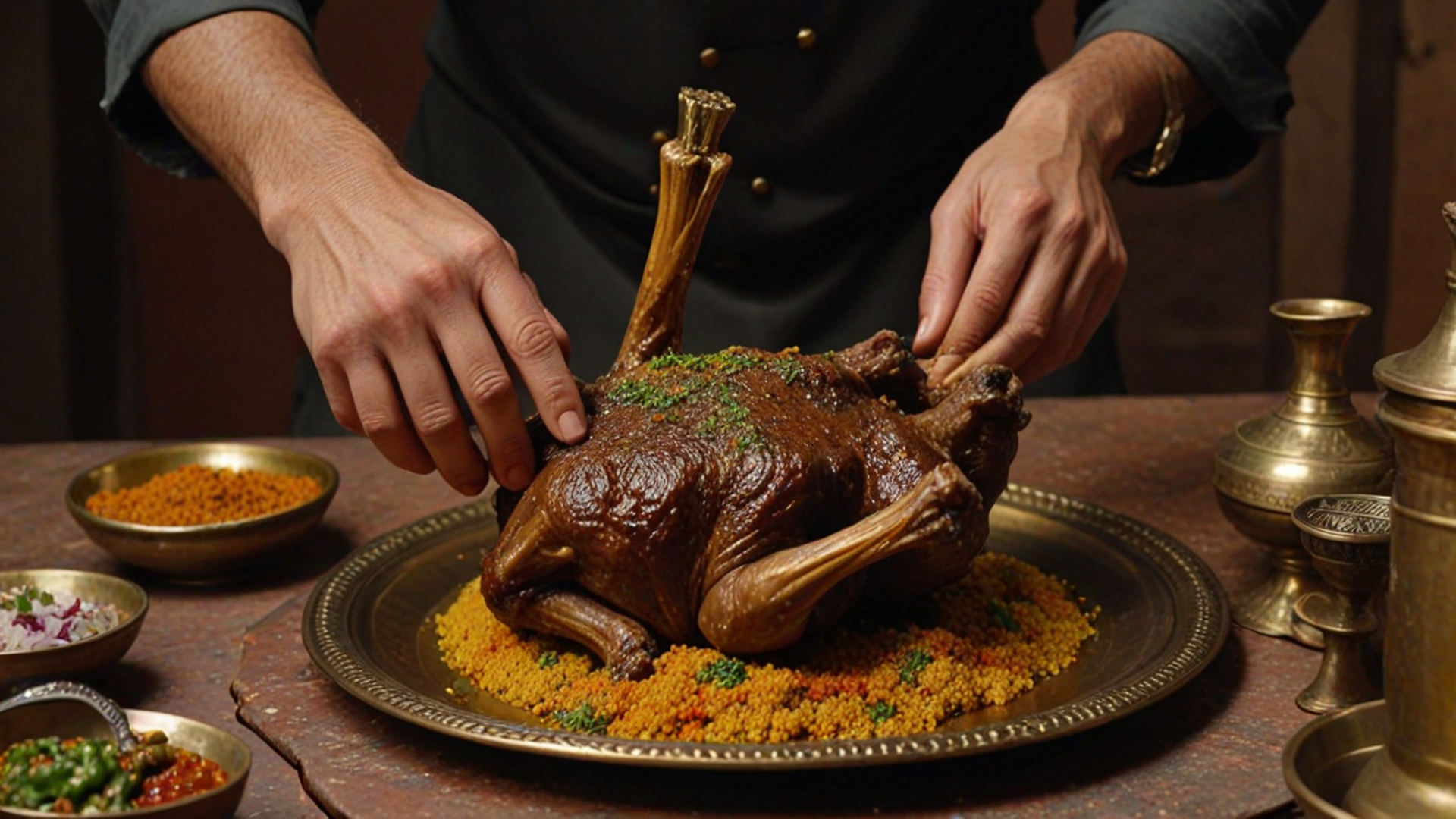
The Moroccan Charmoula Spice Rub: In a large bowl, whisk together steeped saffron water, ground ginger, turmeric, sweet paprika, cinnamon, Ras el Hanout, minced garlic, sea salt, black pepper, and 2 tablespoons olive oil. Add the bone-in lamb pieces, massaging the golden-crimson spice paste into every crevice of the meat. Let marinate for at least 30 minutes (or refrigerate overnight).
2
Grated Onion Foundation (The Tagine Bed): In a traditional glazed earthenware tagine base (using a heat diffuser ring over low flame) or heavy cast-iron Dutch oven, heat remaining 2 tablespoons olive oil over medium-low heat. Add the finely grated onions. Sauté gently for 6 to 8 minutes until translucent and melting. Grated onions break down completely into a rich, sweet, natural gravy without requiring flour or roux thickeners.
3
Seating the Lamb & Herb Bouquet: Arrange the spiced bone-in lamb pieces on top of the bed of grated onions with the thickest bone-in chunks in the center. Pour any remaining marinade from the bowl over the meat. Pour in 1 1/2 cups water around the edges (do not wash spices off the meat). Place the tied cilantro-parsley bouquet in the center.
4
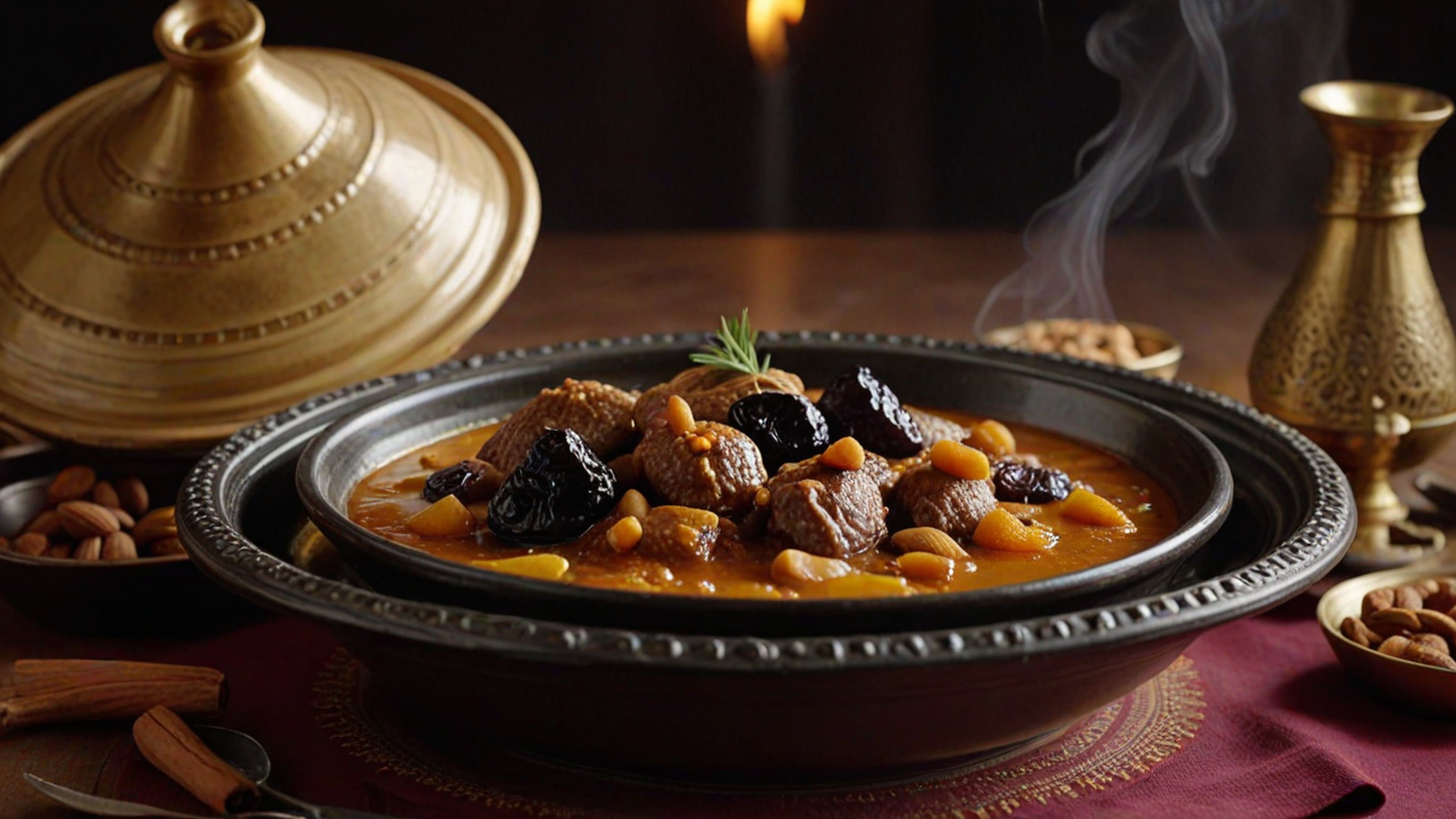
The Conical Tagine Vapor Condensation Braise: Place the heavy conical clay lid onto the tagine base. Adjust heat to low so liquid maintains a gentle, barely audible sub-simmer (approx. 85°C - 90°C). CRITICAL HYDRODYNAMIC SCIENCE: The conical lid acts as a natural condenser: steam rising from the meat hits the cool sloping ceramic walls, condenses into water droplets, and trickles continuously back down onto the meat like self-basting rain. Simmer undisturbed for 2 hours to 2 hours 15 minutes until lamb is meltingly tender and practically falling off the bone.
5
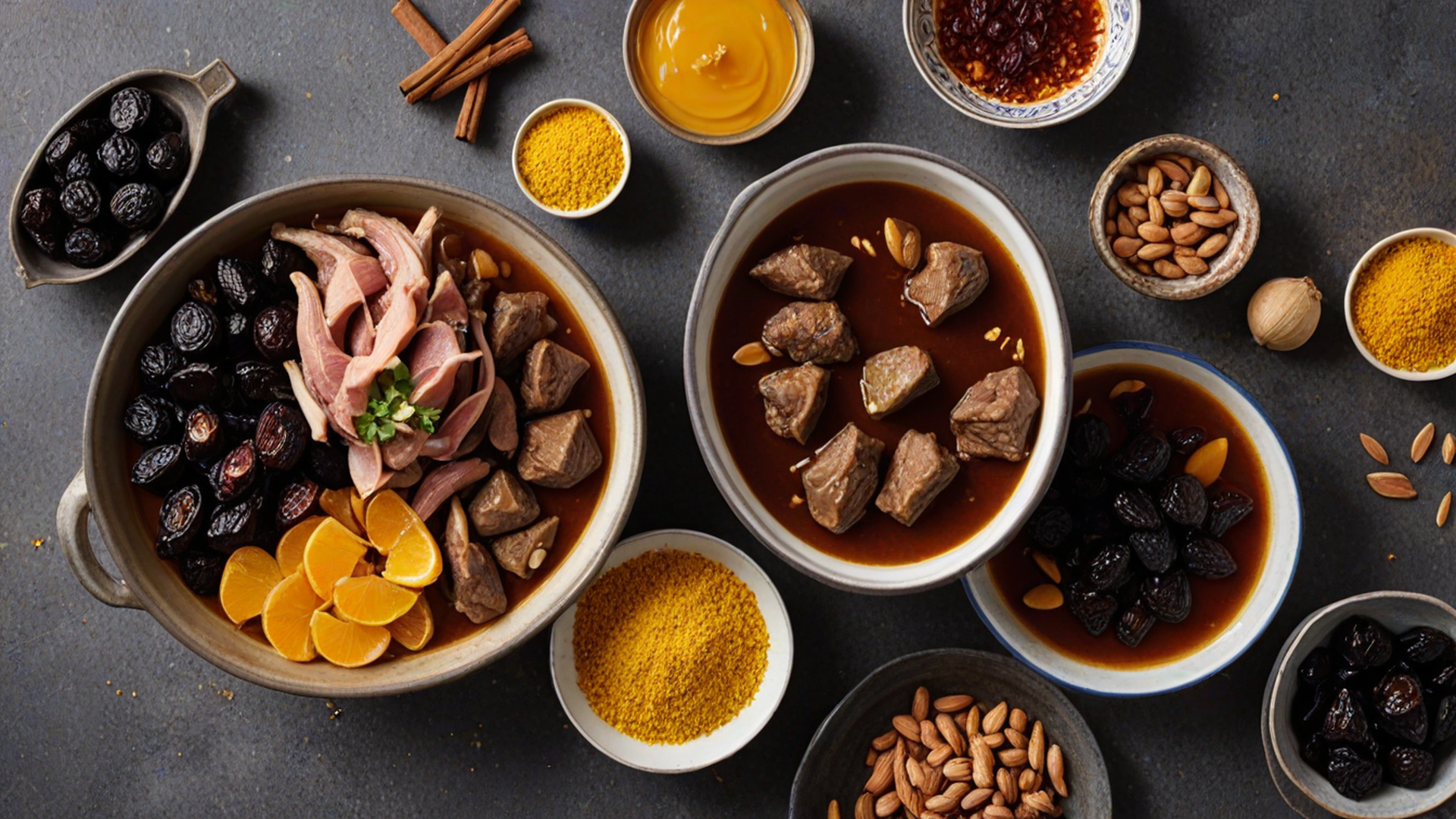
The Honeyed Prune & Orange Blossom Glaze: While lamb braises, place dried prunes in a small saucepan with 1/2 cup water, 1/2 cup braising liquid from the tagine, 2 tbsp honey, 1 tsp cinnamon, and 2 tbsp orange blossom water. Simmer gently over medium heat for 12 to 15 minutes until prunes swell, become plump and glossy, and liquid reduces into a thick, sticky caramel syrup. Remove from heat.
6
Golden Almond Frying: In a small skillet, heat 2 tbsp oil over medium heat. Add blanched raw almonds; fry for 2 to 3 minutes, stirring constantly, until golden-amber and fragrant. Drain immediately on paper towels and sprinkle with a pinch of sea salt.
7
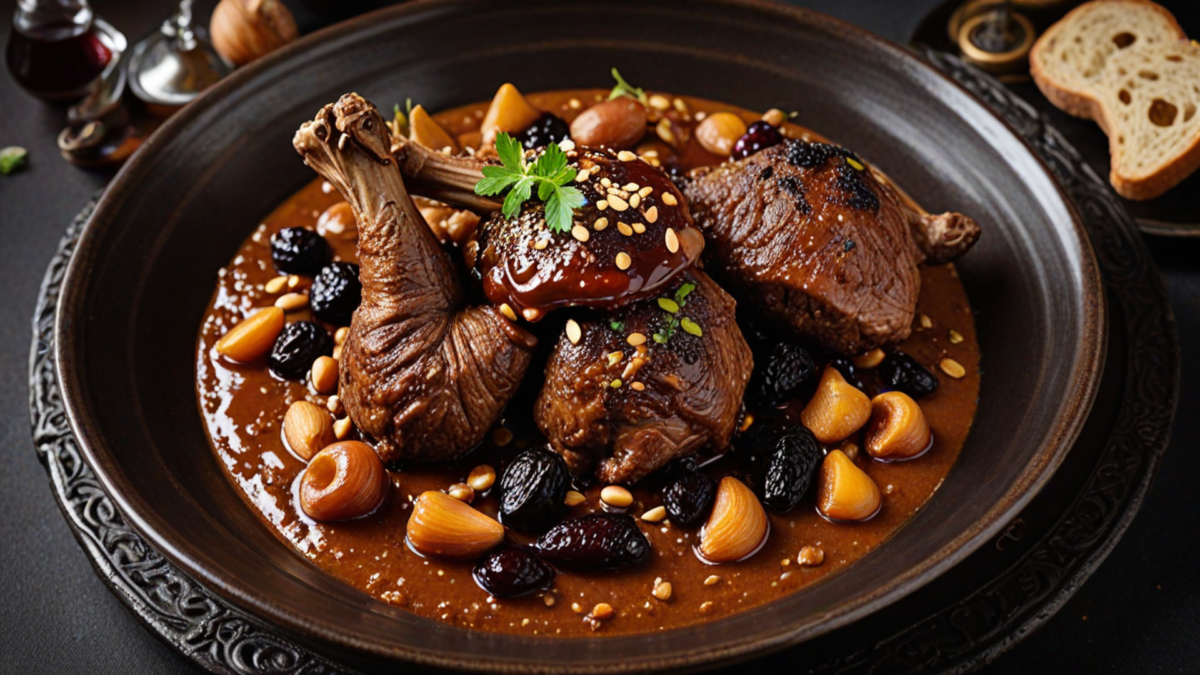
Sauce Reduction & Imperial Royal Plating: Remove tagine lid. Discard herb bouquet. If the onion sauce is too thin, transfer lamb to a platter and boil the onion gravy uncovered for 6 to 8 minutes until it reduces into a thick, glossy, amber-gold emulsion (Daghmira). Return lamb to the sauce. Crown the tender lamb with the glistening honey-glazed prunes, scatter with fried golden almonds and toasted white sesame seeds. Serve piping hot directly in the clay tagine accompanied by warm Moroccan crusty bread (Khobz) for dipping.
The Culinary Science: Why It Works
The culinary physics of the Moroccan tagine is an ancient thermodynamic marvel of convection and internal vapor condensation. The conical tagine lid has a steep, tapered silhouette and cool upper apex: as steam rises from the simmering lamb, it strikes the unglazed ceramic walls, which are cooled by ambient air. In accordance with thermal condensation physics, the steam cools from 100°C to liquid water droplets, which trickle back down along the conical slope directly onto the meat. This establishes an unbroken convective self-basting cycle: very little steam escapes into the room, meaning the dish requires 70% less added water than a standard Western pot, which in turn concentrates the natural glutamates and gelatin without diluting flavor. Furthermore, grated onions release high concentrations of fructans that break down into natural fructose, reacting with lamb amino acids to form a thick, sweet, velvety sauce emulsion (Daghmira) that grips the meat like a glaze.
To cook authentic Moroccan Lamb Tagine (Tajine Mrouzia) with melting fall-off-the-bone tenderness and the quintessential sweet-savory balance, marinate bone-in lamb shanks in saffron, ginger, turmeric, and Ras el Hanout over a bed of grated onions. Simmer under the conical clay lid for over two hours, harnessing natural condensation hydrodynamics to self-baste the lamb into gelatinous perfection. Crown with orange blossom honey-glazed prunes, toasted sesame seeds, and fried golden almonds, serving in the clay vessel with warm crusty Moroccan Khobz bread.
The culinary physics of the Moroccan tagine is an ancient thermodynamic marvel of convection and internal vapor condensation. The conical tagine lid has a steep, tapered silhouette and cool upper apex: as steam rises from the simmering lamb, it strikes the unglazed ceramic walls, which are cooled by ambient air. In accordance with thermal condensation physics, the steam cools from 100°C to liquid water droplets, which trickle back down along the conical slope directly onto the meat. This establishes an unbroken convective self-basting cycle: very little steam escapes into the room, meaning the dish requires 70% less added water than a standard Western pot, which in turn concentrates the natural glutamates and gelatin without diluting flavor. Furthermore, grated onions release high concentrations of fructans that break down into natural fructose, reacting with lamb amino acids to form a thick, sweet, velvety sauce emulsion (Daghmira) that grips the meat like a glaze.
3. Red Flags & Point of No Return Thresholds
Red Flag
Observable Chemical Phenomenon
Mandatory Chef Action
Cracked Clay Tagine Vessel
Placing an earthenware tagine directly onto high heat or cold wet counter
Always use a metal heat-diffuser ring over low flame; never subject clay to sudden thermal shock
Watery Diluted Stew with No Flavor
Pouring liters of broth into the tagine like a soup
Use only 1.5 cups of water; the conical lid condenses and recycles steam, requiring very little added liquid
Tough Stringy Chewy Lamb
Boiling lamb at high heat or cooking less than 2 hours
Cook at a gentle sub-simmer for at least 2 to 2.5 hours until connective tissue fully liquefies into gelatin
Burnt Onions Sticking to Bottom
Using high heat or failing to use olive oil under the grated onion bed
Keep heat low; grated onions form a moisture-rich thermal buffer that prevents meat from scorching
Adds exotic complexity including cardamom, mace, nutmeg, allspice, and dried rosebuds
09
Cooking Heat Level
Low flame with metal heat-diffuser ring
High boiling flame
Sub-boiling temperature (85°C) keeps meat fibers relaxed and succulent
10
Braising Time Window
2.0 to 2.5 hours undisturbed
<1.5 hours (tough collagen)
Time required for bone marrow lipids and connective tissue to fully convert to gelatin
11
Prune Glaze Technique
Poached separately in honey + orange blossom water
Raw prunes dumped into lamb pot
Separate poaching glazes prunes into jewel-like sweet candy without turning meat broth purple
12
Orange Blossom Water Standard
Authentic distilled Moroccan Maa Zhar
Artificial extract / skipped
Imparts the quintessential floral citrus perfume of imperial Moroccan palace banquets
13
Nut Texture Contrast
Blanched almonds fried in oil until golden
Raw chopped nuts
Fried almonds provide a crunchy, nutty, golden textural contrast to soft, melting meat
14
Sauce Consistency (Daghmira)
Reduced to thick, glistening onion gravy
Thin runny watery broth
Sauce should cling heavily to the meat and coat bread without running off
15
Eating Etiquette Tradition
Eaten communally with warm Khobz bread
Eaten with fork and knife
Bread acts as the utensil, dipping into the communal tagine dish to scoop meat and sauce together
5. Step-by-Step Culinary Action Protocol & Process Photography
For scalable ingredient proportions, custom serving calculations, and interactive step check-offs, use the recipe card at the top of this guide. Below is the photographic documentation and culinary physics breakdown for each critical phase.
Phase 1: Precision Mise en Place & Chemical Ratio Balance — All raw lipids, aromatics, and structural starches assembled at room temperature to ensure rapid thermal equilibrium.Phase 2: Mechanical Manipulation & Structural Dezvoltare — Active dough folding, protein emulsion, or cell wall breakdown to establish the dish’s fundamental architectural matrix.Phase 3: Thermal Transformation & Maillard Kinetics — Controlled heat transfer driving gelatinization, lipid rendering, and surface browning within the validated temperature window.
6. Dangerous Common Pitfalls & Disastrous Mistakes
Error 1: Adding too much water: Modern cooks often treat a tagine like an American beef stew and pour in quarts of broth; the conical lid recycles steam, so adding too much liquid turns your rich sauce into a watery, bland soup.
Error 2: Cooking prunes inside the main tagine the whole time: Simmering dried prunes with the meat for 2 hours turns the lamb sauce an unappealing dark murky purple and turns prunes to mush; cook prunes separately in honey syrup and arrange on top at the end.
Error 3: Cracking the tagine on high heat: Earthenware clay cannot withstand direct high heat from a gas flame; always place a metal heat diffuser plate between the burner and the clay pot, and keep the flame low.
Error 4: Using boneless lean meat: Boneless meat has no marrow and little collagen, turning dry and stringy; always use bone-in lamb shoulder or shank.
Thermocouple Calibration: Always verify internal core meat, fish, and custard temperatures with a calibrated instant-read digital probe thermometer.
Thermal & Splatter Protection: Handle boiling baths, smoking charcoal grills, and spitting frying oil using heavy silicone-lined heatproof mitts.
Storage & Bacterial Safety: Cool all high-protein dishes rapidly and refrigerate below 4°C (39°F) for up to 3 days, or freeze for up to 3 months.
8. Frequently Asked Questions (FAQ)
Q1: What makes a Moroccan tagine pot so special?
The iconic conical clay lid acts as a natural condenser. Rising steam cools as it hits the upper walls, turning back into liquid droplets that continuously rain down onto the food, creating an ultra-moist self-basting cooking chamber with minimal water.
Q2: Can I make this recipe in a Dutch oven instead of a tagine?
Yes! A heavy enameled cast-iron Dutch oven works wonderfully. Use 1/4 cup extra water and keep the lid tightly closed on the lowest stove flame or in a 150°C (300°F) oven.
Q3: What is Ras el Hanout?
Ras el Hanout translates literally to ‘Head of the Shop’ in Arabic. It is a master spice merchant’s premier blend of up to 20 to 30 aromatic spices, including ginger, cardamom, mace, cinnamon, allspice, coriander, nutmeg, and dried rose petals.
Q4: What bread is served with Moroccan tagine?
Traditional Moroccan Khobz—a round, crusty, semolina-dusted flatbread with a dense, chewy crumb specifically designed to scoop up the rich sauce and tender meat with your fingers.
Q5: Can tagine be made with beef or chicken?
Yes! Beef shank or chuck works with this exact prune and almond recipe. For chicken tagine, chicken is traditionally paired with preserved lemons and green cracked olives (Tajine Djaj Mqualli).
Q6: How do I care for and season a clay tagine?
Before first use, soak both the base and lid in water for 24 hours. Rub the inside with olive oil and place in a cold oven heated to 150°C (300°F) for 2 hours to cure the clay and prevent cracking.
9. Glosar of 5 Essential Culinary Science Terms
Tagine (Tajine): Both the iconic North African two-piece earthenware cooking vessel with a conical lid, and the slow-cooked savory stews prepared inside it.
Daghmira: The rich, thick, deeply caramelized onion gravy that forms the velvety sauce foundation of authentic Moroccan tagines.
Ras el Hanout: The legendary North African spice blend (‘top of the shop’), combining dozens of warm, sweet, and floral spices.
Maa Zhar: Distilled bitter orange blossom water, a prized floral aromatic in Moroccan savory and sweet cuisine.
Khobz: Traditional round Moroccan daily bread baked with white flour and semolina, used as the primary eating utensil for tagines.
10. Organic Network Links & Community Forum Hub
Join the precision culinary science discussion at the RecipeTips Community Forum. Exchange thermodynamic triage data, troubleshoot emulsion failures, and share kitchen experiment results with fellow culinary scientists and passionate home cooks in our dedicated lounges.