🌐 元の言語で表示中 この記事はまだ日本語に翻訳されていません。元のバージョンを表示しています。 1. Immediate 3-Sentence Action Protocol & Provenance To bake legendary Portuguese Pastéis de Nata with an audibly crackling spiral pastry shell and a blistered custard crown, roll puff pastry into a tight cigar and slice into spiral discs, thumb-pressing into metal molds to form paper-thin cups. Whisk egg yolks into a scalded […]
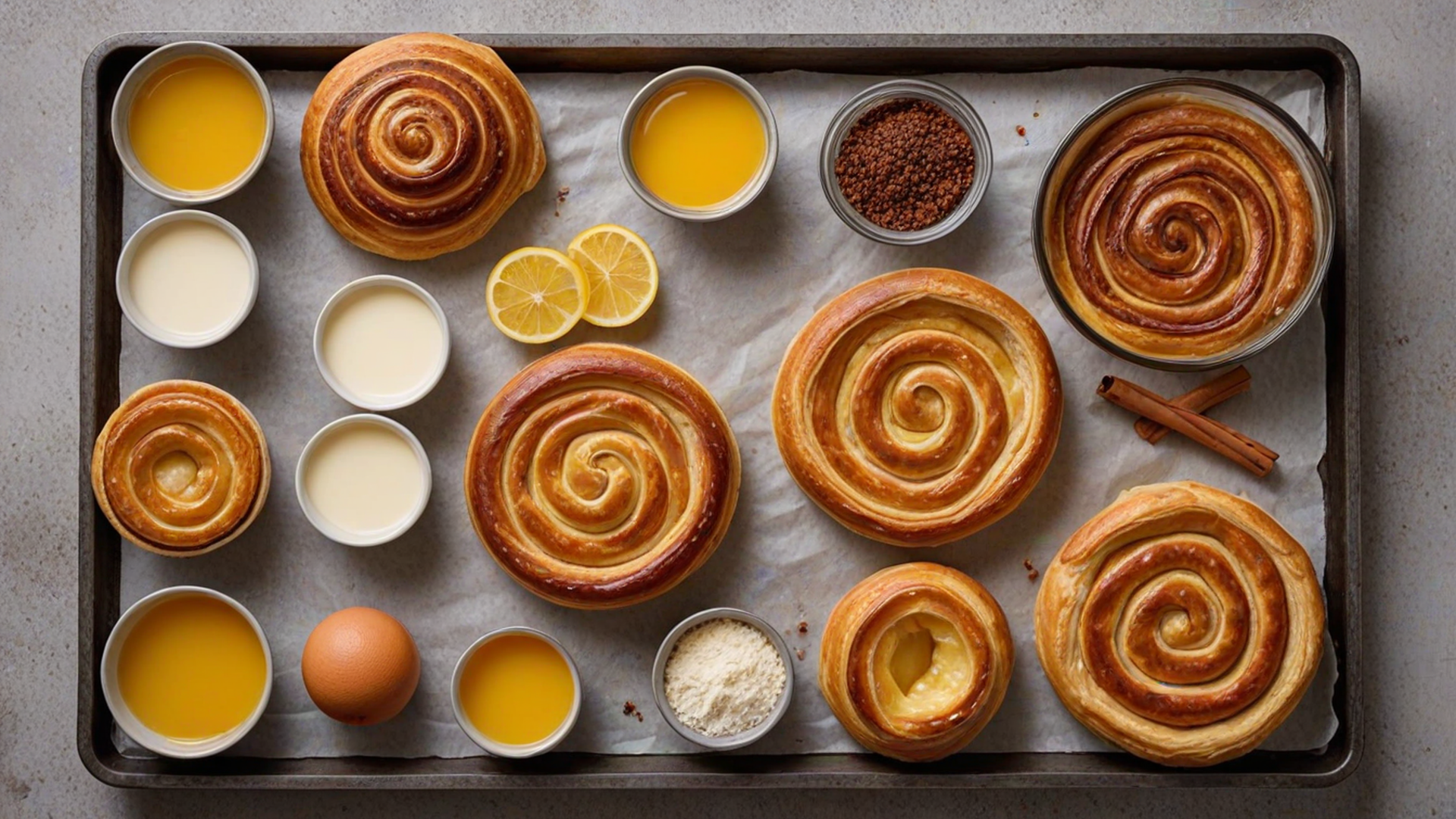
The Spiral Log Technique (Crust Rings): Lay chilled puff pastry flat. Brush with a few drops of water, then roll tightly into a dense, firm spiral cylinder (like a tight cigar). Wrap in plastic and chill for 20 minutes. Slice the log into 12 uniform 3/4-inch (2cm) discs. Slicing exposes the concentric spiral lamination rings.
2
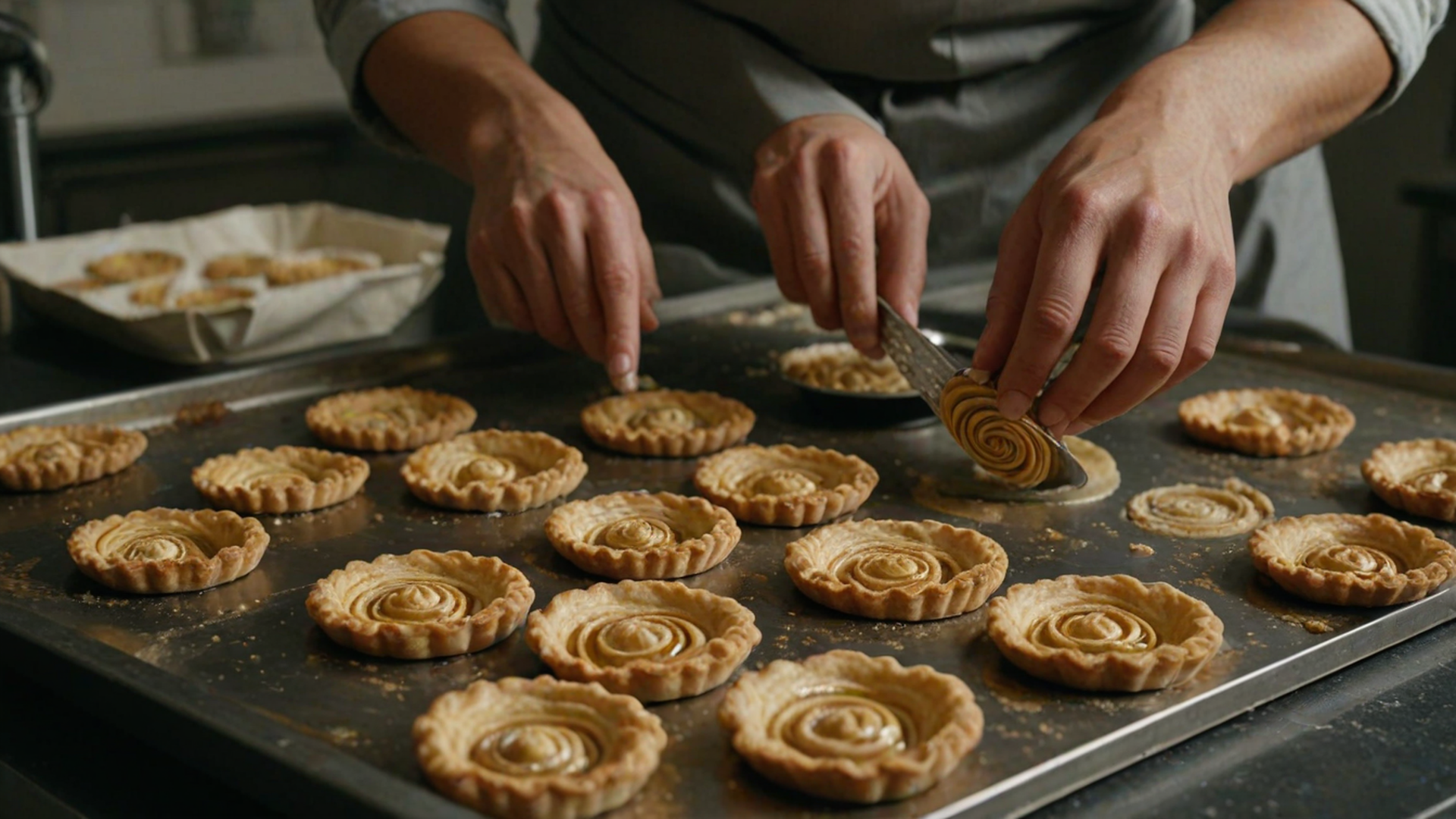
Molding the Tart Shells (The Thumb Press): Place one sliced disc flat into each cavity of a 12-cup metal muffin tin (or traditional flared tin nata molds) with cut spiral face facing up. CRITICAL LISBON TECHNIQUE: Dip thumbs in cold water. Press your thumb firmly into the center of the dough disc, flattening it against the bottom, then swirl and press outward and upward along the sides until the pastry forms a paper-thin cup that extends 2mm above the rim of the mold. The concentric spiral dough rings ensure the bottom stays crispy while the rim blooms into hundreds of flaky tiers.
3
The Starch-Milk Scald Base: In a small saucepan, whisk 1/3 cup flour with 1/4 cup cold milk until a smooth, lump-free paste forms. In a separate saucepan, heat the remaining 1 cup milk to a gentle simmer. Slowly pour the hot milk into the flour paste while whisking continuously over medium heat for 2 minutes until it thickens into a thick, glossy pudding base. Remove from heat.
4
The 100°C Lemon-Cinnamon Sugar Syrup: In a small pot, combine sugar, water, lemon peel, and cinnamon stick. Bring to a boil over medium-high heat without stirring. Boil for exactly 3 to 4 minutes until the syrup reaches the thread stage (100°C - 102°C / 215°F - 220°F). Remove lemon peel and cinnamon stick. Slowly pour the hot syrup into the thickened milk base in a steady stream while whisking continuously. Cool to lukewarm (approx. 45°C / 115°F).
5
Yolk Incorporation & Double Straining: Whisk 6 egg yolks and vanilla extract into the cooled custard base until smooth and bright yellow. Pass the custard through a fine-mesh chinois sieve twice to remove any chalazae or cooked egg strands, guaranteeing a mirror-smooth liquid velvet custard. Pour the custard into the prepared tart shells, filling to 3/4 full (do not overfill or custard will boil over).
6
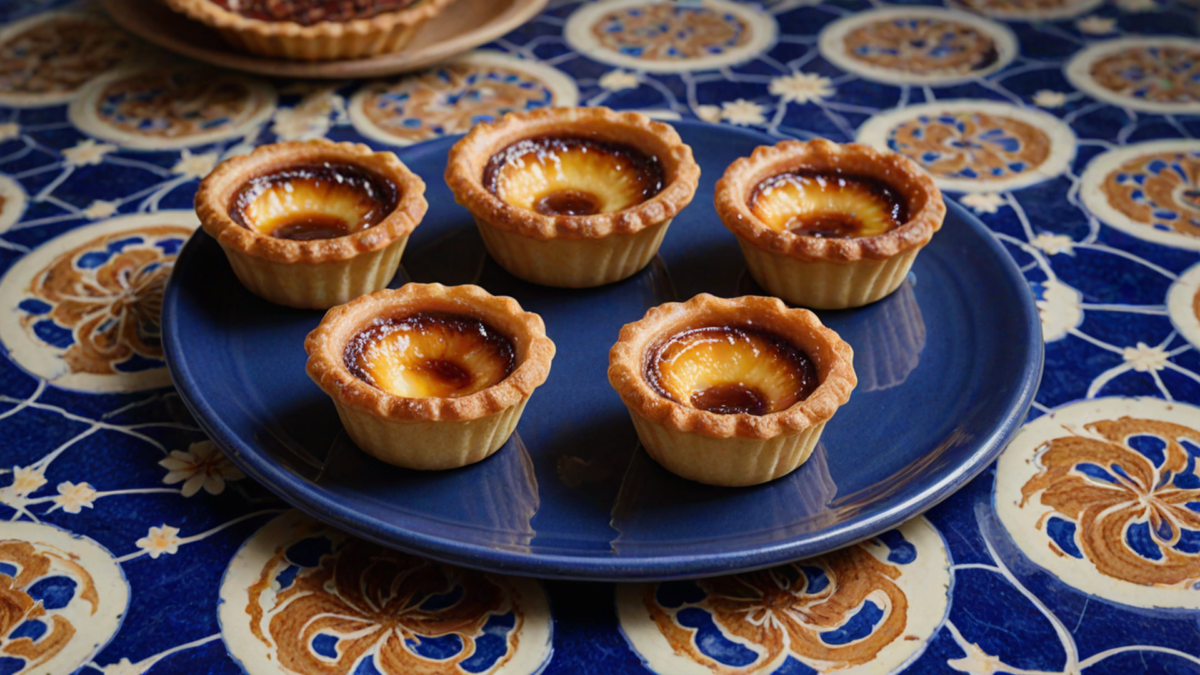
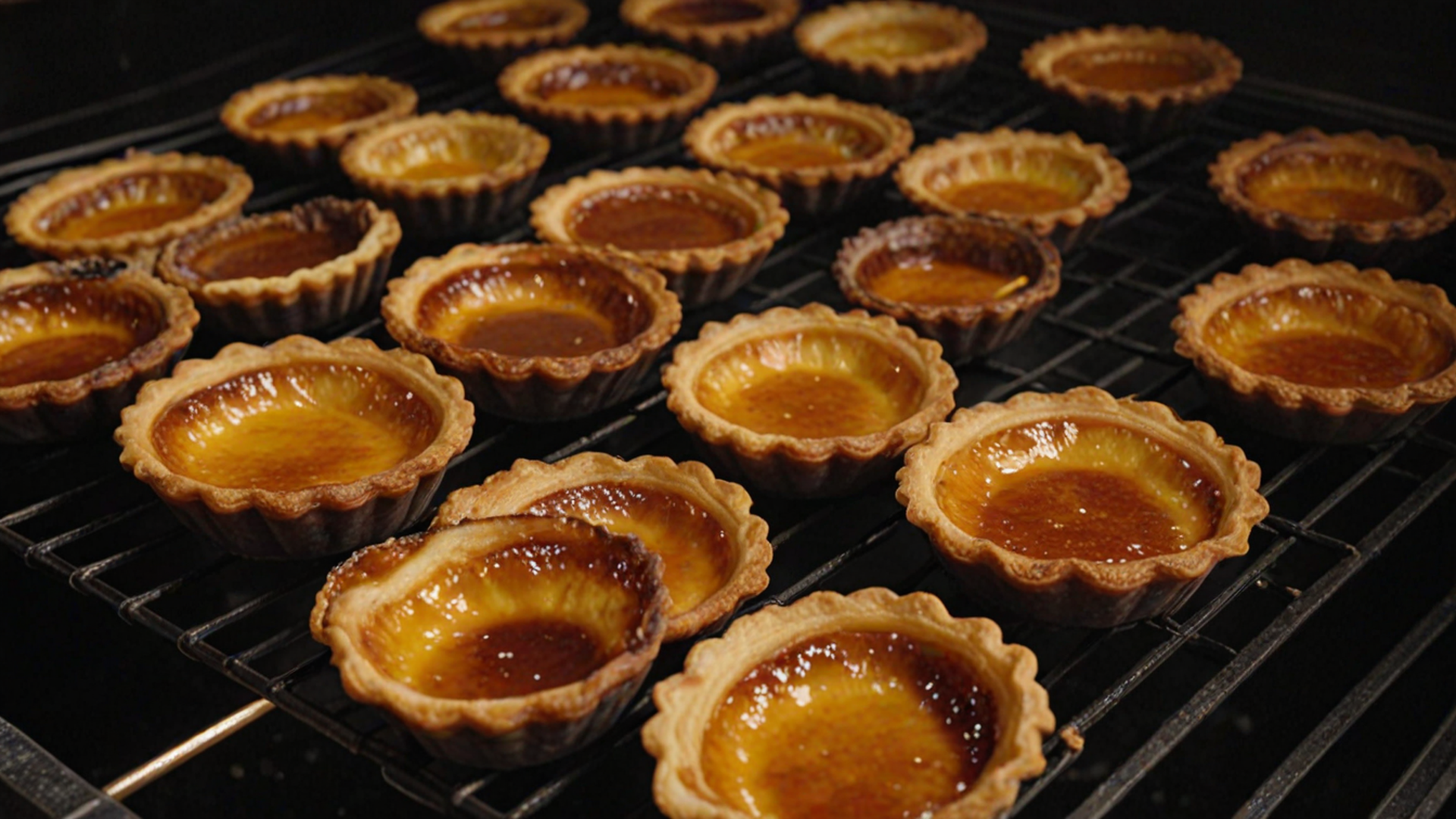
The 260°C - 290°C Blast Furnace Bake: CRITICAL THERMAL LAW: Authentic Pastéis de Nata are baked in commercial ovens at 300°C (575°F). Preheat your home oven to its MAXIMUM temperature (260°C - 290°C / 500°F - 550°F) with a pizza stone on the top rack. Bake the tarts for 10 to 12 minutes on the top rack. The blast of volcanic heat vaporizes butter in the pastry into steam, puffing the dough into crispy blistered layers, while radiant heat caramelizes the surface sugar of the custard into iconic black-brown blistered 'leopard' spots.
7
Cooling & Lisbon Ritual Service: Remove from oven. The custard will be puffed high like a soufflé and will gently settle into a flat, glossy custard as it cools. Cool in the tin for 5 minutes, then transfer to a wire rack. Dust generously with ground cinnamon and powdered sugar. Serve warm while the pastry crust shatters like glass.
The Culinary Science: Why It Works
The baking physics of Pastéis de Nata relies on extreme thermal differential and sugar caramelization. In Belém, Lisbon, bakery ovens operate at 300°C to 350°C. Under this blast furnace heat, water in the butter layers vaporizes into high-pressure steam within 60 seconds, forcing the spiral pastry layers apart into wafer-thin, crisp leaves before butterfat can leak out. Simultaneously, the custard contains a high concentration of sucrose from the cooked sugar syrup: as surface bubbles burst under 280°C heat, surface sugars undergo rapid caramelization and pyrolysis, developing dark mahogany-black blistered patches (resembling roasted crème brûlée) without curdling the underlying egg yolks, which remain soft, wobbly, and custardy.
To bake legendary Portuguese Pastéis de Nata with an audibly crackling spiral pastry shell and a blistered custard crown, roll puff pastry into a tight cigar and slice into spiral discs, thumb-pressing into metal molds to form paper-thin cups. Whisk egg yolks into a scalded milk base enriched with lemon-cinnamon sugar syrup, strain twice for mirror-like silkiness, and bake at the oven’s maximum temperature (260°C – 290°C) until volcanic heat puffs the laminated layers and caramelizes the custard surface into iconic dark leopard blisters.
The baking physics of Pastéis de Nata relies on extreme thermal differential and sugar caramelization. In Belém, Lisbon, bakery ovens operate at 300°C to 350°C. Under this blast furnace heat, water in the butter layers vaporizes into high-pressure steam within 60 seconds, forcing the spiral pastry layers apart into wafer-thin, crisp leaves before butterfat can leak out. Simultaneously, the custard contains a high concentration of sucrose from the cooked sugar syrup: as surface bubbles burst under 280°C heat, surface sugars undergo rapid caramelization and pyrolysis, developing dark mahogany-black blistered patches (resembling roasted crème brûlée) without curdling the underlying egg yolks, which remain soft, wobbly, and custardy.
3. Red Flags & Point of No Return Thresholds
Red Flag
Observable Chemical Phenomenon
Mandatory Chef Action
Soggy Leathery Raw Crust
Baking at low oven temperatures (180°C – 200°C), melting butter into greasy dough
Bake at absolute maximum oven heat (260°C – 290°C / 500°F – 550°F) on top rack with pizza stone
Curdled Scrambled Egg Custard
Whisking egg yolks into the boiling hot milk-syrup mixture
Cool the milk-syrup mixture to lukewarm (45°C) before gently whisking in egg yolks
Custard Boiled Over Pan Rim
Overfilling the tart shells to the top
Fill shells strictly 3/4 full to leave room for the custard to expand like a soufflé during baking
Pale Un-Blistered Yellow Tops
Baking on the middle or bottom oven rack away from top heating elements
Bake on the very top rack directly under the upper broiler/heating element for maximum radiant caramelization
Exposing cut spiral face to the mold bottom allows concentric dough rings to expand and crisp
02
Mold Lining Technique
Thumb dipped in cold water, pressed upward
Rolled with rolling pin
Thumb pressing creates thin bottom and leaves thick, multi-layered spiral rims that puff dramatically
03
Starch Thickener Standard
1/3 cup all-purpose wheat flour
Cornstarch only (turns rubbery)
Flour provides velvety creaminess that stabilizes egg yolks without turning gummy when cooled
04
Sugar Syrup Infusion
Boiled with true Ceylon cinnamon + lemon peel
Plain granulated sugar mixed cold
Pre-boiling syrup to thread stage (100°C) eliminates sugar crystals and infuses citrus aromatics
05
Egg Yolk Concentration
6 large fresh egg yolks (zero egg whites)
Whole eggs (watery, soufflés too high)
Pure yolks provide rich lecithin emulsifier that creates lush, melt-in-the-mouth custard
06
Custard Straining Standard
Strained twice through fine chinois sieve
Left unstrained (lumpy)
Removes any chalazae or cooked flour flecks, guaranteeing a mirror-smooth liquid velvet custard
07
Fill Level Standard
Filled strictly 3/4 full
Filled to top rim (overflows)
Leaves 1/4-inch thermal expansion buffer for custard to puff without spilling over edges
08
Oven Temperature Standard
260°C – 290°C (500°F – 550°F) MAXIMUM
<220°C (pastry turns greasy)
Volcanic heat is non-negotiable to flash-steam pastry layers and blister surface sugars
09
Oven Rack Position
Top rack (closest to upper heating element)
Middle or bottom rack
Maximizes direct radiant heat on top of tarts to create signature dark caramelized blisters
10
Bake Duration Precision
10 to 12 minutes maximum
>15 minutes (curdles custard)
Puffs pastry into shatteringly crisp leaves while keeping interior custard soft and wobbly
11
Surface Blistering Benchmark
50% golden yellow, 50% dark leopard spots
Completely pale yellow
ダーク blistered spots provide bittersweet caramel notes that balance rich egg yolk custard
12
Post-Bake Settlement
Custard settles from dome into flat disc
Collapses into hollow crater
Indicates proper starch-gelatinization balance in the custard base
13
De-Molding Window
5 minutes in pan, then to wire rack
Left in pan until cold
Wire rack allows steam to escape from bottom, preventing condensation from softening the crust
14
Service Temperature Standard
Warm (approx. 40°C / 105°F)
Ice-cold from refrigerator
Warm temperature enhances puff pastry flakiness and keeps custard silky and fluid
15
Lisbon Ritual Dusting
Ground cinnamon + powdered sugar at table
Pre-dusted in kitchen
Diners dust fresh cinnamon to taste, inhaling aromatic warm spice with every hot bite
5. Step-by-Step Culinary Action Protocol & Process Photography
For scalable ingredient proportions, custom serving calculations, and interactive step check-offs, use the recipe card at the top of this guide. Below is the photographic documentation and culinary physics breakdown for each critical phase.
Phase 1: Precision Mise en Place & Chemical Ratio Balance — All raw lipids, aromatics, and structural starches assembled at room temperature to ensure rapid thermal equilibrium.Phase 2: Mechanical Manipulation & Structural 開発 — Active dough folding, protein emulsion, or cell wall breakdown to establish the dish’s fundamental architectural matrix.Phase 3: Thermal Transformation & Maillard Kinetics — Controlled heat transfer driving gelatinization, lipid rendering, and surface browning within the validated temperature window.
6. Dangerous Common Pitfalls & Disastrous Mistakes
Error 1: Baking at ordinary baking temperatures (180°C / 350°F): At normal temperatures, the butter melts out of the pastry before it can puff, leaving you with greasy, pale, soggy tart shells; crank your oven to its absolute highest limit.
Error 2: Adding egg yolks to boiling hot syrup: Boiling syrup will instantly scramble the egg yolks into sweet omelet bits; let the milk-syrup base cool to warm before adding yolks.
Error 3: Cutting the pastry with a cookie cutter: Traditional nata pastry must be rolled into a spiral log and sliced into discs so the spiral edges sit on the bottom and puff outward; cookie-cut pastry shrinks and becomes soggy.
Error 4: Eating cold out of the fridge: Pastéis de Nata are designed to be eaten warm on the day they are baked; reheat for 3 minutes in a hot oven to recrisp the shell before eating.
Thermocouple Calibration: Always verify internal core meat, fish, and custard temperatures with a calibrated instant-read digital probe thermometer.
Thermal & Splatter Protection: Handle boiling baths, smoking charcoal grills, and spitting frying oil using heavy silicone-lined heatproof mitts.
Storage & Bacterial Safety: Cool all high-protein dishes rapidly and refrigerate below 4°C (39°F) for up to 3 days, or freeze for up to 3 months.
8. Frequently Asked Questions (FAQ)
Q1: Where did Pastéis de Nata originate?
They were invented before the 18th century by Catholic monks at the Jerónimos Monastery in Belém, Lisbon. Monks used large quantities of egg whites to starch religious habits and clarify wines, leaving leftover egg yolks that were transformed into these legendary custard tarts.
Q2: Why are there dark burnt-looking spots on top?
Those dark spots are intentional and essential! Known as ‘leopard spotting,’ they are caramelized sugar blisters created by intense 280°C heat, providing a toasted caramel contrast to the sweet custard.
Q3: What molds should I use?
Traditional shallow, flared metal nata tins are best. A standard 12-cup metal muffin tin works exceptionally well in home kitchens. Avoid silicone molds (silicone does not conduct high heat fast enough to crisp pastry).
Q4: Can Pastéis de Nata be reheated?
Yes! Reheat in an oven or toaster oven at 200°C (400°F) for 4 to 5 minutes to restore the glass-like crunch of the pastry. Never microwave!
Q5: How do you eat Pastéis de Nata like a local in Lisbon?
Locals eat them warm from the bakery counter dusted generously with ground cinnamon and powdered sugar, accompanied by a strong shot of dark Portuguese espresso (Bica).
Q6: Can I use store-bought puff pastry?
Yes! High-quality all-butter frozen puff pastry works wonderfully. Thaw in the refrigerator, roll tightly into a spiral log, slice into discs, and mold with your thumbs.
9. 用語集 of 5 Essential Culinary Science Terms
Pastel de Nata: The singular form of Portugal’s iconic egg custard tart (plural: Pastéis de Nata), celebrated globally for its flaky spiral shell and blistered crown.
Puff Pastry Spiral Log: The traditional Portuguese shaping technique where laminated dough is rolled like a cigar and sliced into discs to expose concentric layers.
Leopard Spotting: The desirable dark caramelized blisters formed on the custard surface under extreme top radiant heat.
Thread Stage: A candy-making stage (approx. 100°C – 104°F) where sugar syrup forms loose, pliable threads when dropped into cold water.
Bica: The traditional Lisbon espresso coffee, intense and dark, traditionally paired with warm Pastéis de Nata.
10. Organic Network Links & Community フォーラム Hub
Join the precision culinary science discussion at the RecipeTips Community フォーラム. Exchange thermodynamic triage data, troubleshoot emulsion failures, and share kitchen experiment results with fellow culinary scientists and passionate home cooks in our dedicated lounges.