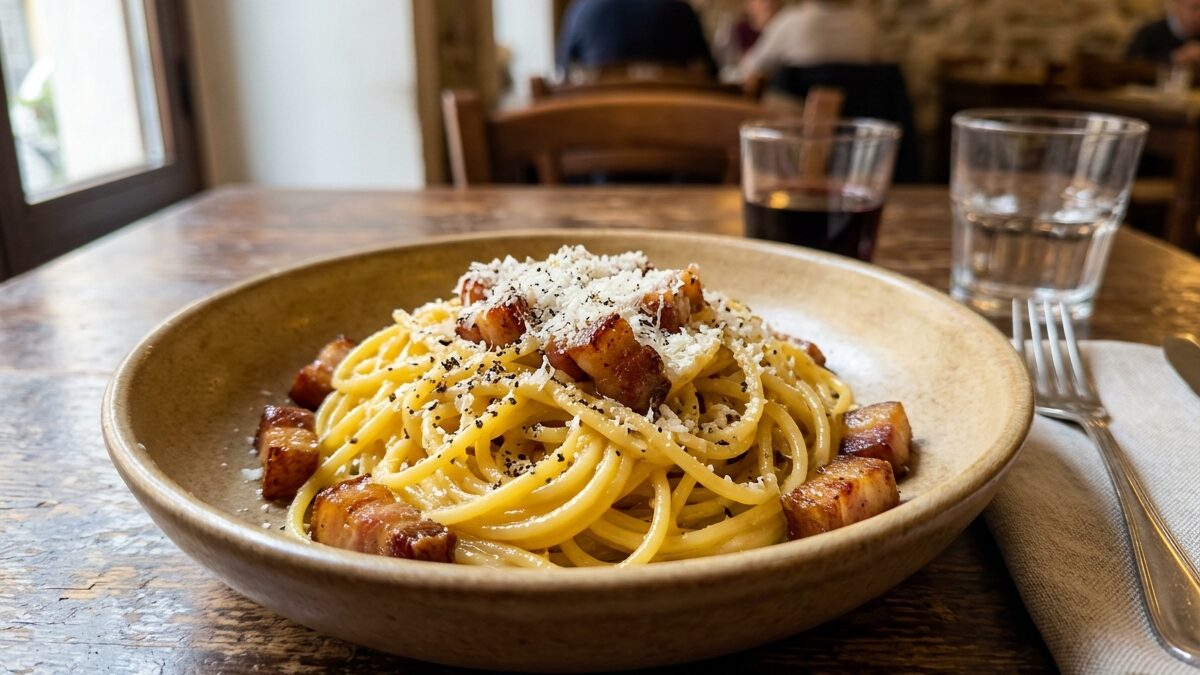
Authentic Roman Spaghetti alla Carbonara: Emulsion Science & The Zero-Cream Rule
Learn how to make authentic Roman Spaghetti alla Carbonara with zero cream. Our kitchen science breakdown explains the exact starch-to-fat emulsion ratio for an ultra-glossy, lump-free sauce.
A true Carbonara sauce is not cooked; it is an emulsion created off the heat. Starch suspended in salty boiling pasta water acts as a surfactant, binding the hydrophobic rendered fat of cured pork jowl (guanciale) with the hydrophilic proteins of raw egg yolks and Pecorino Romano. The pan residual heat must remain below 68°C (155°F) when folding the egg mixture; exceeding this threshold permanently denatures ovalbumin, transforming your silky cream into scrambled eggs.
Step-by-Step Instructions
1
Slice the guanciale into 1/4-inch (6mm) thick matchsticks. Place them into a cold stainless steel or heavy skillet over medium-low heat. Slowly render the pork fat for 8-10 minutes until the exterior is deeply crisp and golden while the interior stays tender. Remove from heat and reserve the rendered liquid liquid fat.
2
Toast the coarse black pepper in a dry pan for 60 seconds until fragrant. In a heatproof ceramic bowl, whisk together the 4 egg yolks, 1 whole egg, 80g finely grated Pecorino Romano, and toasted black pepper into a thick paste (the "carbocream"). Slowly whisk in 2 tablespoons of warm rendered pork fat.
3
Bring 4 liters of water to a rolling boil with 15g salt (slightly less salty than usual, as Pecorino and guanciale are naturally salty). Cook the bronze-cut spaghetti until 2 minutes shy of al dente.
4
Transfer the pasta directly into the warm skillet with the crispy guanciale, adding 1/2 cup (120ml) of starchy pasta water. Toss vigorously over medium heat for 60 seconds so the starch and pork fat begin to marry.
5
CRITICAL STEP (OFF HEAT): Remove the pan completely from the stove burner and let rest for 30 seconds to drop the skillet temperature below 65°C (150°F). Pour in the egg and cheese mixture while tossing and swirling continuously.
6
Keep tossing vigorously as the residual heat melts the cheese and emulsifies with the starchy water into a lustrous, velvety glossy coating. Plate immediately and finish with crispy guanciale on top and fresh cracked pepper.
Learn how to make authentic Roman Spaghetti alla Carbonara with zero cream. Our kitchen science breakdown explains the exact starch-to-fat emulsion ratio for an ultra-glossy, lump-free sauce.
A true Carbonara sauce is not cooked; it is an emulsion created off the heat. Starch suspended in salty boiling pasta water acts as a surfactant, binding the hydrophobic rendered fat of cured pork jowl (guanciale) with the hydrophilic proteins of raw egg yolks and Pecorino Romano. The pan residual heat must remain below 68°C (155°F) when folding the egg mixture; exceeding this threshold permanently denatures ovalbumin, transforming your silky cream into scrambled eggs.
Step-by-Step Culinary Protocol
Slice the guanciale into 1/4-inch (6mm) thick matchsticks. Place them into a cold stainless steel or heavy skillet over medium-low heat. Slowly render the pork fat for 8-10 minutes until the exterior is deeply crisp and golden while the interior stays tender. Remove from heat and reserve the rendered liquid liquid fat.
Toast the coarse black pepper in a dry pan for 60 seconds until fragrant. In a heatproof ceramic bowl, whisk together the 4 egg yolks, 1 whole egg, 80g finely grated Pecorino Romano, and toasted black pepper into a thick paste (the “carbocream”). Slowly whisk in 2 tablespoons of warm rendered pork fat.
Bring 4 liters of water to a rolling boil with 15g salt (slightly less salty than usual, as Pecorino and guanciale are naturally salty). Cook the bronze-cut spaghetti until 2 minutes shy of al dente.
Transfer the pasta directly into the warm skillet with the crispy guanciale, adding 1/2 cup (120ml) of starchy pasta water. Toss vigorously over medium heat for 60 seconds so the starch and pork fat begin to marry.
CRITICAL STEP (OFF HEAT): Remove the pan completely from the stove burner and let rest for 30 seconds to drop the skillet temperature below 65°C (150°F). Pour in the egg and cheese mixture while tossing and swirling continuously.
Keep tossing vigorously as the residual heat melts the cheese and emulsifies with the starchy water into a lustrous, velvety glossy coating. Plate immediately and finish with crispy guanciale on top and fresh cracked pepper.