Find a little inspiration for your next meal.All Recipes ↗
Recipes
Authentic Spanish Gambas al Ajillo: Cold-Oil Garlic Confit, Chili Oleoresin & Flash-Poached Prawns
🌐 Εμφανίζεται η αρχική γλώσσα Αυτό το άρθρο δεν έχει μεταφραστεί ακόμα στα ελληνικά. Βλέπετε την αρχική έκδοση. 1. Immediate 3-Sentence Action Protocol & Provenance To cook authentic Spanish Gambas al Ajillo with succulent, tender prawns and an intoxicating garlic-chili oil, infuse sliced garlic chips into cold extra virgin olive oil over gentle heat until […]
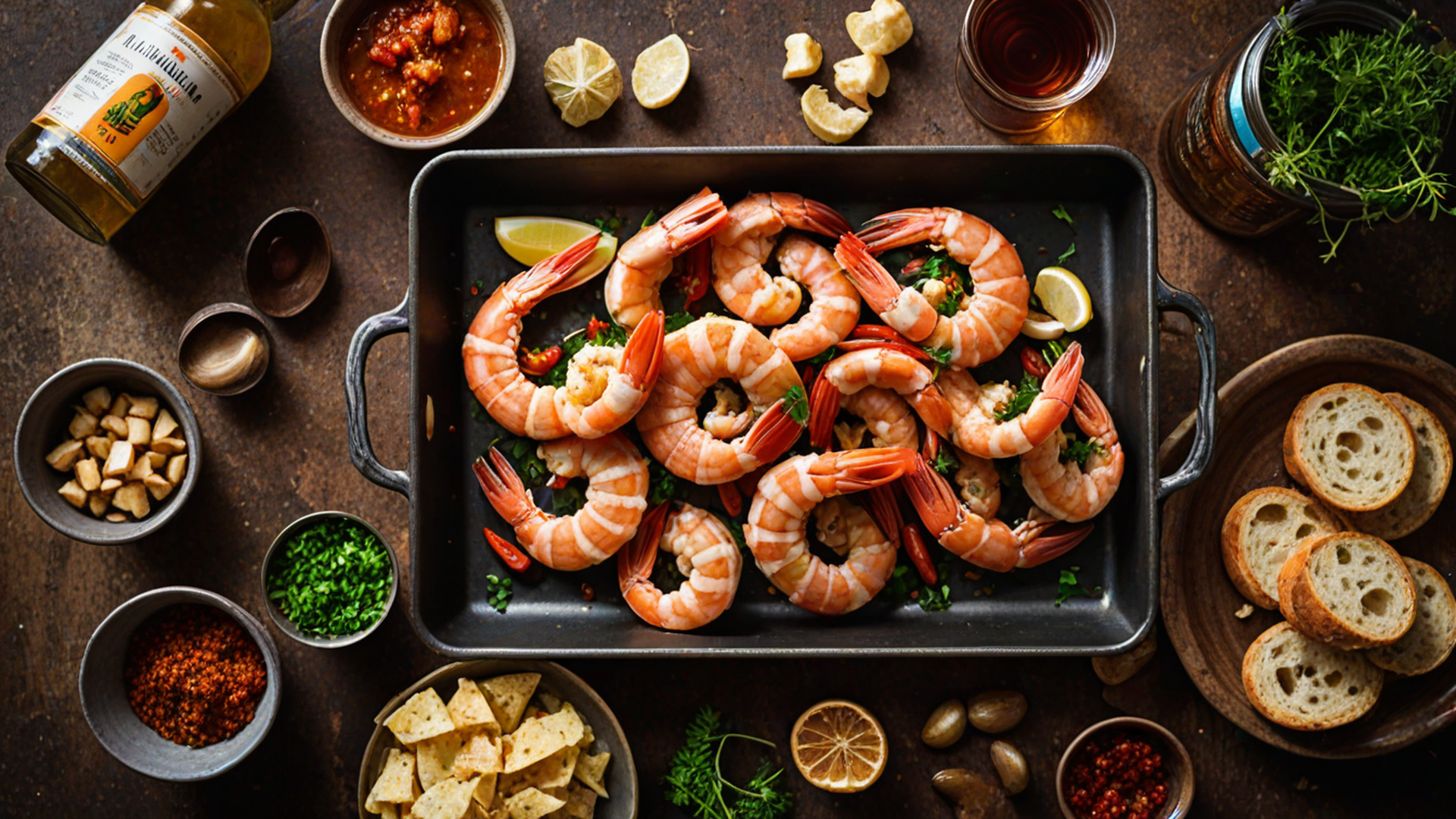
Prawn Salting & Surface Moisture Control: Toss peeled, deveined prawns with 1/2 tsp flaky sea salt and let rest on a paper-towel-lined plate for 10 minutes. Blot thoroughly dry. Salting draws out surface moisture and plumps the prawn muscle fibers, ensuring they sear and snap rather than boil in their own juices.
2
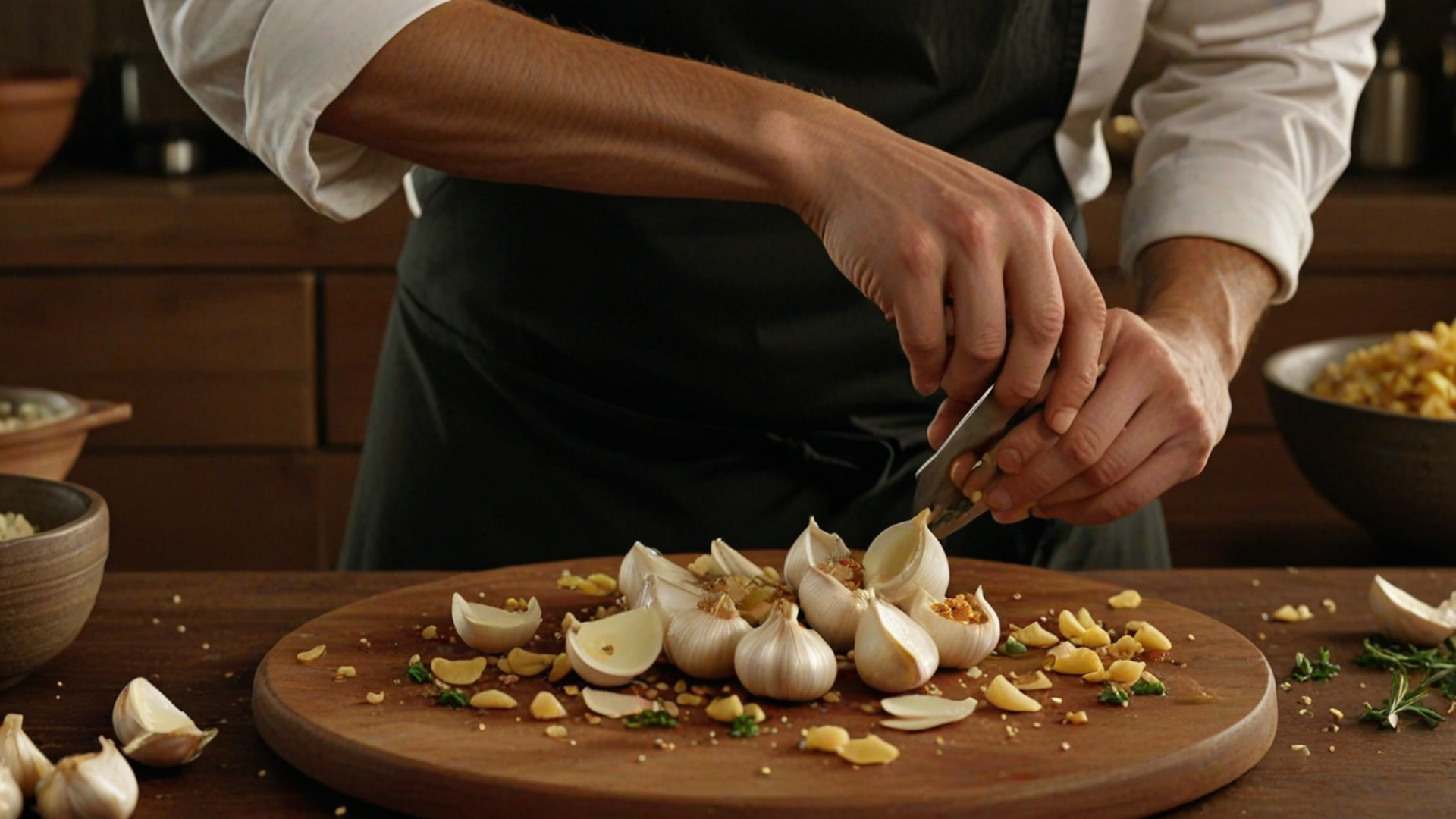
The Cold-Oil Garlic Infusion (Confit Infusion): In a traditional Spanish earthenware cazuela or heavy 10-inch skillet, add 1/2 cup extra virgin olive oil and paper-thin sliced garlic chips into the COLD pan. Turn heat to medium-low. Slowly warm the oil over 3 to 4 minutes: heating garlic from cold oil gently cooks the garlic, extracting allium essential oils into the olive oil without burning the delicate chips. When garlic begins to sizzle gently, add the dried red chili rings.
3
The Blonde Garlic Golden Window: Watch the garlic chips meticulously: as soon as they turn pale straw-blonde and fragrant (approx. 2 minutes of gentle sizzling), slide the prawns into the cazuela in a single uncrowded layer. Do NOT let the garlic turn dark brown—burnt garlic turns irreversibly bitter and ruins the entire olive oil bath.
4
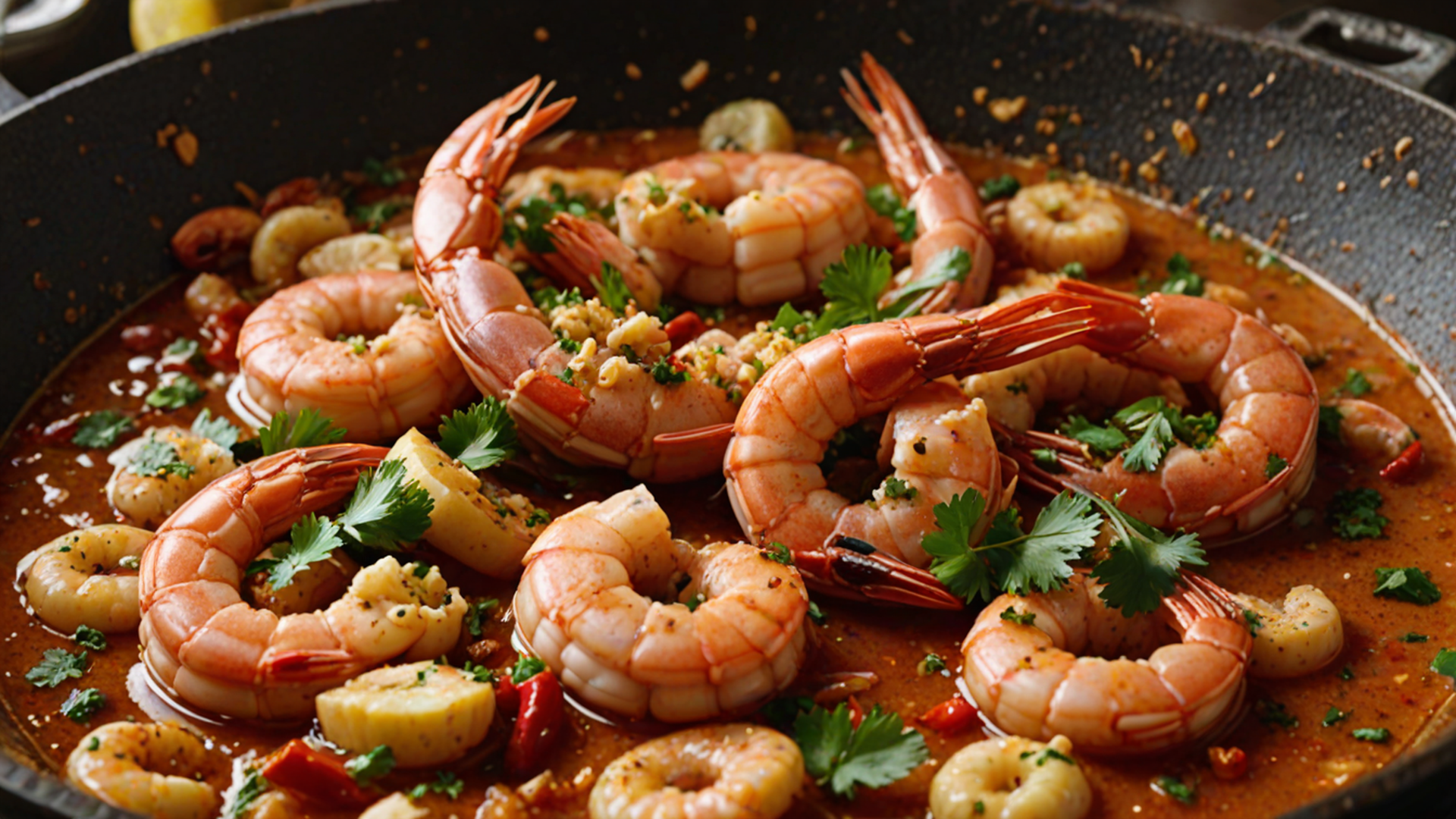
The High-Heat Flash Poach: Increase heat to medium-high. Cook prawns undisturbed for 90 seconds until the underside turns opaque coral-pink. Flip each prawn using tongs and cook for another 60 to 90 seconds. The prawns should just curl into loose 'C' shapes with glossy, translucent centers (internal 60°C / 140°F).
5
Sherry Deglazing & Paprika Bloom: Splash in 2 tablespoons dry Fino Sherry and sprinkle sweet smoked paprika. The sherry hits the hot oil, sizzling violently and emulsifying slightly with the prawn juices and olive oil to create a rich, savory pan sauce. Cook for 30 seconds to evaporate raw alcohol.
6
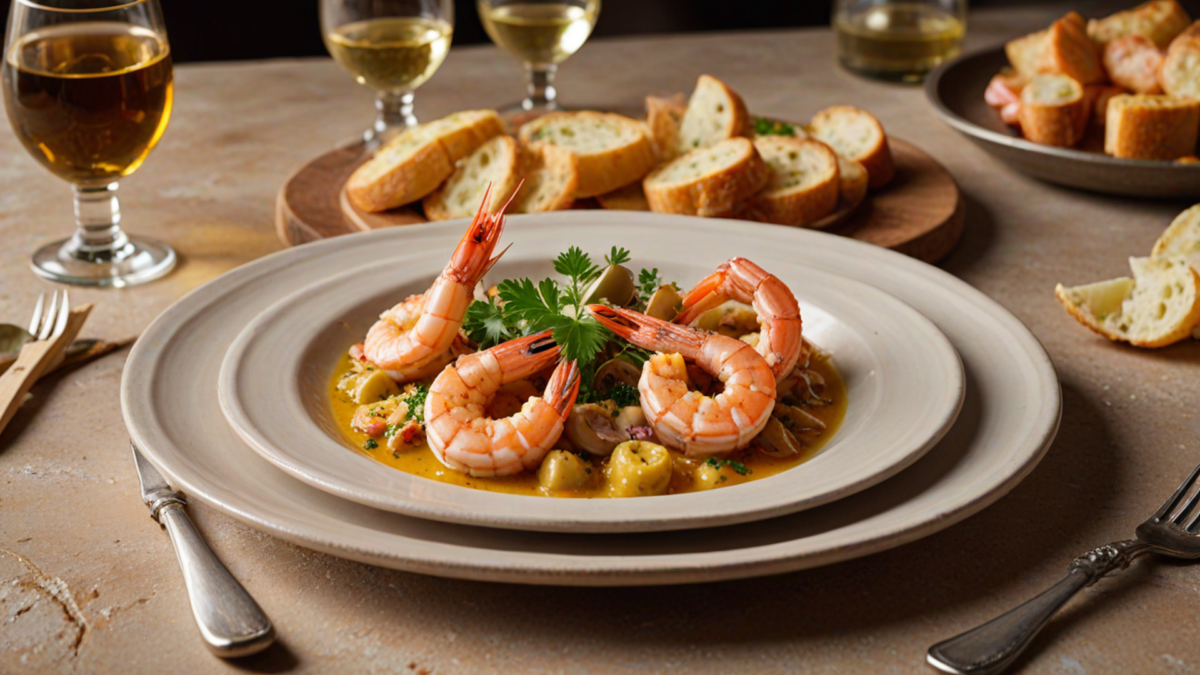
Sizzling Cazuela Table Service: Remove the cazuela from heat immediately. Stir in fresh chopped flat-leaf parsley. The heavy clay cazuela stores immense thermal energy and will continue to bubble and sizzle dramatically at the table for 2 full minutes. Serve immediately alongside towering slices of warm crusty bread. Diners spear succulent prawns and plunge crusty bread deep into the bubbling, chili-garlic olive oil.
The Culinary Science: Why It Works
The culinary science of Gambas al Ajillo is governed by low-temperature allicin extraction and lipid poaching kinetics. Garlic contains alliin and the enzyme alliinase, which produce allicin upon slicing. When garlic is dropped into hot 180°C oil, surface moisture flashes off violently, burning sulfur compounds into acrid, bitter carbon. Starting garlic in cold olive oil allows gentle convective warming below 130°C: water evaporates smoothly while fat-soluble sulfur and allium aromatics dissolve into the olive oil matrix. Crucially, shrimp are composed of delicate actin and myosin proteins that contract and squeeze out water above 65°C, turning rubbery. Poaching in 140°C olive oil transfers heat gently, cooking the prawns into tender, juicy gems in under two minutes while prawn surface juices and Fino Sherry form a temporary micro-emulsion with the olive oil.
To cook authentic Spanish Gambas al Ajillo with succulent, tender prawns and an intoxicating garlic-chili oil, infuse sliced garlic chips into cold extra virgin olive oil over gentle heat until pale golden. Flash-poach large wild prawns for barely two minutes until coral-pink, splash with dry Fino Sherry and smoked paprika, and serve sputtering hot in a traditional clay cazuela alongside crusty Spanish bread to sop up the golden nectar.
The culinary science of Gambas al Ajillo is governed by low-temperature allicin extraction and lipid poaching kinetics. Garlic contains alliin and the enzyme alliinase, which produce allicin upon slicing. When garlic is dropped into hot 180°C oil, surface moisture flashes off violently, burning sulfur compounds into acrid, bitter carbon. Starting garlic in cold olive oil allows gentle convective warming below 130°C: water evaporates smoothly while fat-soluble sulfur and allium aromatics dissolve into the olive oil matrix. Crucially, shrimp are composed of delicate actin and myosin proteins that contract and squeeze out water above 65°C, turning rubbery. Poaching in 140°C olive oil transfers heat gently, cooking the prawns into tender, juicy gems in under two minutes while prawn surface juices and Fino Sherry form a temporary micro-emulsion with the olive oil.
3. Red Flags & Point of No Return Thresholds
Red Flag
Observable Chemical Phenomenon
Mandatory Chef Action
Bitter Acrid Burnt Garlic
Dropping sliced garlic into smoking-hot oil, scorching garlic chips black within seconds
Always start garlic in COLD olive oil; gently warm until straw-blonde, never dark brown
Rubbery Overcooked Shriveled Shrimp
Cooking shrimp for 5 to 6 minutes until they curl into tight little rubber balls
Cook prawns for only 90 seconds per side; pull off heat while they are in a loose ‘C’ shape
Watery Oil That Splatters Violently
Adding wet, dripping un-dried shrimp straight from the sink into hot oil
Blot shrimp bone-dry with paper towels before cooking to prevent watery splatters
Bland Oil with No Kick
Using old, stale olive oil or omitting the dried red chili rings
Use premium Spanish extra virgin olive oil and dried red Guindilla chilies to extract spicy oleoresins
Large wild prawns deliver sweet, firm snap and oceanic umami that infuses the oil
02
Garlic Slicing Precision
Paper-thin translucent chips (1mm)
Minced into tiny paste
Paper-thin chips cook evenly into crispy golden slivers without burning
03
Garlic Infusion Method
Started in COLD olive oil over medium-low heat
Dropped into screaming-hot oil
Extracts garlic allicin smoothly into the oil without scorching bitter sulfur compounds
04
Oil Quality Standard
Spanish extra virgin olive oil (Picual/Arbequina)
Canola oil / vegetable oil
Olive oil is 50% of the dish; its peppery, fruity notes form the dipping sauce for bread
05
Chili Heat Component
Dried red Guindilla or bird’s eye chilies
Chili powder / hot sauce
Whole dried chilies infuse spicy oleoresin into the hot oil without clouding its clarity
06
Shrimp Surface Moisture
Blotted bone-dry with paper towels
Wet dripping shrimp
Dry surface allows immediate contact with hot oil, searing and locking in juices
07
Shrimp Cooking Temperature
Medium-high heat (140°C – 150°C)
Low simmer (boils shrimp)
Quick high-heat poaching cooks meat through before moisture can leach out
08
Shrimp Cooking Duration
90 seconds side 1 + 60 seconds side 2
>4 minutes (turns rubbery)
Prawns must curl into a loose ‘C’ shape with juicy, sweet, snapping bite
09
Deglazing Spirit Standard
Dry Spanish Fino Sherry or dry white wine
Sweet wine / water
Fino Sherry acidity emulsifies with shrimp juices and olive oil, adding complex nutty notes
10
Smoked Paprika Standard
Pimentón de la Vera (dulce / sweet smoked)
Standard supermarket paprika
Smoked oak paprika adds amber-red color and rich wood-smoke depth to the sauce
11
Cooking Vessel Tradition
Authentic terracotta earthenware cazuela
Thin aluminum non-stick skillet
Clay cazuela retains intense heat, keeping the dish bubbling and sizzling at the table
12
Fresh Herb Incorporation
Finely chopped fresh flat-leaf parsley off-heat
Dried parsley cooked in oil
Fresh parsley adds green chlorophyll freshness and cuts through rich warm olive oil
13
Salt Dispersion Standard
Pre-salted on raw shrimp + flaky sea salt finish
Unsalted / heavily salted
Pre-salting plumps shrimp muscle; flaky salt provides pleasant crunchy salinity
14
Service Thermal Sizzle
Served bubbling and sputtering at the table
Lukewarm on plate
The theatrical sizzle and volcanic garlic aroma are hallmarks of authentic Spanish tapas bars
15
Bread Accompaniment
Thick slices of crusty artisan bread (pan rústico)
Soft sliced sandwich bread
Crusty bread is mandatory; dipping bread into the garlic-chili oil is the true soul of the dish
5. Step-by-Step Culinary Action Protocol & Process Photography
For scalable ingredient proportions, custom serving calculations, and interactive step check-offs, use the recipe card at the top of this guide. Below is the photographic documentation and culinary physics breakdown for each critical phase.
Phase 1: Precision Mise en Place & Chemical Ratio Balance — All raw lipids, aromatics, and structural starches assembled at room temperature to ensure rapid thermal equilibrium.Phase 2: Mechanical Manipulation & Structural Ανάπτυξη — Active dough folding, protein emulsion, or cell wall breakdown to establish the dish’s fundamental architectural matrix.Phase 3: Thermal Transformation & Maillard Kinetics — Controlled heat transfer driving gelatinization, lipid rendering, and surface browning within the validated temperature window.
6. Dangerous Common Pitfalls & Disastrous Mistakes
Error 1: Dropping garlic into screaming-hot oil: Hot oil burns garlic chips black in 10 seconds, turning your expensive extra virgin olive oil into bitter, acrid garbage; always start garlic in cold oil.
Error 2: Using pre-cooked frozen shrimp: Pre-cooked shrimp will turn into rubbery, tasteless erasers; you must use raw wild shrimp for sweet flavor and succulent texture.
Error 3: Overcooking the shrimp: As soon as the shrimp turn pink and curl into a ‘C’ shape, take the pan off the heat! The hot earthenware cazuela will continue cooking the shrimp for another two minutes.
Error 4: Skimping on the olive oil: Gambas al ajillo is not stir-fried shrimp; it is shrimp poached in a deep bath of garlic-infused olive oil. The oil is meant to be dunked with crusty bread.
Thermocouple Calibration: Always verify internal core meat, fish, and custard temperatures with a calibrated instant-read digital probe thermometer.
Thermal & Splatter Protection: Handle boiling baths, smoking charcoal grills, and spitting frying oil using heavy silicone-lined heatproof mitts.
Storage & Bacterial Safety: Cool all high-protein dishes rapidly and refrigerate below 4°C (39°F) for up to 3 days, or freeze for up to 3 months.
8. Frequently Asked Questions (FAQ)
Q1: Why is Gambas al Ajillo served in an earthenware dish (cazuela)?
Traditional glazed terracotta cazuelas hold heat five times longer than metal pans. The dish is brought to the table boiling and sizzling dramatically, keeping the shrimp piping hot while you dip bread.
Q2: What does ‘C-shape’ versus ‘O-shape’ mean in shrimp cooking?
A famous culinary rule: When shrimp curl into a loose ‘C’ shape, they are perfectly Cooked. When they curl into a tight circle like an ‘O’, they are Overcooked and rubbery!
Q3: What kind of bread should I serve with this?
A crusty European baguette, sourdough loaf, or traditional Spanish pan rústico with a crisp crust and open, airy crumb designed for soaking up rich garlic oil.
Q4: Can I make Gambas al Ajillo in a regular stainless steel or cast iron skillet?
Yes! A small cast-iron skillet or heavy stainless steel pan works wonderfully and replicates the heat retention of a clay cazuela.
Q5: What is Fino Sherry?
Fino Sherry is a bone-dry, pale, crisp fortified wine from Jerez, Spain. A splash adds bright acidity and nutty complexity that ties the shrimp and garlic together.
Q6: How spicy is authentic Gambas al Ajillo?
It has a mild to moderate warmth. The dried red chilies infuse the oil with fragrant warmth without the fiery, tongue-numbing burn of fresh hot peppers.
9. Γλωσσάρι of 5 Essential Culinary Science Terms
Cazuela: A traditional Spanish glazed earthenware clay cooking dish that retains high heat and is used for cooking and serving tapas.
Pimentón de la Vera: Authentic Spanish paprika made from smoke-dried peppers ground into a fine crimson powder with intense wood-char aroma.
Fino Sherry: A very dry, light, fortified Spanish white wine aged under a protective yeast cap (flor) in Jerez, Spain.
Oleoresin: The naturally occurring mixture of essential oil and resin found in dried chili peppers that dissolves into hot olive oil.
Allicin: The potent organosulfur compound formed when fresh garlic cells are sliced, responsible for fresh garlic aroma and flavor.
10. Organic Network Links & Community Φόρουμ Hub
Join the precision culinary science discussion at the RecipeTips Community Φόρουμ. Exchange thermodynamic triage data, troubleshoot emulsion failures, and share kitchen experiment results with fellow culinary scientists and passionate home cooks in our dedicated lounges.