🌐 Limba originală afișată Acest articol nu a fost încă tradus în română. Vizualizați versiunea originală. 1. Immediate 3-Sentence Action Protocol & Provenance To construct the pinnacle of French classical pastry—the iconic Mille-Feuille (Napoleon)—compress all-butter puff pastry between two heavy baking sheets at 195°C (385°F) to restrict vertical puffing into dense, razor-thin tiers. Dust with […]
Vanilla Pastry Cream (Crème Pâtissière) Foundation: In a saucepan, bring milk, scraped vanilla bean seeds, and pod to a simmer. In a bowl, whisk egg yolks, granulated sugar, and cornstarch until pale and smooth. Slowly temper one-third of the hot milk into the egg mixture while whisking. Pour back into the saucepan and cook over medium heat, whisking vigorously. As cornstarch gelatinizes, the cream will bubble and thicken into a dense, velvety custard (approx. 2 minutes of active boiling to deactivate starch-splitting amylase enzymes). Remove from heat, discard vanilla pod, whisk in cold butter cubes until glossy, press plastic wrap directly onto surface, and chill at 3°C for at least 3 hours.
2
Diplomat Cream Lightening (Crème Diplomate): Once pastry cream is cold and set, beat with a whisk for 30 seconds to loosen its structure. In a separate chilled bowl, whip 1/2 cup cold heavy cream until stiff peaks form. Gently fold the whipped cream into the pastry cream in two additions using a silicone spatula. The resulting Crème Diplomate is light, luxurious, pipeable, and holds sharp edges without weeping. Transfer to a piping bag fitted with a 1/2-inch round or star tip.
3
Compressed Puff Pastry Baking Protocol: Preheat oven to 195°C (385°F). Place the rolled 2mm puff pastry sheet onto a parchment-lined baking sheet. Prick (dock) the entire surface thoroughly with a fork at 1/2-inch intervals. Place a second sheet of parchment paper directly on top of the dough, followed by a second heavy baking sheet placed on top. Baking between two compressed sheets limits vertical puff: instead of blowing up into an uncontrolled 2-inch mountain, the pastry expands horizontally into compact, wafer-thin, razor-crisp alternating layers.
4
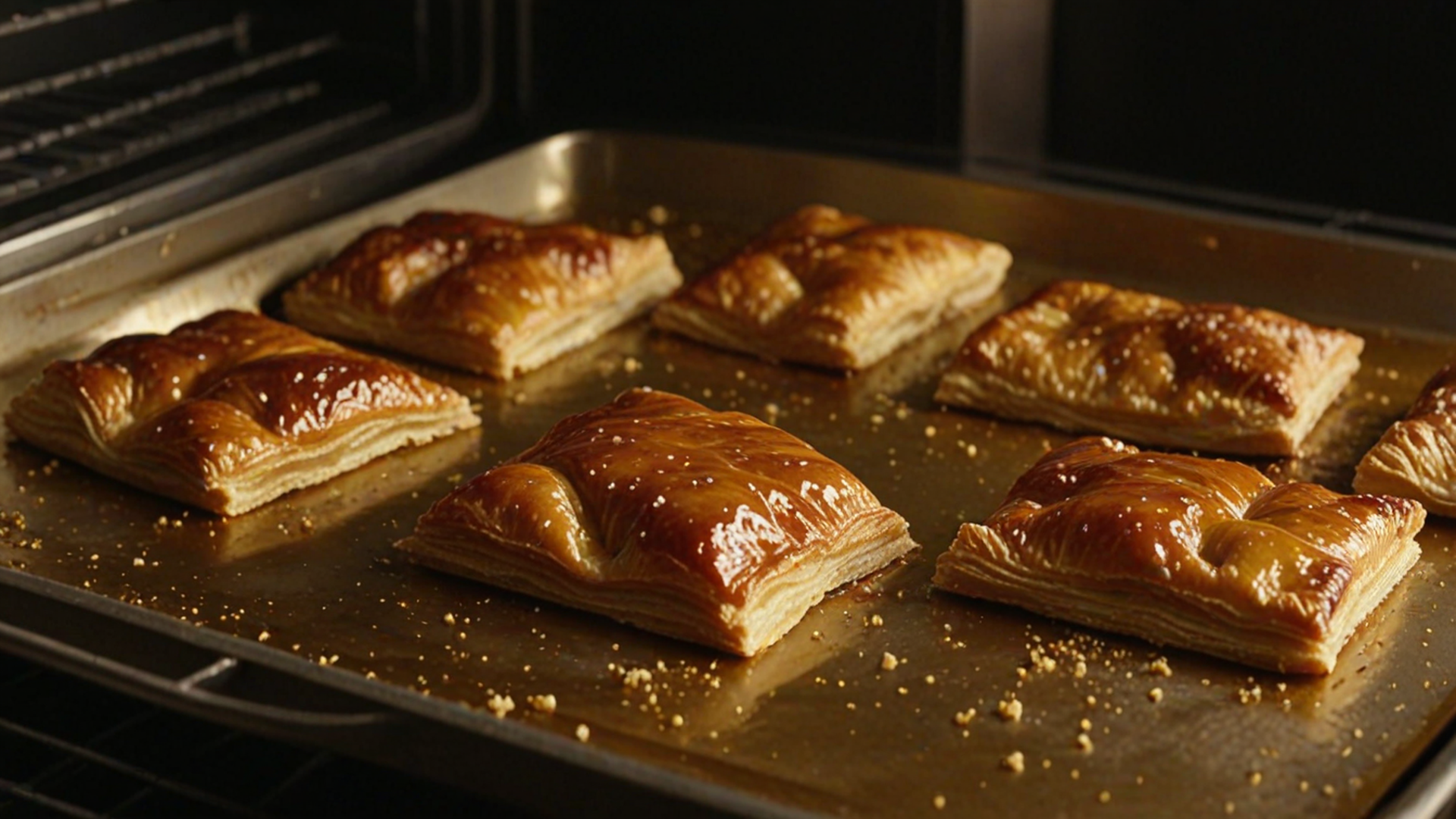
Initial Bake & Caramelized Sugar Lacquer: Bake weighted down for 20 minutes. Remove the top baking sheet and top parchment paper. Sift an even, heavy snowfall of powdered sugar over the entire exposed pastry surface. Return to oven uncovered at 215°C (420°F) for 5 to 7 minutes. Watch meticulously: the intense heat melts the powdered sugar into bubbling liquid sucrose that caramelizes into a golden-amber glass lacquer. This sugar glaze serves two purposes: it creates an acoustic crackling crunch and acts as an impermeable moisture barrier that keeps the pastry crisp against the cream.
5
Precision Geometry Slicing: Let caramelized pastry cool completely on a wire rack for 15 minutes. Using a sharp serrated bread knife in gentle sawing motions (or a laser-straight chef's knife), trim the uneven edges to form a perfect 12x15-inch rectangle. Cut into 18 identical rectangles (each approx. 2.5 x 5 inches). Group into 6 sets of 3 matching rectangles (bottom, middle, top).
6
The Traditional Chevron Spiderweb Glaze: Take the 6 top pastry rectangles. Spread warmed white fondant glaze evenly across each top tile. Immediately pipe thin parallel horizontal lines of melted dark chocolate across the white glaze. Before the chocolate sets, draw the tip of a toothpick or knife lightly perpendicular across the lines (alternating up and down) to create the iconic French chevron feather pattern. Let set for 10 minutes.
7
Two-Tier Architectural Assembly: Lay the bottom pastry rectangles on a clean board. Pipe neat, uniform, upright bulbs of vanilla Crème Diplomate across the surface. Place the middle pastry rectangle on top, pressing very gently. Pipe a second layer of diplomat cream bulbs. Crown with the glazed chevron top rectangle. Chill for 30 minutes before serving. To slice, turn the mille-feuille gently onto its side and cut with a serrated knife so the cream doesn't squish out.
The Culinary Science: Why It Works
The structural and sensory brilliance of the Mille-Feuille (meaning 'thousand leaves') relies on constrained lamination physics, starch retrogradation, and glass transition glazing. Standard puff pastry rises unevenly into a fragile balloon; by weighting the pastry between two heavy sheet pans, escaping steam is forced laterally through micro-channels, compressing 729 alternating layers of butter and dough into an ultra-dense, wafer-thin, shatteringly crisp plank. The high-heat sugar dusting at 215°C undergoes rapid sucrose pyrolysis: molten sugar fuses with surface starch into an amorphous caramel glass barrier with zero water activity. This waterproof barrier prevents the water in the underlying crème diplomate (which is stabilized by gelatinized cornstarch and whipped cream fats) from softening the pastry, preserving an acoustic glass-shattering crunch for hours.
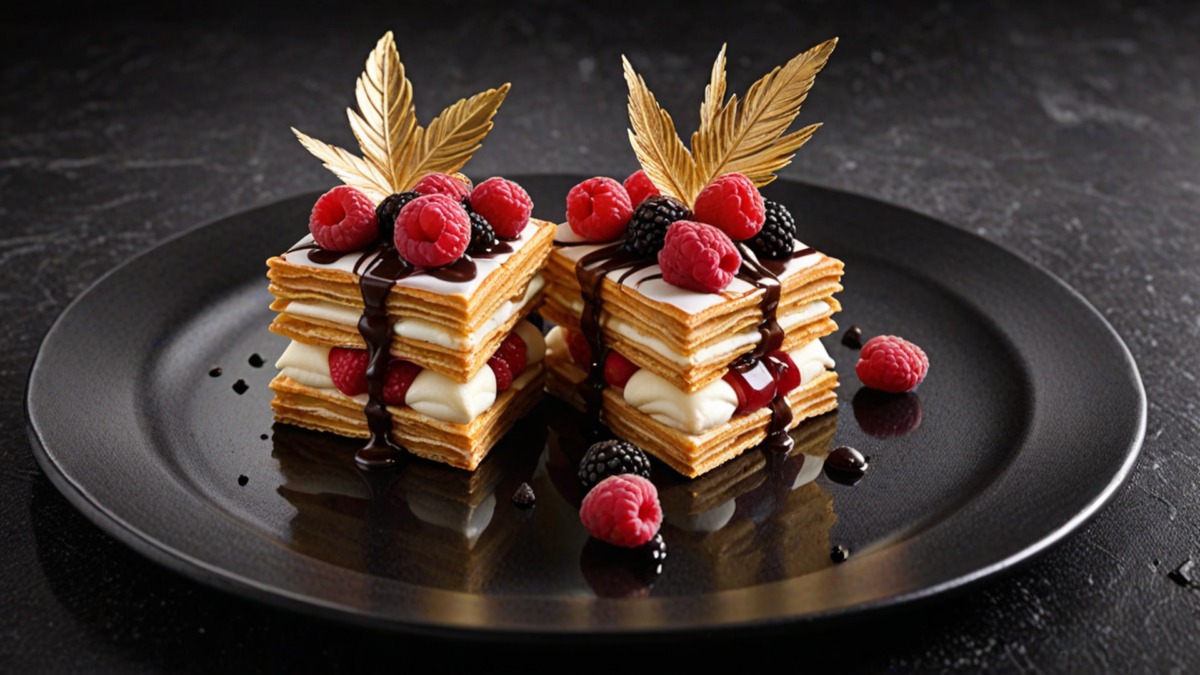
To construct the pinnacle of French classical pastry—the iconic Mille-Feuille (Napoleon)—compress all-butter puff pastry between two heavy baking sheets at 195°C (385°F) to restrict vertical puffing into dense, razor-thin tiers. Dust with powdered sugar and flash-caramelize at high heat into a crackling amber glass lacquer that blocks humidity. Sandwich two tiers of light, vanilla-bean Crème Diplomate between the golden wafers, crowning with the legendary feathered chocolate chevron spiderweb glaze.
The structural and sensory brilliance of the Mille-Feuille (meaning ‘thousand leaves’) relies on constrained lamination physics, starch retrogradation, and glass transition glazing. Standard puff pastry rises unevenly into a fragile balloon; by weighting the pastry between two heavy sheet pans, escaping steam is forced laterally through micro-channels, compressing 729 alternating layers of butter and dough into an ultra-dense, wafer-thin, shatteringly crisp plank. The high-heat sugar dusting at 215°C undergoes rapid sucrose pyrolysis: molten sugar fuses with surface starch into an amorphous caramel glass barrier with zero water activity. This waterproof barrier prevents the water in the underlying crème diplomate (which is stabilized by gelatinized cornstarch and whipped cream fats) from softening the pastry, preserving an acoustic glass-shattering crunch for hours.
3. Red Flags & Point of No Return Thresholds
Red Flag
Observable Chemical Phenomenon
Mandatory Chef Action
Puff Pastry Ballooning Unevenly
Baking puff pastry unweighted without the second baking sheet on top
Bake pastry firmly sandwiched between two parchment-lined heavy baking sheets to keep it razor-flat
Soggy Leathery Pastry Slices
Skipping the powdered sugar caramelization step, allowing cream moisture to soften dough
Dust with powdered sugar and bake uncovered at 215°C for 6 minutes until an amber glass glaze forms
Cream Squishing Out the Sides When Eating
Cutting the mille-feuille vertically from top to bottom with a dull knife
Turn the pastry onto its side and slice with a razor-sharp serrated knife in gentle sawing motions
Runny Unset Pastry Cream
Failing to boil the cornstarch pastry cream for a full 2 minutes
Cornstarch must boil actively for 2 minutes to deactivate alpha-amylase egg enzymes and fully set
Fine powdered sugar dissolves instantly under heat, forming a mirror-smooth glass lacquer
06
Caramelization Temperature
215°C (420°F) for 5 to 7 minutes
<180°C (fails to caramelize)
Flash-pyrolyzes sucrose into an amber candy glaze that acts as a waterproof moisture barrier
07
Cream Classification
Crème Diplomate (pastry cream + whipped cream)
Plain whipped cream / butter cream
Diplomat cream combines the rich vanilla body of pastry cream with the airy lightness of mousse
08
Vanilla Bean Quality
Scraped Madagascar Bourbon vanilla bean
Artificial vanilla essence
Pure vanilla seeds provide unmistakable visual speckling and deep floral-bourbon aroma
09
Starch Thickener Boiling Rule
Boiled actively for 2 minutes with whisking
Removed as soon as it thickens
Active boiling is mandatory to denature salivary amylase enzymes that would liquefy custard
10
Butter Addition to Custard
Cold butter cubes whisked in off-heat
Melted hot butter stirred in
Cold butter incorporates as a stable micro-emulsion, imparting silky sheen and mouthfeel
11
Tile Cutting Instrument
Sharp serrated bread knife with gentle sawing
Dull chef’s knife pressed down
Sawing prevents crushing the delicate lamination layers and preserves clean, sharp corners
12
Tile Dimension Standard
Uniform 2.5 x 5-inch (6 x 12cm) rectangles
Irregular random pieces
Exact individual French bakery dimension for elegant hand-holding and plating
13
Icing Layer Standard
Warm white fondant + dark chocolate chevrons
Plain powdered sugar / thick frosting
Traditional feather-drawn chevron spiderweb provides iconic Parisian bakery aesthetic
14
Assembly Chill Time
30 minutes at 4°C before slicing
Served warm immediately
Firms diplomat cream slightly so layers stay locked in place during plating
15
Eating Technique Standard
Turned on side and cut with fork
Pressed down from top (squishes cream)
Turning on side allows fork to cut between pastry wafers without squeezing cream out
5. Step-by-Step Culinary Action Protocol & Process Photography
For scalable ingredient proportions, custom serving calculations, and interactive step check-offs, use the recipe card at the top of this guide. Below is the photographic documentation and culinary physics breakdown for each critical phase.
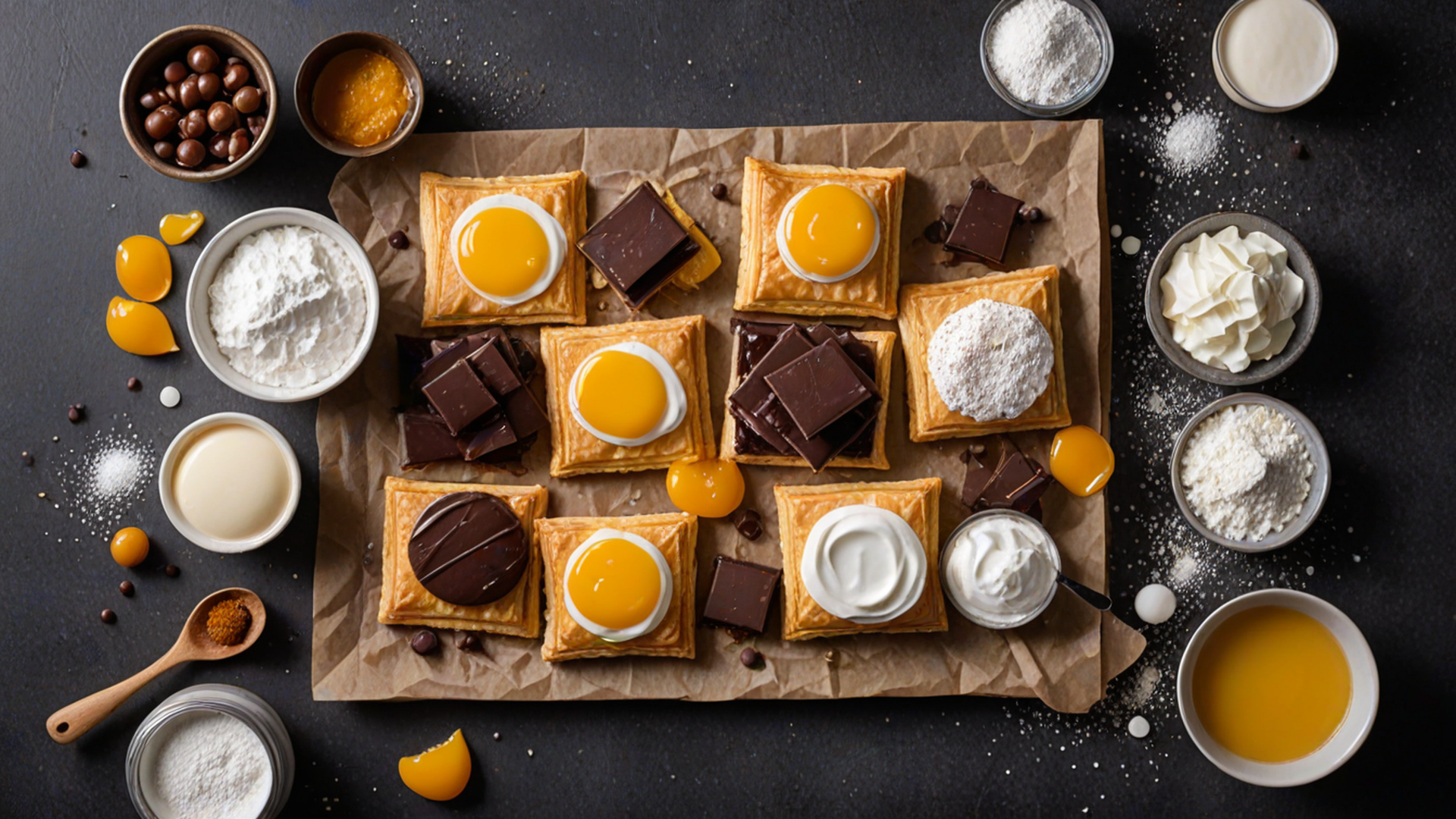
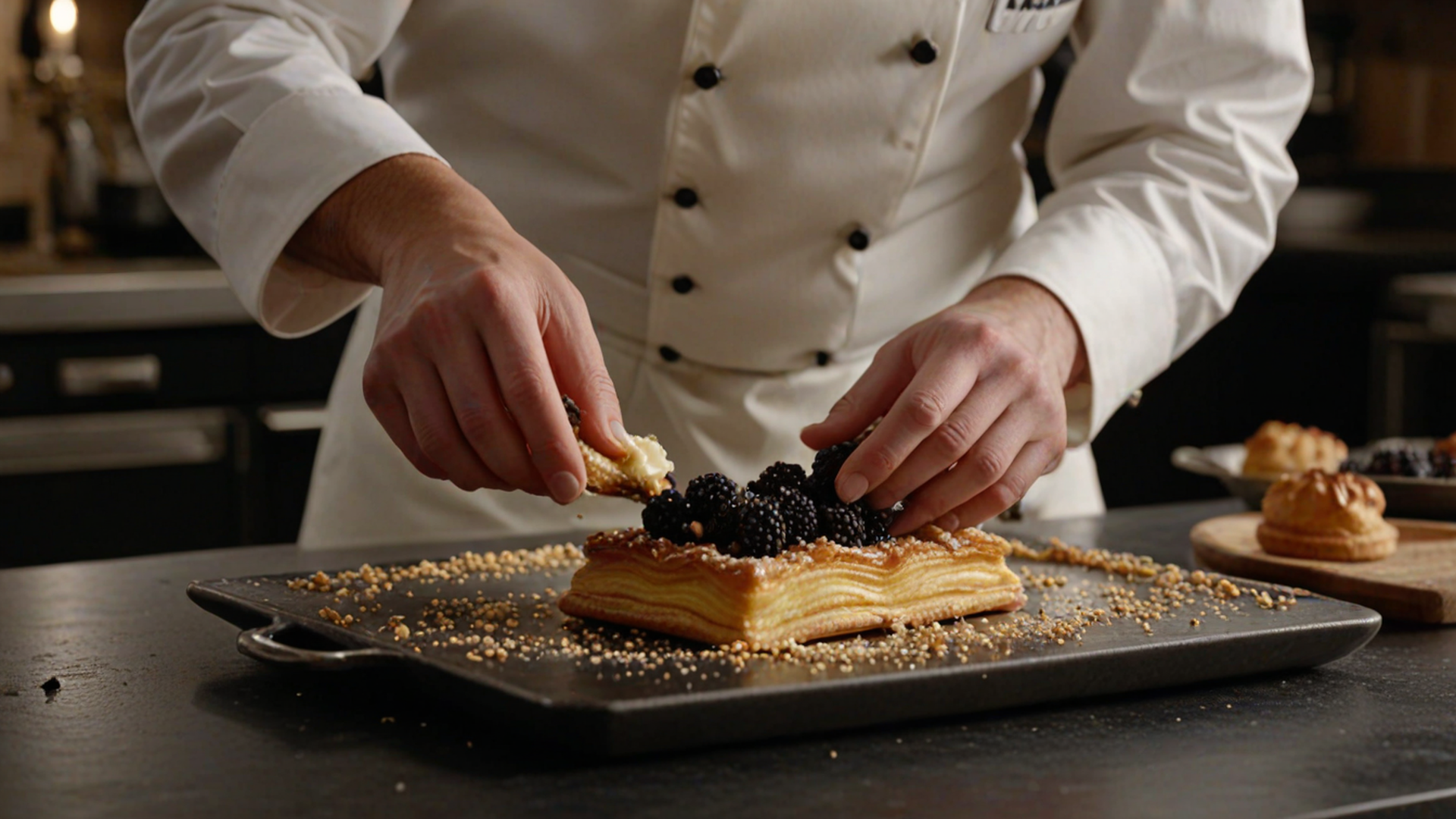
Phase 1: Precision Mise en Place & Chemical Ratio Balance — All raw lipids, aromatics, and structural starches assembled at room temperature to ensure rapid thermal equilibrium.Phase 2: Mechanical Manipulation & Structural Dezvoltare — Active dough folding, protein emulsion, or cell wall breakdown to establish the dish’s fundamental architectural matrix.Phase 3: Thermal Transformation & Maillard Kinetics — Controlled heat transfer driving gelatinization, lipid rendering, and surface browning within the validated temperature window.
6. Dangerous Common Pitfalls & Disastrous Mistakes
Error 1: Baking without weights on top: If you don’t place a second heavy baking sheet on top of the pastry, it will puff up into an unruly 2-inch mountain that cannot be cut into neat, layered rectangles.
Error 2: Skipping the powdered sugar caramelization: If you don’t caramelize the sugar on the pastry, moisture from the custard cream will soak into the pastry within 30 minutes, turning your crisp mille-feuille into soggy cardboard.
Error 3: Trying to cut the finished pastry from the top: Pressing down on the top with a fork or knife squeezes all the diplomat cream out the sides; turn the mille-feuille onto its side and slice gently with a serrated knife.
Error 4: Under-cooking the pastry cream: Cornstarch requires 2 full minutes of boiling bubbling heat to permanently thicken and neutralize egg enzymes; pulling it off the stove too early will cause the cream to turn runny as it chills.
Thermocouple Calibration: Always verify internal core meat, fish, and custard temperatures with a calibrated instant-read digital probe thermometer.
Thermal & Splatter Protection: Handle boiling baths, smoking charcoal grills, and spitting frying oil using heavy silicone-lined heatproof mitts.
Storage & Bacterial Safety: Cool all high-protein dishes rapidly and refrigerate below 4°C (39°F) for up to 3 days, or freeze for up to 3 months.
8. Frequently Asked Questions (FAQ)
Q1: What does ‘Mille-Feuille’ literally mean?
Mille-Feuille translates literally to ‘A Thousand Leaves’ in French, referring to the hundreds of wafer-thin, flaky pastry layers created by classical French lamination.
Q2: What is the difference between a Mille-Feuille and a Napoleon?
In French culinary terminology, Mille-Feuille is the authentic name for the layered pastry. ‘Napoleon’ is the common English and American name for the same dessert, named after the French word for Naples (‘Napolitain’).
Q3: What is Crème Diplomate?
Crème Diplomate is a luxurious French cream made by folding freshly whipped heavy cream into chilled vanilla bean pastry cream (crème pâtissière). It is lighter than pastry cream but significantly richer and more stable than plain whipped cream.
Q4: How do you create the classic chevron feathered icing pattern?
Spread warm white fondant glaze across the top pastry. Immediately pipe thin horizontal lines of melted dark chocolate across it. Before it sets, drag the tip of a toothpick vertically up and down in alternating directions across the chocolate lines to create the iconic feather pattern.
Q5: How long can a Mille-Feuille sit before it gets soggy?
Thanks to our caramelized sugar lacquer, this mille-feuille stays audibly crisp for 6 to 8 hours in the refrigerator. However, for peak acoustic crunch, assemble within 2 to 3 hours of serving.
Q6: Can I use frozen puff pastry?
Yes! Look for all-butter frozen puff pastry (avoid pastries made with vegetable shortening or margarine). All-butter pastry delivers authentic flavor, flakiness, and superior melting quality.
9. Glosar of 5 Essential Culinary Science Terms
Mille-Feuille: The classical French three-tier puff pastry dessert layered with pastry cream, celebrated for its ‘thousand leaves’ lamination.
Crème Diplomate: Pastry cream (crème pâtissière) lightened with stabilized whipped heavy cream, yielding an airy, pipeable velvet texture.
Pâte Feuilletée Inversée: Inverted puff pastry where the butter block encases the dough packet, resulting in extreme flakiness and zero oven shrinkage.
Docking: Pricking pastry dough repeatedly with a fork to release trapped steam and maintain a flat, uniform bake.
Chevron Glaze: The traditional feather-patterned icing created by drawing a toothpick through alternating white fondant and dark chocolate lines.
10. Organic Network Links & Community Forum Hub
Join the precision culinary science discussion at the RecipeTips Community Forum. Exchange thermodynamic triage data, troubleshoot emulsion failures, and share kitchen experiment results with fellow culinary scientists and passionate home cooks in our dedicated lounges.