Find a little inspiration for your next meal.All Recipes ↗
Recipes
Classic French Onion Soup: Slow Fructose Caramelization, Fortified Beef Bone Gelatin & The Broiled Gruyère Crust
🌐 يتم عرض اللغة الأصلية لم تتم ترجمة هذا المقال إلى اللغة العربية بعد. أنت تشاهد النسخة الأصلية. 1. Immediate 3-Sentence Action Protocol & Provenance To cook authentic French Onion Soup (Soupe à l’Oignon Gratinée) with its deep mahogany sweetness and unbroken blanket of blistered Gruyère cheese, slice yellow onions pole-to-pole and slowly caramelize over […]
The Pole-to-Pole Onion Geometry: Cut onions in half through the root and stem (pole-to-pole). Slice into uniform 1/4-inch (6mm) crescent half-moons. Slicing pole-to-pole follows the natural grain of onion muscle fibers: this ensures the onion strands soften and caramelize without completely collapsing into stringy mush during an hour of cooking.
2
The Water Evaporation Stage (Osmosis): In a large 8-quart enameled cast-iron Dutch oven, melt butter and olive oil over medium heat. Add all 5 pounds of sliced onions (they will fill the pot to the very brim) and 1 tsp sea salt. Cook uncovered, stirring occasionally, for 20 minutes. Salt draws cellular water out of the onions via osmosis; the mountain of onions will shrink down by 70% into soft, translucent, pale yellow strands sitting in their own sweet liquid.
3
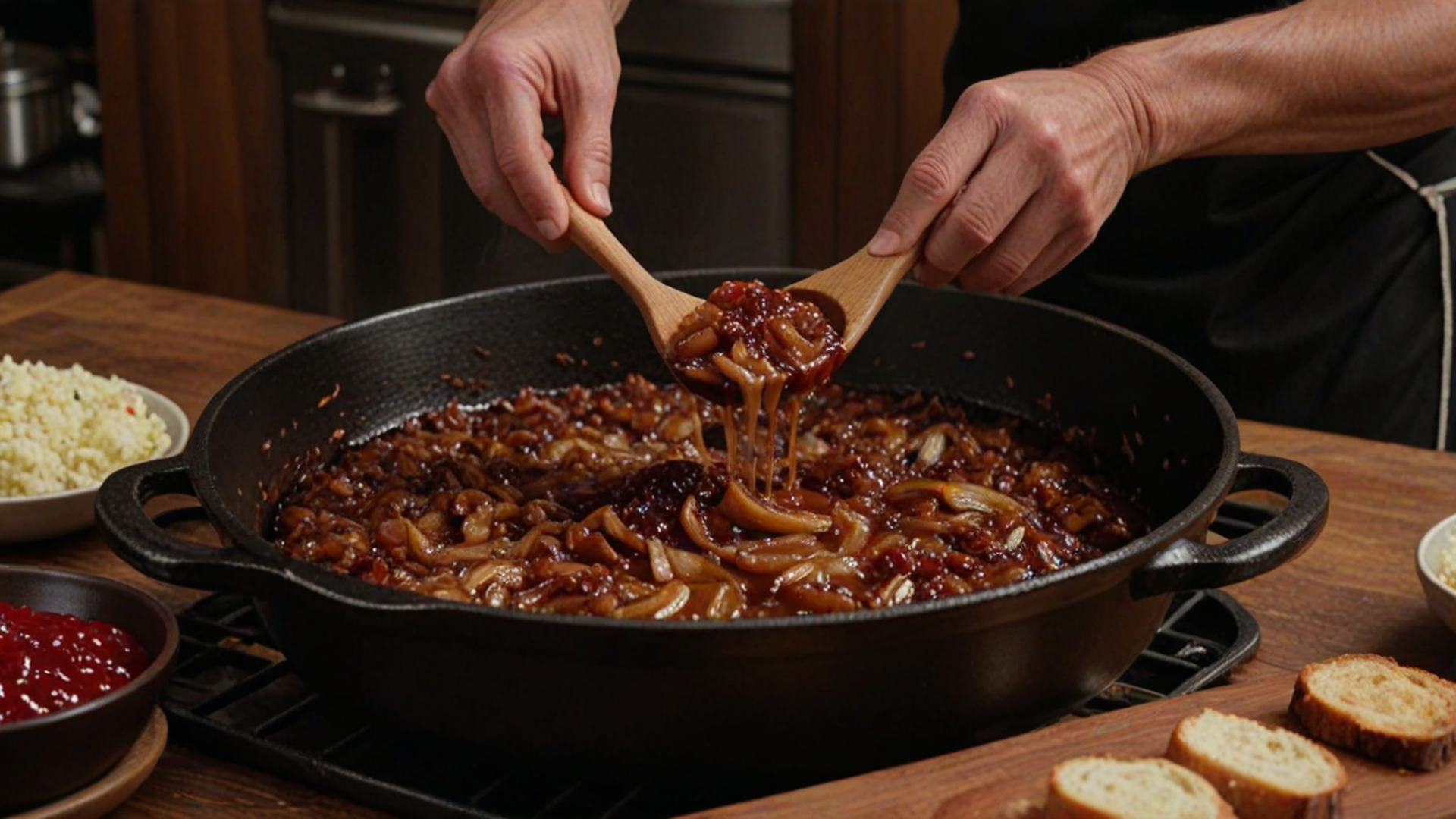
The 50-Minute Pyrolysis Marathon (Caramelization): Reduce heat to medium-low. Cook undisturbed for 5 to 6 minutes until a golden-brown glaze (fond) develops on the bottom of the pot. Stir with a flat wooden spatula, scraping the caramelized glaze off the bottom and folding it into the onions. Repeat this cycle every 4 to 5 minutes for 45 to 55 minutes. As water evaporates, the natural allium sugars (fructose and sucrose) undergo non-enzymatic browning (Maillard and pyrolysis). The onions will transform through stages: pale yellow, golden-blonde, hazelnut-brown, and finally into a rich, sweet, sticky, dark mahogany-amber onion jam.
4
Flour Dusting & Cognac-Wine Deglazing: Sprinkle 2 tbsp flour over the caramelized onion jam; stir continuously for 2 minutes to cook out raw flour taste. Pour in 1/2 cup dry white wine and 2 tbsp Cognac, scraping up every single particle of dark caramelized fond from the bottom and sides of the pot. Boil vigorously for 2 minutes until alcohol evaporates and liquid reduces to a glossy syrup.
5
The Fortified Bone Stock Simmer: Pour in 6 cups rich roasted beef bone stock, 2 cups chicken stock, and add the bouquet garni. Bring to a gentle boil, then reduce heat to low. Cover partially with lid and simmer gently for 40 minutes: the beef bone gelatin, chicken glutamates, and sweet caramelized onion sugars marry into a dark, complex, lip-smacking broth that glimmers with tiny golden fat droplets. Season with freshly cracked black pepper. Discard bouquet garni.
6
The Garlic-Rubbed Baguette Croutons: Slice baguette into 1-inch thick rounds. Place on a baking sheet and bake at 180°C (350°F) for 12 minutes until completely dry and hard (stale crouton texture). While hot, vigorously rub the cut surface of a raw garlic clove across the top of each toasted crouton: the coarse bread texture acts as a microplane, grater-shaving fresh garlic oils into the crust.
7
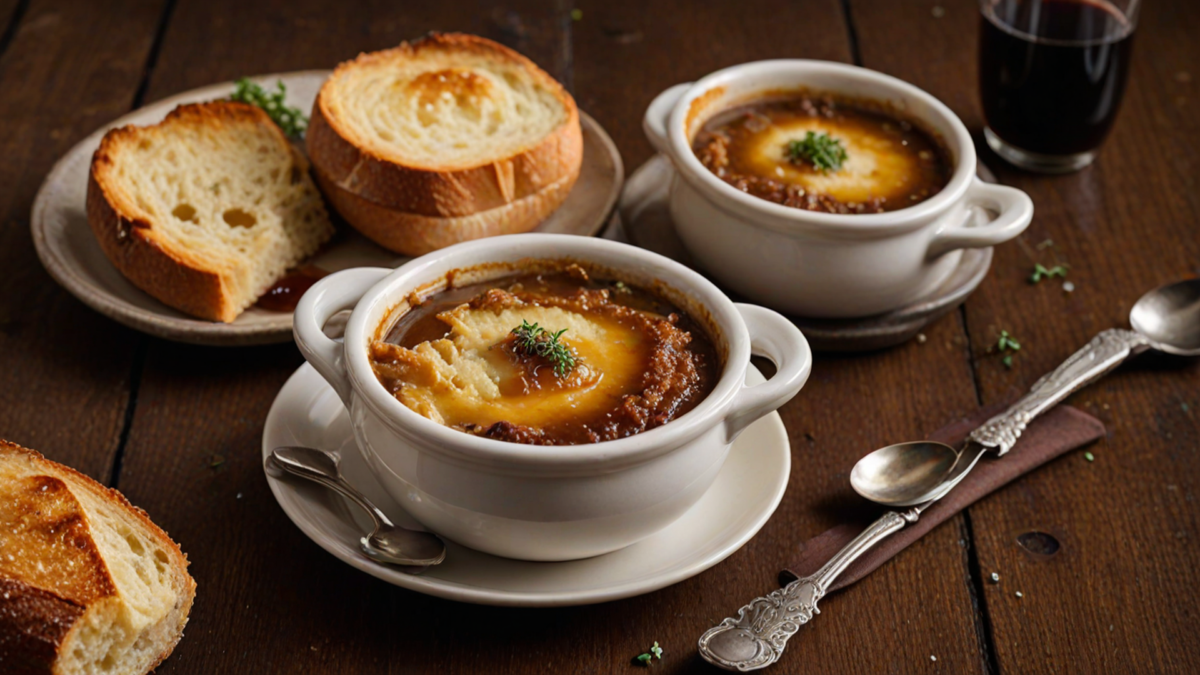
The Gratinée Broil & Blistered Cheese Lid: Preheat oven broiler to high (260°C / 500°F). Ladle boiling-hot onion soup into six ovenproof ceramic lion's-head soup crocks, filling to 1/2 inch below rim. Float 1 or 2 garlic-rubbed croutons on top of the broth. Pile a mountain of freshly grated Swiss Gruyère cheese generously over the bread, ensuring the cheese extends slightly over the ceramic rims of the bowls. Place crocks onto a sturdy baking sheet. Broil 4 inches from heat element for 4 to 5 minutes until the Gruyère cheese melts, bubbles furiously, and blisters into an unbroken, caramelized golden-brown molten crust. Let cool for 5 minutes before serving (soup beneath the cheese crust is volcanic!).
The Culinary Science: Why It Works
The culinary chemistry of Soupe à l'Oignon represents carbohydrate pyrolysis, sulfur degradation, and protein Maillard reactions. Raw onions contain high concentrations of pungent sulfur compounds (isoalliin) and bitter fructan carbohydrates. As onions cook slowly below 120°C, harsh sulfur compounds break down and volatilize into sweet allicin derivatives. Between 130°C and 165°C, moisture evaporates completely, allowing fructose and glucose sugars to undergo thermal pyrolysis and react with onion amino acids via the Maillard reaction. This produces hundreds of rich, savory heterocyclic molecules (pyrazines, furans, and thiophenes), turning pungent white onions into a sweet, dark mahogany jam. Crucially, the final gratinée stage utilizes the fat and casein matrix of Swiss Gruyère (which melts at 65°C and browns at 180°C without separating): the melted cheese forms an impermeable hydrophobic seal over the crouton, trapping boiling steam underneath and preserving the volcanic heat of the broth until the diner punctures the crust with a spoon.
To cook authentic French Onion Soup (Soupe à l’Oignon Gratinée) with its deep mahogany sweetness and unbroken blanket of blistered Gruyère cheese, slice yellow onions pole-to-pole and slowly caramelize over fifty minutes into a dark amber onion jam. Deglaze with dry white wine and French Cognac, simmer in gelatinous roasted beef bone stock and aromatics, and ladle into ceramic crocks. Crown with garlic-rubbed baguette croutons and a mountain of freshly grated Swiss Gruyère, broiling until the cheese blisters into a golden-brown, molten lid.
The culinary chemistry of Soupe à l’Oignon represents carbohydrate pyrolysis, sulfur degradation, and protein Maillard reactions. Raw onions contain high concentrations of pungent sulfur compounds (isoalliin) and bitter fructan carbohydrates. As onions cook slowly below 120°C, harsh sulfur compounds break down and volatilize into sweet allicin derivatives. Between 130°C and 165°C, moisture evaporates completely, allowing fructose and glucose sugars to undergo thermal pyrolysis and react with onion amino acids via the Maillard reaction. This produces hundreds of rich, savory heterocyclic molecules (pyrazines, furans, and thiophenes), turning pungent white onions into a sweet, dark mahogany jam. Crucially, the final gratinée stage utilizes the fat and casein matrix of Swiss Gruyère (which melts at 65°C and browns at 180°C without separating): the melted cheese forms an impermeable hydrophobic seal over the crouton, trapping boiling steam underneath and preserving the volcanic heat of the broth until the diner punctures the crust with a spoon.
3. Red Flags & Point of No Return Thresholds
Red Flag
Observable Chemical Phenomenon
Mandatory Chef Action
Pale Sweet Onion Water with No Depth
Rushing the caramelization in 15 minutes over high heat or boiling onions in stock
Caramelization cannot be rushed; cook slowly for 50 to 60 minutes until onions turn dark mahogany
Bitter Acrid Blackened Flavor
Scorching onions over high heat without stirring, turning fond into black carbon
Maintain medium-low heat; scrape bottom fond continuously as it forms every 4 to 5 minutes
Soggy Bread Dissolving into Mush
Using fresh untoasted bread or thin sandwich bread that sinks to bottom
Bake 1-inch thick baguette slices until bone-dry and hard; float them securely on top of the broth
Chewy Oily Separated Cheese Layer
Using pre-shredded supermarket cheese or baking under low heat for too long
Grate real Swiss Gruyère fresh from block; blast under screaming-hot broiler for 4 minutes to blister
Gruyère has nutty, earthy complexity and ideal melting properties that form a solid blistered seal
15
Gratinée Broiler Setting
High broil (260°C / 500°F) 4 inches from heat
Low baking in oven
Flash-melts and blisters cheese into golden-brown peaks before crouton can sink into soup
5. Step-by-Step Culinary Action Protocol & Process Photography
For scalable ingredient proportions, custom serving calculations, and interactive step check-offs, use the recipe card at the top of this guide. Below is the photographic documentation and culinary physics breakdown for each critical phase.
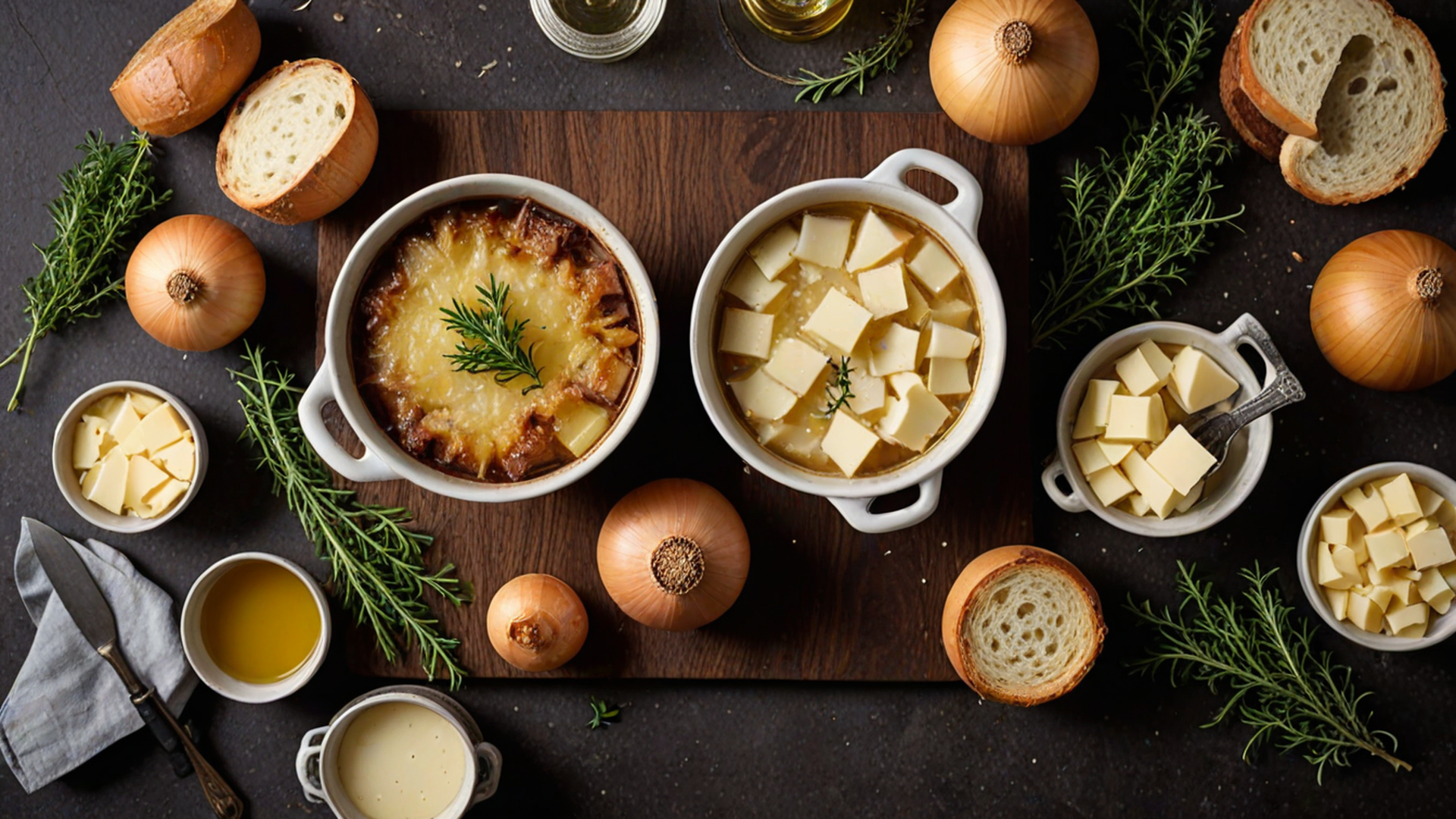
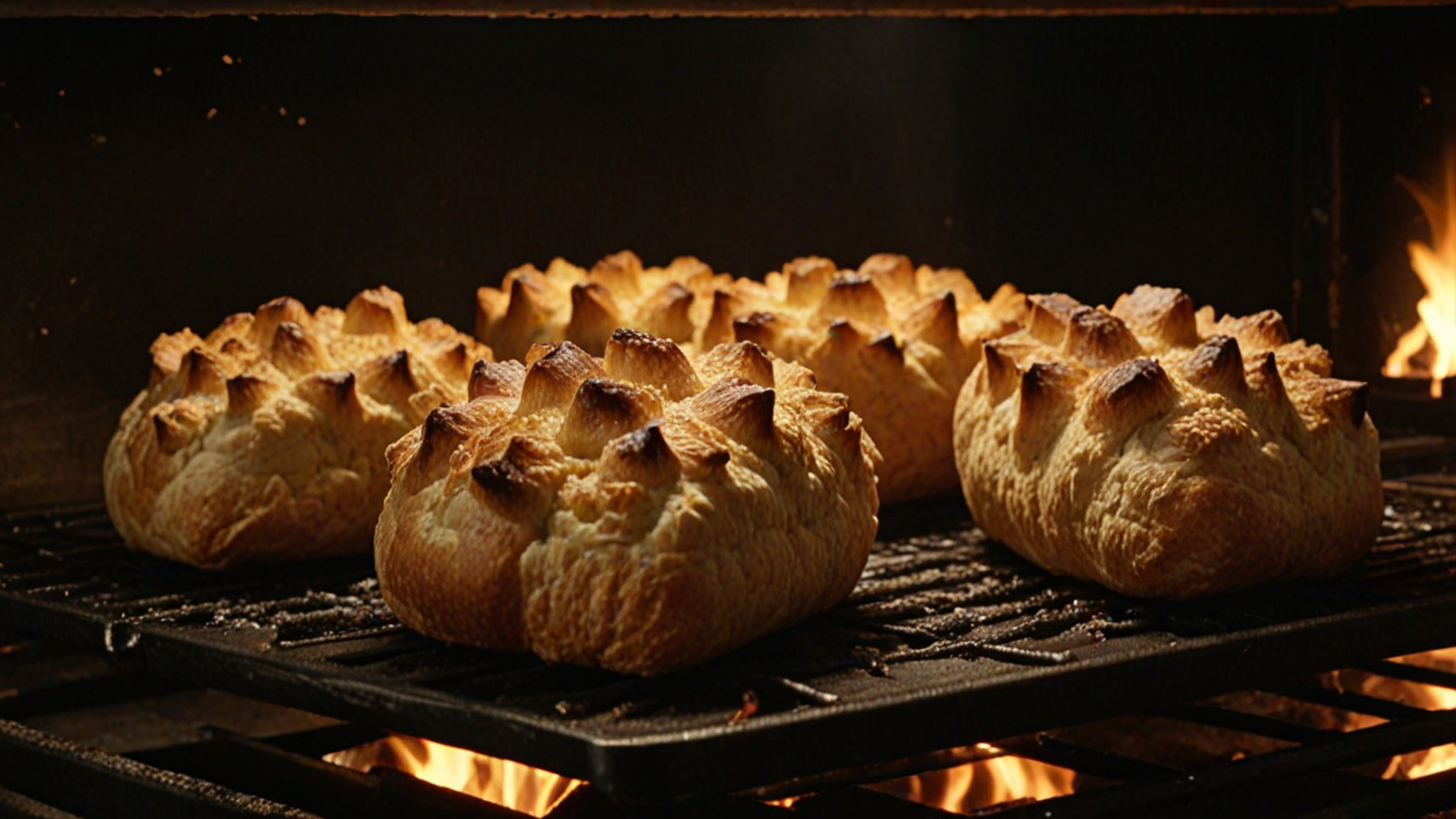
Phase 1: Precision Mise en Place & Chemical Ratio Balance — All raw lipids, aromatics, and structural starches assembled at room temperature to ensure rapid thermal equilibrium.Phase 2: Mechanical Manipulation & Structural التطوير — Active dough folding, protein emulsion, or cell wall breakdown to establish the dish’s fundamental architectural matrix.Phase 3: Thermal Transformation & Maillard Kinetics — Controlled heat transfer driving gelatinization, lipid rendering, and surface browning within the validated temperature window.
6. Dangerous Common Pitfalls & Disastrous Mistakes
Error 1: Trying to rush onion caramelization in 15 minutes: There are zero shortcuts in food science here. It takes a minimum of 45 to 55 minutes for 5 pounds of onions to shed their water and brown deeply; cranking the heat will burn the edges bitter.
Error 2: Using canned salty beef broth: Commercial canned beef broth is mostly water, salt, and artificial caramel coloring. Real French onion soup relies on the natural gelatin and body of roasted beef bone stock.
Error 3: Using soft untoasted bread: Fresh bread will soak up broth and dissolve into a soggy sponge that sinks to the bottom of the bowl; bake your baguette slices until bone-dry and hard.
Error 4: Not using oven-safe ceramic crocks: Standard porcelain or glass bowls can crack or shatter under the 260°C high broiler; use authentic high-fired ceramic French onion soup crocks.
Thermocouple Calibration: Always verify internal core meat, fish, and custard temperatures with a calibrated instant-read digital probe thermometer.
Thermal & Splatter Protection: Handle boiling baths, smoking charcoal grills, and spitting frying oil using heavy silicone-lined heatproof mitts.
Storage & Bacterial Safety: Cool all high-protein dishes rapidly and refrigerate below 4°C (39°F) for up to 3 days, or freeze for up to 3 months.
8. Frequently Asked Questions (FAQ)
Q1: Why does authentic French onion soup take so long to cook?
Because 5 pounds of raw onions contain nearly 4.5 pounds of water! That water must evaporate completely before the temperature in the pot can rise above 100°C to initiate the caramelization and Maillard browning reactions.
Q2: Can I make French onion soup with red onions or sweet Vidalia onions?
Standard yellow cooking onions are best because they have the highest sulfur content and balanced sugar. Sweet Vidalia onions have too much water and turn cloyingly sweet; red onions turn an unappealing dark muddy gray when cooked down.
Q3: What cheese is traditional on French onion soup?
Authentic Swiss Gruyère DOP or French Comté are the traditional choices. They melt into an elastic, nutty, savory blanket that blisters beautifully under the broiler without becoming greasy.
Q4: Can French onion soup be frozen?
Yes! Freeze the soup (onions and broth) in airtight containers for up to 3 months. When ready to serve, thaw, bring to a rolling boil, ladle into crocks, top with bread and Gruyère, and broil fresh.
Q5: Why is a blend of beef and chicken stock used?
Pure beef stock can be overwhelmingly heavy and iron-rich. Blending 3 parts rich beef bone stock with 1 part golden chicken stock adds roundness, clean amino acid glutamates, and balanced savory depth.
Q6: How do you eat French onion soup without burning your mouth?
The melted Gruyère cheese lid traps boiling steam underneath like a pressure cooker! Cut a small vent through the cheese crust with your spoon and let steam escape for 2 minutes before enjoying.
9. المصطلحات of 5 Essential Culinary Science Terms
Gratinée: The classical French culinary technique of topping a dish with bread crumbs and cheese and broiling until a golden-brown crust forms.
Fond: The deeply caramelized layer of sugars and proteins that adheres to the bottom of the Dutch oven during onion caramelization.
Gruyère DOP: A hard, aged Swiss raw cow’s milk cheese from the canton of Fribourg, celebrated for its nutty, savory depth and superior melting qualities.
Maillard Pyrolysis: The simultaneous non-enzymatic browning of amino acids and thermal decomposition of allium sugars into dark, complex flavor compounds.
Lion’s-Head Crock: The traditional French high-sided, ceramic, ovenproof bowl with lion-head handles, designed specifically for Soupe à l’Oignon Gratinée.
10. Organic Network Links & Community منتدى Hub
Join the precision culinary science discussion at the RecipeTips Community منتدى. Exchange thermodynamic triage data, troubleshoot emulsion failures, and share kitchen experiment results with fellow culinary scientists and passionate home cooks in our dedicated lounges.