🌐 Originalt sprog vises Denne artikel er endnu ikke oversat til dansk. Du ser den originale version. 1. Immediate 3-Sentence Action Protocol & Provenance To execute authentic Southern Smoked Pulled Pork with a glistening mahogany-black bark and succulent, melting strands, slather bone-in pork shoulder with yellow mustard and a coarse brown sugar-paprika rub. Smoke low […]
Pork Butt Inspection & Aerodynamic Trimming: Inspect the pork butt. Trim any ragged, hanging flaps of meat that would burn into dry carbon during 12 hours of smoking. Sculpt the fat cap to a uniform 1/4-inch (6mm) thickness, scoring the fat in a 1-inch crosshatch diamond pattern without cutting into the red muscle. Scoring allows fat to render outward while letting spices and smoke penetrate deep into the meat.
2
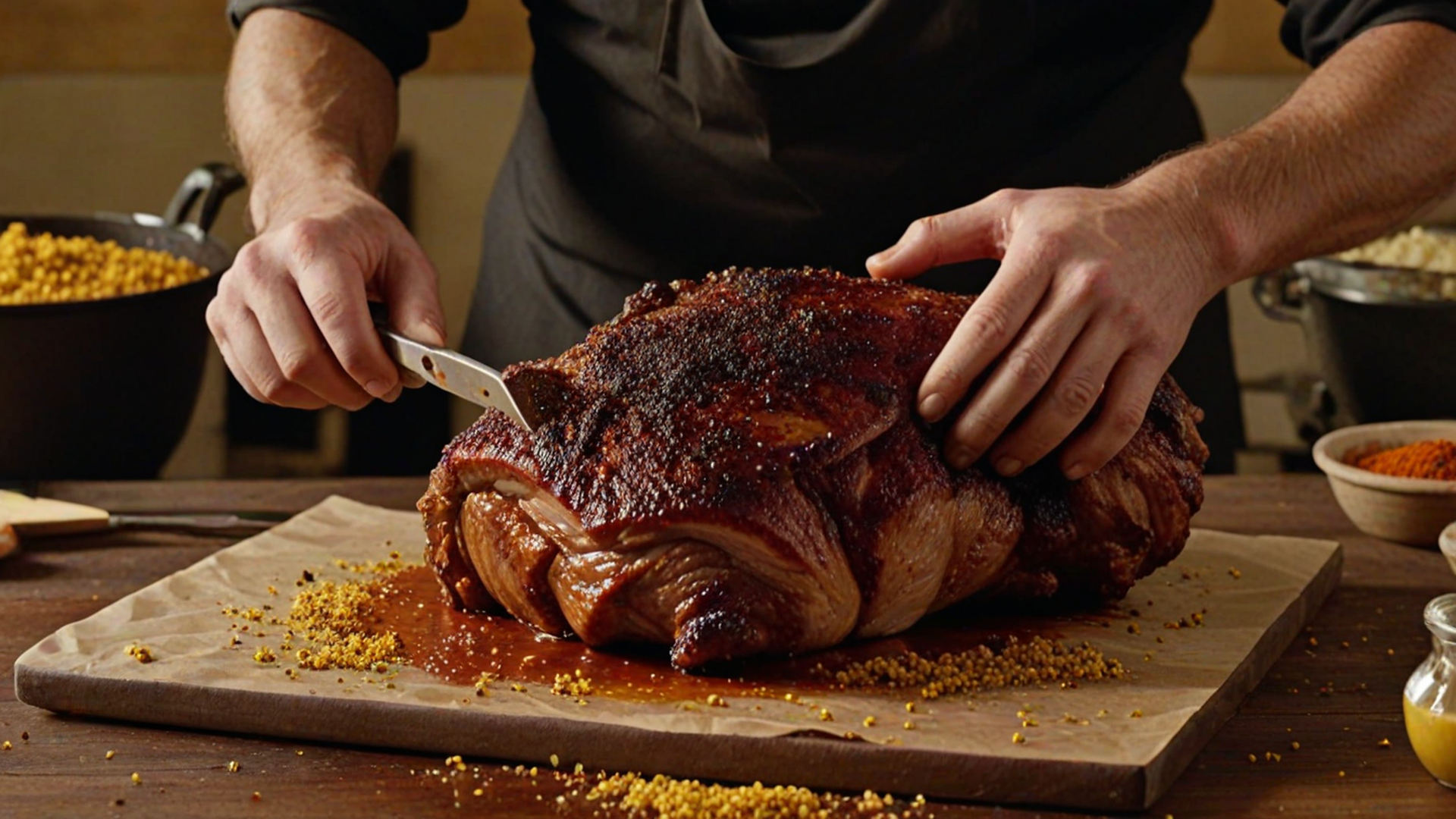
The Yellow Mustard Slather (The Binder): Slather the entire surface of the pork butt with a thin, even coat of yellow mustard. The vinegar and turmeric in mustard do not impart any mustard flavor after 12 hours of smoking; instead, the viscous emulsion serves as a tacky glue that anchors the dry spice rub to the cold meat.
3
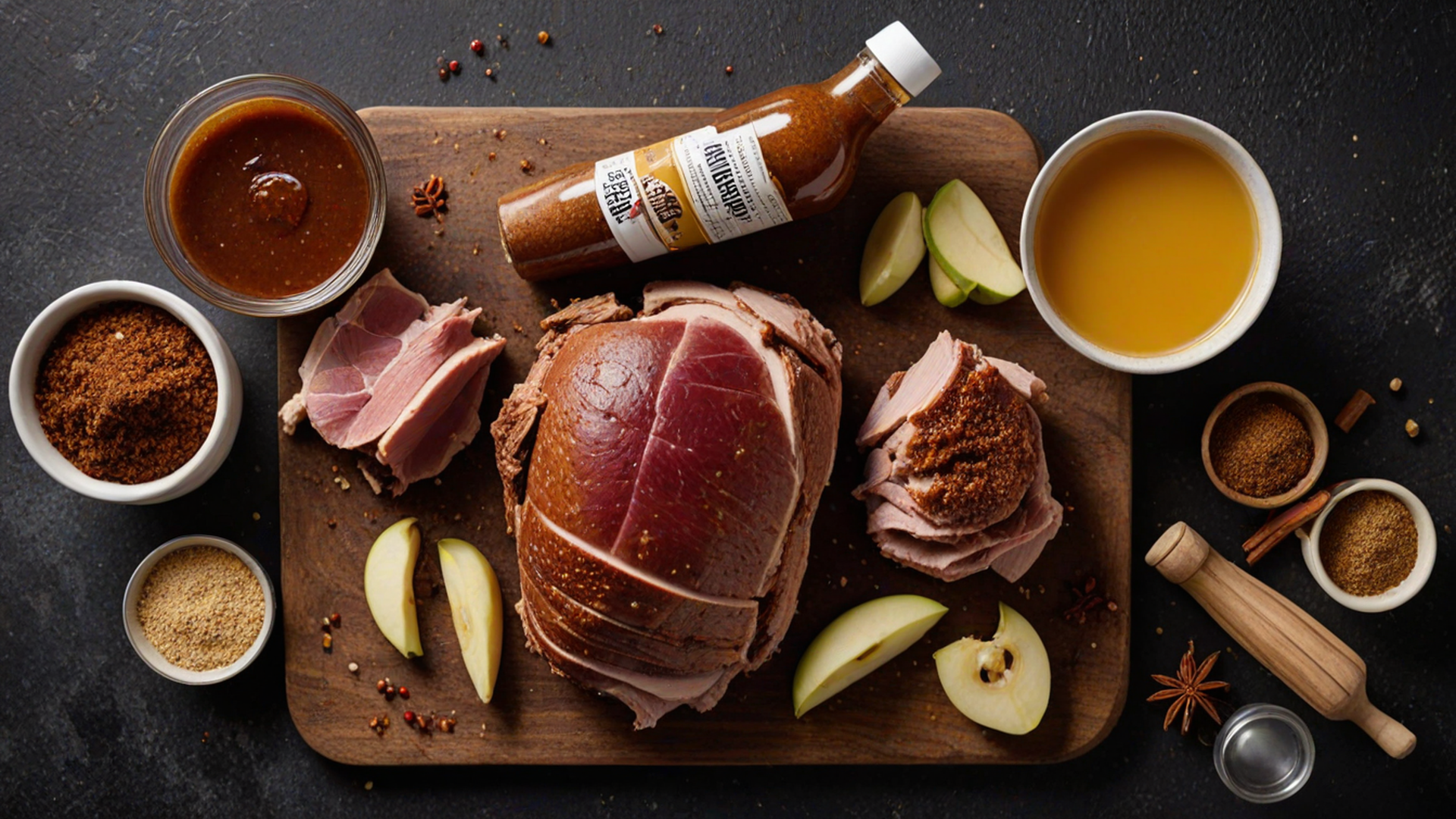
The Memphis Dry Rub Application: In a bowl, mix dark brown sugar, kosher salt, smoked paprika, 16-mesh black pepper, garlic powder, onion powder, and cayenne. Dust the pork shoulder heavily on all sides, patting the rub gently into the meat with your hands until fully coated in a thick, uniform crimson-brown jacket. Let rest at room temperature for 30 minutes while the smoker heats; salt will draw out surface moisture and dissolve into a sticky glaze.
4
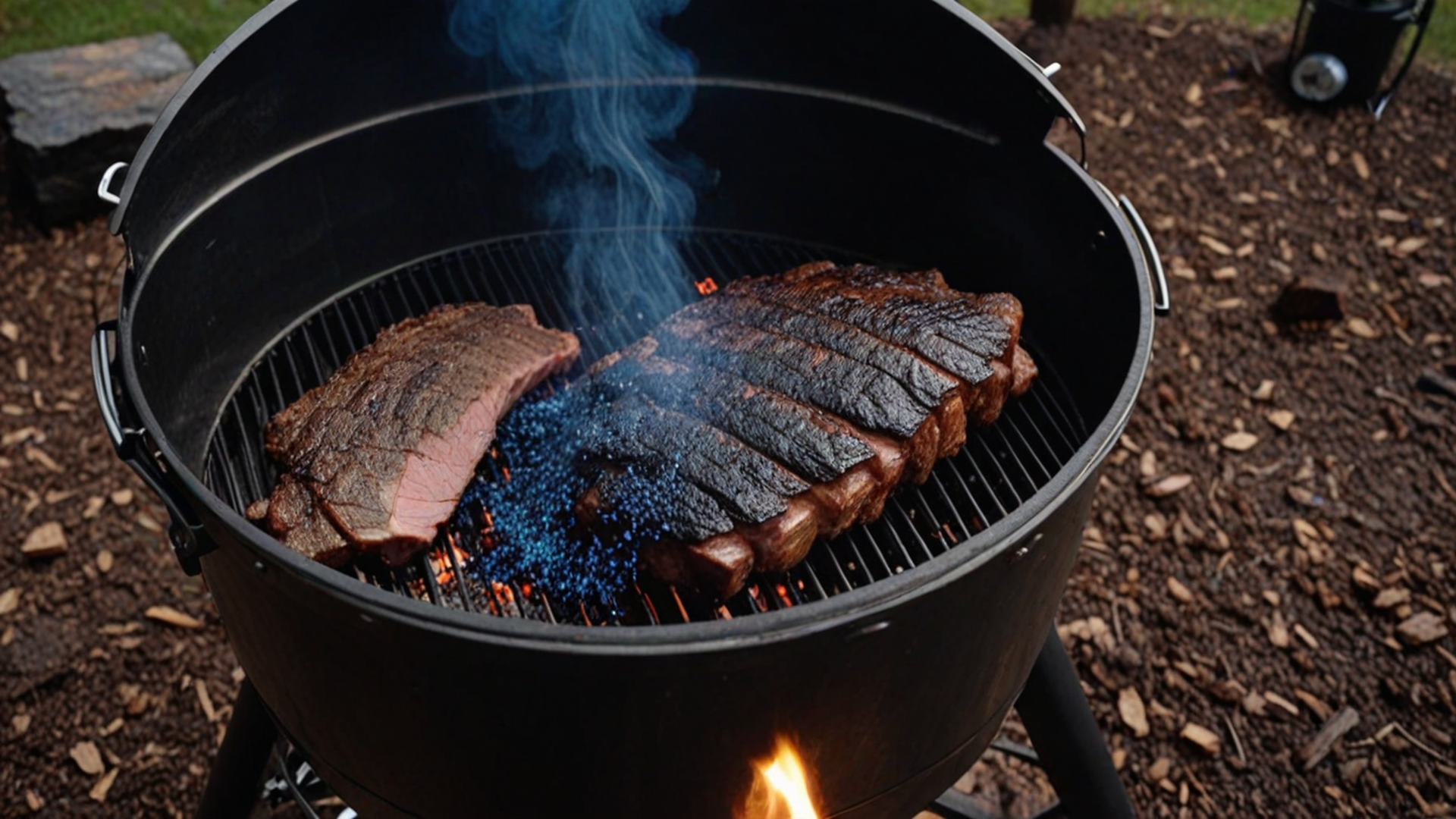
Offset Smoker Fire Stabilization: Preheat an offset barrel smoker to 107°C - 115°C (225°F - 240°F) using seasoned hickory and applewood coals. Maintain a clean, translucent, faint blue smoke draft (thin blue smoke). Place the pork butt fat-side up on the smoker grate, with the thicker end facing the firebox inlet to absorb radiant heat.
5
Phase 1 Smoke Ring Diffusion & Bark Polymerization: Smoke undisturbed for the first 3 hours. Nitric oxide (NO) and carbon monoxide (CO) in the wood smoke react with cold myoglobin in the outer 1/2-inch of meat, locking it into a permanent crimson smoke ring. The spices, salt, and rendered fat slowly dehydrate and polymerize into a dark, crunchy crust (the bark).
6
Phase 2 Spritzing & The Evaporative Stall: After hour 3, once the bark is set and dry to the touch, spritz the meat every 45 minutes with a 50/50 mixture of apple cider vinegar and apple juice. Between hours 6 and 8, when internal temperature reaches 65°C - 74°C (150°F - 165°F), the pork enters 'the stall'—evaporative cooling halts temperature rise for hours. Once a jet-black, glistening bark is fully formed, wrap the pork butt tightly in two overlapping sheets of heavy-duty aluminum foil or peach butcher paper, adding 1/4 cup apple juice inside. Return wrapped pork to smoker at 120°C (250°F).
7
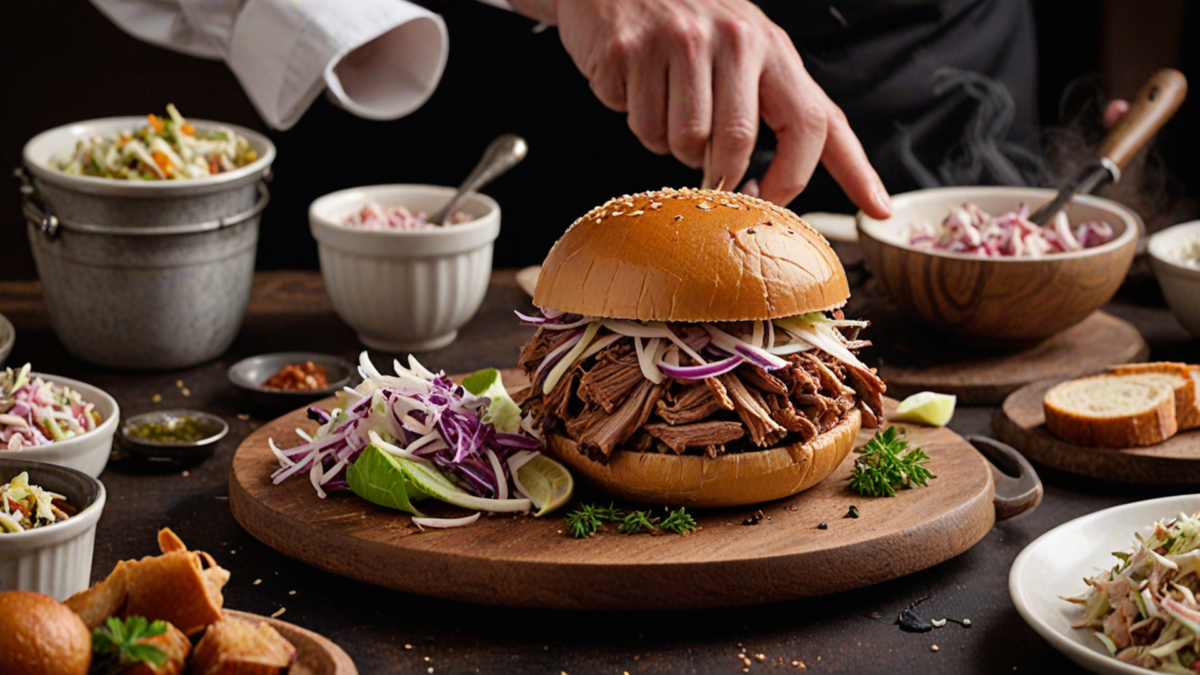
The 203°F Collagen Melt & The Bone Pull Test: Cook wrapped pork until an instant-read digital probe glides into the center with zero resistance, like warm butter, and internal core temperature reaches 95°C (203°F). At this precise temperature, tough collagen has fully hydrolyzed into liquid gelatin. Transfer wrapped pork to an insulated cooler lined with towels and rest undisturbed for 2 hours. Unwrap: grasp the blade bone and pull gently—it should slide out clean as a whistle with zero meat clinging to it. Shred the succulent meat by hand into long, juicy ribbons, mixing crispy black bark with tender pink meat. Toss with tangy Eastern North Carolina vinegar sauce and pile high on soft brioche buns with coleslaw.
The Culinary Science: Why It Works
The culinary physics of smoked pulled pork is a triumph of collagen hydrolysis and bark polymerization thermodynamics. Pork butt contains dense networks of connective collagen surrounding muscle fibers. Below 65°C, collagen remains tough as leather; at 85°C to 95°C, the collagen triple helices unwind and hydrolyze into liquid gelatin, transforming tough pork into meltingly tender, succulent strands. Crucially, the evaporative stall occurs between 65°C and 74°C: moisture sweats out of the meat and evaporates, cooling the meat at the exact rate the smoker heats it (latent heat of vaporization). Wrapping the pork halts evaporative cooling, powering through the stall. Meanwhile, the exterior bark is formed by the polymerization of fat-soluble smoke aerosols, fat, salt, and brown sugar, creating a crunchy, savory crust rich in hundreds of smoky guaiacol and syringol aroma compounds.
To execute authentic Southern Smoked Pulled Pork with a glistening mahogany-black bark and succulent, melting strands, slather bone-in pork shoulder with yellow mustard and a coarse brown sugar-paprika rub. Smoke low and slow at 110°C (230°F) over seasoned hickory wood to form a deep crimson smoke ring, powering through the evaporative stall with an apple cider vinegar mop and protective butcher paper wrap. Pull the meat when the internal core hits 95°C (203°F) and the shoulder blade bone slides out effortlessly, shredding into juicy ribbons doused in spicy Carolina vinegar sauce.
The culinary physics of smoked pulled pork is a triumph of collagen hydrolysis and bark polymerization thermodynamics. Pork butt contains dense networks of connective collagen surrounding muscle fibers. Below 65°C, collagen remains tough as leather; at 85°C to 95°C, the collagen triple helices unwind and hydrolyze into liquid gelatin, transforming tough pork into meltingly tender, succulent strands. Crucially, the evaporative stall occurs between 65°C and 74°C: moisture sweats out of the meat and evaporates, cooling the meat at the exact rate the smoker heats it (latent heat of vaporization). Wrapping the pork halts evaporative cooling, powering through the stall. Meanwhile, the exterior bark is formed by the polymerization of fat-soluble smoke aerosols, fat, salt, and brown sugar, creating a crunchy, savory crust rich in hundreds of smoky guaiacol and syringol aroma compounds.
3. Red Flags & Point of No Return Thresholds
Red Flag
Observable Chemical Phenomenon
Mandatory Chef Action
Tough Chewy Meat That Won’t Shred
Pulling the pork off the smoker too early based on time rather than internal temperature (e.g. at 75°C)
Cook until internal temperature reaches strictly 93°C – 96°C (200°F – 205°F) and probe enters like warm butter
Bitter Acrid Black Creosote Bark
Smoking with wet green wood or starving the fire of oxygen, producing thick white/gray billowing smoke
Maintain a hot, clean wood fire with ample oxygen, producing invisible or faint translucent blue smoke
Dry Shredded Chalky Meat
Skipping the 2-hour resting phase and shredding the pork steaming hot right off the smoker
Rest the wrapped pork butt for at least 1.5 to 2 hours in an insulated cooler so juices redistribute
Mushy Bark with No Crunch
Wrapping the pork butt in foil too early before the dark mahogany bark has fully set
Wait until hours 6 to 7 when the spice rub has completely dried and formed a firm, dark crust before wrapping
Blue smoke indicates clean complete combustion; thick white smoke coats meat in bitter creosote
08
Smoker Cooking Temp
107°C – 115°C (225°F – 240°F) steady
>150°C (fast cook ruins collagen)
Low steady heat gives collagen ample time to melt into gelatin without boiling meat dry
09
Spritzing Solution Formulation
50% raw cider vinegar / 50% apple juice
Plain water
Vinegar acid tenderizes surface fibers; apple fructose caramelizes into deep mahogany sheen
10
Wrapping Phase Timing
At the stall (68°C – 74°C) after bark sets
Wrapped at beginning of cook
Halts evaporative cooling stall while protecting the established crunchy bark
11
Internal Core Pull Temp
93°C – 96°C (200°F – 205°F)
<85°C (collagen remains tough)
The exact gelatinization threshold where connective tissue liquefies and blade bone slides out clean
12
Insulated Resting Window
2 hours in insulated cooler with dry towels
Shredded straight off smoker
Allows relaxed muscle fibers to reabsorb liquefied fats and gelatin throughout the meat
13
The Bone Pull Test
Blade bone slides out clean with zero force
Bone stuck tight (under-cooked)
The definitive physical benchmark of fully rendered, perfectly cooked pulled pork
14
Shredding Technique
Pulled by hand into thick strands with bark
Pureed or food-processed
Hand-pulling preserves long succulent muscle fibers mixed with crunchy bark nuggets
15
Carolina Sauce Balance
Apple cider vinegar + chili flakes + brown sugar
Thick sweet tomato sauce
High acid vinegar cuts through rich pork fat, revitalizing the palate with tangy heat
5. Step-by-Step Culinary Action Protocol & Process Photography
For scalable ingredient proportions, custom serving calculations, and interactive step check-offs, use the recipe card at the top of this guide. Below is the photographic documentation and culinary physics breakdown for each critical phase.
Phase 1: Precision Mise en Place & Chemical Ratio Balance — All raw lipids, aromatics, and structural starches assembled at room temperature to ensure rapid thermal equilibrium.Phase 2: Mechanical Manipulation & Structural Udvikling — Active dough folding, protein emulsion, or cell wall breakdown to establish the dish’s fundamental architectural matrix.Phase 3: Thermal Transformation & Maillard Kinetics — Controlled heat transfer driving gelatinization, lipid rendering, and surface browning within the validated temperature window.
6. Dangerous Common Pitfalls & Disastrous Mistakes
Error 1: Pulling the pork off the smoker at 75°C (165°F): At 75°C, pork is technically safe to eat, but the tough collagen has not melted yet! If you try to pull it, the meat will be tough as rubber and impossible to shred; you must take it all the way to 95°C (203°F).
Error 2: Smoking with dirty white smoke: If your smoker is choking on airflow, it produces thick white billowy smoke. That smoke contains toxic creosote, which coats the meat in a bitter, ashy, gasoline-like film; keep dampers open for clean blue smoke.
Error 3: Trimming all the fat off the roast: Pork shoulder needs its fat cap. As it cooks fat-side up, the melting fat continuously bastes the lean muscle underneath, keeping it moist through 12 hours of heat.
Error 4: Shredding the meat while it is steaming hot: Ripping into the meat immediately dumps cups of pressurized liquid onto the cutting board, leaving the pork dry within minutes; let it rest in a cooler for 2 hours.
Thermocouple Calibration: Always verify internal core meat, fish, and custard temperatures with a calibrated instant-read digital probe thermometer.
Thermal & Splatter Protection: Handle boiling baths, smoking charcoal grills, and spitting frying oil using heavy silicone-lined heatproof mitts.
Storage & Bacterial Safety: Cool all high-protein dishes rapidly and refrigerate below 4°C (39°F) for up to 3 days, or freeze for up to 3 months.
8. Frequently Asked Questions (FAQ)
Q1: What is the ‘Stall’ in barbecue smoking?
The stall is a natural physical phenomenon where the pork’s internal temperature plateaus around 65°C-74°C (150°F-165°F) and stops rising for 2 to 4 hours. It is caused by evaporative cooling: moisture sweats to the surface and evaporates, cooling the meat at the exact rate the smoker heats it. Wrapping the meat halts evaporation and breaks the stall.
Q2: Why is it called ‘Boston Butt’ if it comes from the shoulder?
In colonial America, less valuable pork shoulder cuts were packed into wooden salt barrels called ‘butts’ for storage and shipping from Boston, giving the shoulder cut its quirky historical name.
Q3: What is the pink ring around the outer edge of the meat?
That is the coveted ‘smoke ring.’ It is formed when nitric oxide (NO) and carbon monoxide (CO) gases from wood combustion penetrate cold raw meat, chemically locking the myoglobin protein into a permanent pink nitrosyl-protoheme molecule before it can turn gray from heat.
Q4: Can I make pulled pork in an oven or slow cooker?
Yes! You can bake wrapped pork shoulder at 135°C (275°F) for 6 to 8 hours until it reaches 95°C (203°F). You won’t get the authentic smoke ring or wood-fired bark, but you will achieve identical melting tenderness.
Q5: What is Eastern North Carolina vinegar sauce?
Eastern NC sauce is the oldest barbecue sauce in America. It contains zero tomatoes and zero molasses: it is pure apple cider vinegar seasoned with red pepper flakes, brown sugar, black pepper, and salt. It cuts through pork fat like a razor.
Q6: How do I store and reheat leftover pulled pork?
Pulled pork freezes phenomenally for up to 6 months. To reheat, warm in a baking dish covered tightly with foil with a splash of apple juice or chicken broth at 160°C (325°F) for 20 minutes to restore juiciness.
9. Ordliste of 5 Essential Culinary Science Terms
Bark: The dark, intensely flavorful, crunchy, caramelized exterior crust that forms on smoked meat from polymerized spices, rendered fat, and smoke aerosols.
The Stall: The thermodynamic plateau where evaporative cooling balances heat absorption, pausing internal temperature rise during slow smoking.
Collagen Hydrolysis: The thermal unwinding of tough connective tissue into succulent, water-soluble gelatin occurring steadily between 70°C and 95°C.
Smoke Ring: A distinct 1/4-inch pink border just beneath the bark, formed by the chemical bonding of wood-smoke nitric oxide to raw meat myoglobin.
Boston Butt: The upper portion of the pork shoulder containing the blade bone, celebrated for dense marbling and superior pulled pork texture.
10. Organic Network Links & Community Forum Hub
Join the precision culinary science discussion at the RecipeTips Community Forum. Exchange thermodynamic triage data, troubleshoot emulsion failures, and share kitchen experiment results with fellow culinary scientists and passionate home cooks in our dedicated lounges.