The Science of Broken Emulsions: How to Fix Curdled Mayonnaise & Hollandaise in 60 Seconds
Why do emulsions break? Learn the culinary physics of lecithin and droplet suspension, plus our fail-safe 60-second rescue method to salvage curdled Hollandaise or broken mayonnaise every single time.
An emulsion like Hollandaise or Mayonnaise is a colloidal suspension where billions of microscopic fat droplets are suspended in a continuous aqueous phase. Egg yolk contains lecithin (phosphatidylcholine), an amphiphilic molecule with a water-loving head and fat-loving tail that coats each oil droplet, preventing them from coalescing. A sauce "breaks" for only two physical reasons: either oil was added faster than the shear forces could disperse it, or excessive heat (>65°C / 150°F) coagulated yolk proteins, forcing water out and letting fat pool into an unappetizing puddle.
Step-by-Step Instructions
1
THE STABLE HOLLANDAISE BASE: Place 3 egg yolks, 1 tbsp lemon juice, and 1 tsp water in a stainless steel round-bottom bowl set over a pot of barely simmering water (bain-marie). Ensure the bowl bottom does not touch the water.
2
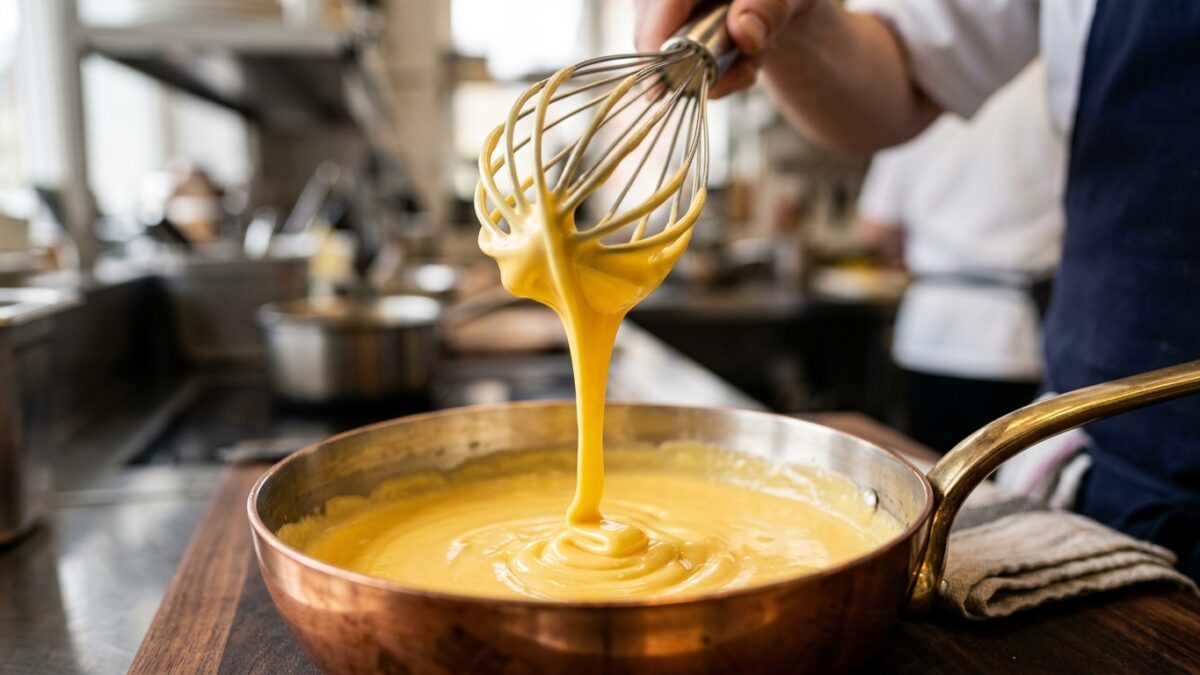
WHISKING TO RIBBON STAGE: Whisk vigorously in a figure-eight pattern for 3 to 4 minutes until the mixture triples in volume, turns pale pastel yellow, and falls from the whisk in thick ribbons (internal temp 58°C–62°C / 136°F–144°F).
3
EMULSIFICATION (SLOW DRIP): Remove bowl from heat. Place on a damp kitchen towel to stabilize. Begin adding warm clarified butter literally drop by drop while whisking rapidly. Once the emulsion takes hold (about 1/4 of butter added), pour the remaining butter in a steady, thin, hair-like stream.
4
EMERGENCY RESCUE PROTOCOL 1 (The Warm Water Reset): If the sauce suddenly looks greasy, separates, or develops tiny oil beads, STOP adding butter immediately! Vigorously whisk in 1 teaspoon of warm (not hot) water. The extra water restores the continuous aqueous phase, pulling the fat droplets back into suspension.
5
EMERGENCY RESCUE PROTOCOL 2 (The Fresh Yolk Re-Emulsion): If the sauce is completely separated into curdled lumps and oil: Place 1 fresh room-temperature egg yolk and 1 tsp warm water in a clean, dry bowl. Whisk until frothy. Slowly, teaspoon by teaspoon, whisk your broken sauce into the fresh yolk. The fresh unheated lecithin molecules will immediately reorganize and restore the velvety ribbon emulsion in 60 seconds.
Why do emulsions break? Learn the culinary physics of lecithin and droplet suspension, plus our fail-safe 60-second rescue method to salvage curdled Hollandaise or broken mayonnaise every single time.
An emulsion like Hollandaise or Mayonnaise is a colloidal suspension where billions of microscopic fat droplets are suspended in a continuous aqueous phase. Egg yolk contains lecithin (phosphatidylcholine), an amphiphilic molecule with a water-loving head and fat-loving tail that coats each oil droplet, preventing them from coalescing. A sauce “breaks” for only two physical reasons: either oil was added faster than the shear forces could disperse it, or excessive heat (>65°C / 150°F) coagulated yolk proteins, forcing water out and letting fat pool into an unappetizing puddle.
Step-by-Step Culinary Protocol
THE STABLE HOLLANDAISE BASE: Place 3 egg yolks, 1 tbsp lemon juice, and 1 tsp water in a stainless steel round-bottom bowl set over a pot of barely simmering water (bain-marie). Ensure the bowl bottom does not touch the water.
WHISKING TO RIBBON STAGE: Whisk vigorously in a figure-eight pattern for 3 to 4 minutes until the mixture triples in volume, turns pale pastel yellow, and falls from the whisk in thick ribbons (internal temp 58°C–62°C / 136°F–144°F).
EMULSIFICATION (SLOW DRIP): Remove bowl from heat. Place on a damp kitchen towel to stabilize. Begin adding warm clarified butter literally drop by drop while whisking rapidly. Once the emulsion takes hold (about 1/4 of butter added), pour the remaining butter in a steady, thin, hair-like stream.
EMERGENCY RESCUE PROTOCOL 1 (The Warm Water Reset): If the sauce suddenly looks greasy, separates, or develops tiny oil beads, STOP adding butter immediately! Vigorously whisk in 1 teaspoon of warm (not hot) water. The extra water restores the continuous aqueous phase, pulling the fat droplets back into suspension.
EMERGENCY RESCUE PROTOCOL 2 (The Fresh Yolk Re-Emulsion): If the sauce is completely separated into curdled lumps and oil: Place 1 fresh room-temperature egg yolk and 1 tsp warm water in a clean, dry bowl. Whisk until frothy. Slowly, teaspoon by teaspoon, whisk your broken sauce into the fresh yolk. The fresh unheated lecithin molecules will immediately reorganize and restore the velvety ribbon emulsion in 60 seconds.
Precision Ingredients Checklist
3 large egg yolks (3 large fresh egg yolks (room temp))