Find a little inspiration for your next meal.All Recipes ↗
Recipes
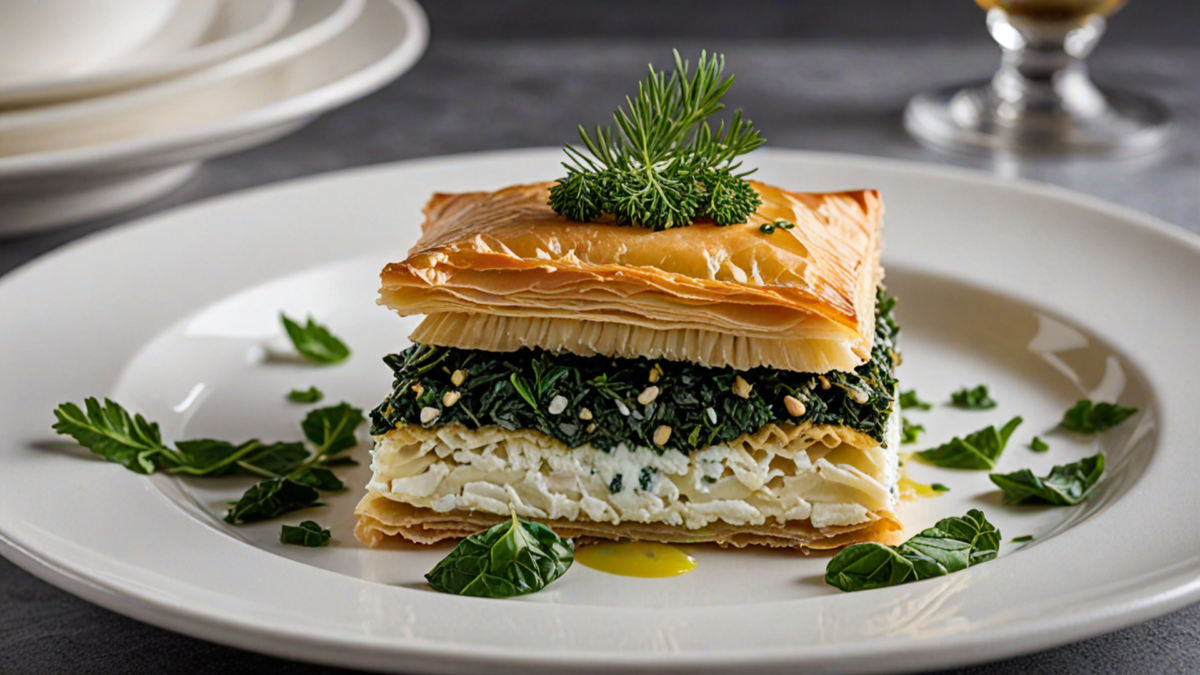
Traditional Greek Spanakopita: Laminated Phyllo Air Gaps, Spinach Moisture Purge & Sheep’s Milk Feta Brine
🌐 Originalsprache wird angezeigt Dieser Artikel wurde noch nicht ins Deutsche übersetzt. Sie sehen die Originalversion. 1. Immediate 3-Sentence Action Protocol & Provenance To bake legendary Greek Spanakopita with a multi-tiered, shatteringly crisp phyllo crust and a succulent, savory spinach-feta interior, aggressively salt and wring out fresh spinach to expel all cellular water. Fold with […]
The Spinach Salt Osmosis Purge: CRITICAL LAW: Never use soggy wet spinach! Fresh spinach is 92% water; if water is not removed, it turns the bottom phyllo into wet wallpaper paste. Place chopped spinach in a large colander, sprinkle with 1 tsp salt, and toss thoroughly. Let sit for 15 minutes. Using your hands, take handfuls of spinach and squeeze with maximum force over the sink (or wrap in a clean towel and wring dry like a wet towel) until the volume shrinks by 80% and practically zero water remains.
2
Aromatic Allium Sauté & Cooling: Heat 2 tablespoons olive oil in a skillet over medium heat. Sauté diced yellow onion and green scallions for 6 minutes until soft, sweet, and translucent. Remove from heat and let cool to room temperature (never add hot onions to raw eggs!).
3
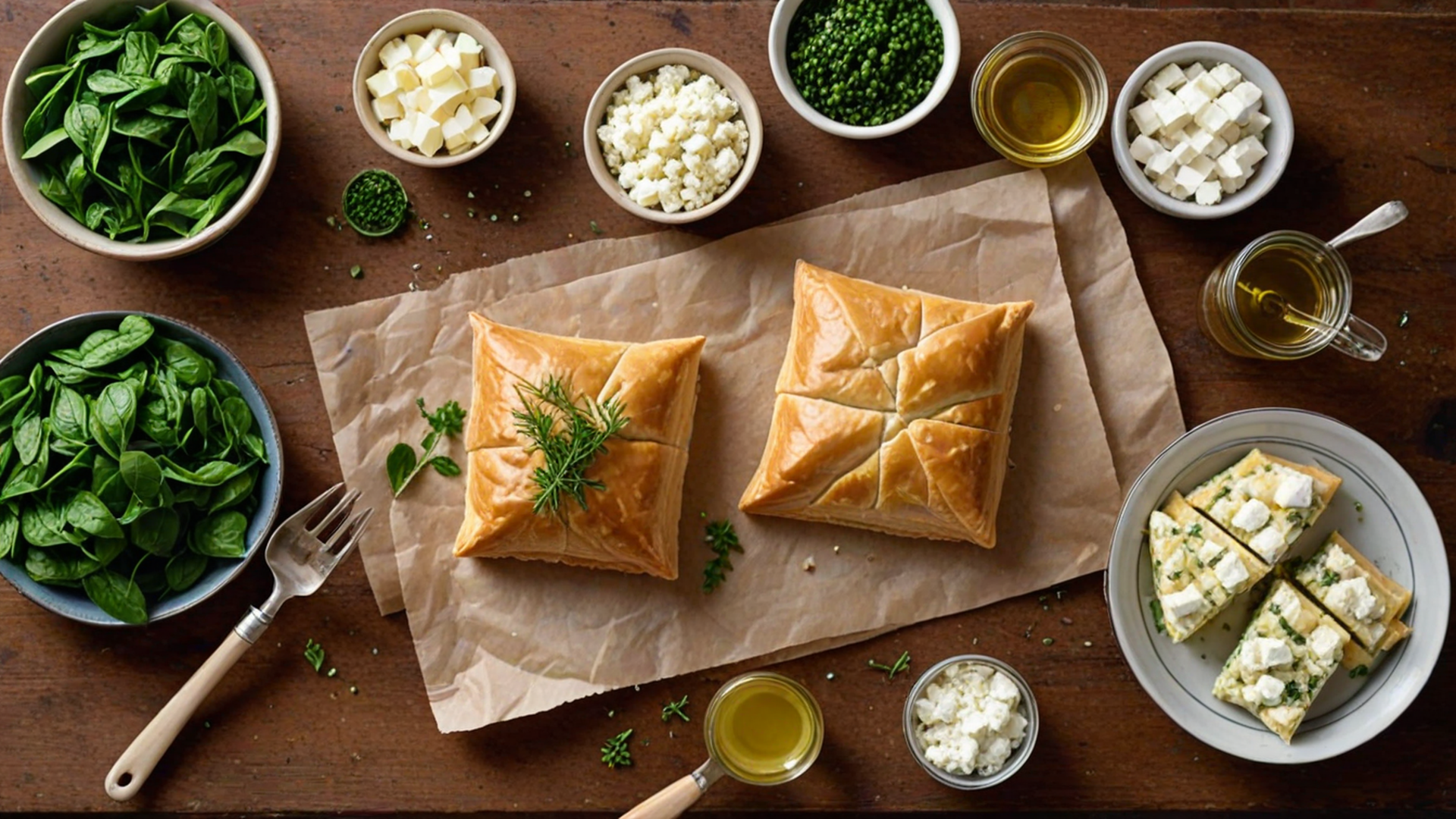
The Spanakopita Herb & Cheese Binder: In a large bowl, combine the squeezed dry spinach, cooled sautéed onions, crumbled authentic Greek sheep's milk Feta, ricotta (or anthotyro), fresh chopped dill, fresh parsley, beaten eggs, grated nutmeg, black pepper, and a pinch of salt. Gently fold together with a spatula until evenly combined. The eggs and ricotta form a creamy binder that sets the spinach into tender layers without leaking moisture.
4
Phyllo Conditioning & The Damp Towel Shield: Unroll thawed phyllo sheets onto cutting board. Cover immediately with a sheet of plastic wrap topped with a lightly damp (not soaking wet) clean kitchen towel. Phyllo pastry dries out and turns to brittle dust in under 60 seconds if exposed to dry room air.
5
The Bottom Lamination Architecture: Brush the bottom and sides of a 9x13-inch metal or ceramic baking dish generously with melted olive oil or clarified butter. Lay one sheet of phyllo into the pan, letting the excess hang over the edges. Using a pastry brush, generously brush or flick melted oil over the entire surface of the sheet. Repeat with 7 more sheets of phyllo, brushing oil between EVERY single sheet (8 sheets total for bottom base). Brushing fat between layers creates microscopic air pockets that fry the individual sheets apart into dozens of shatteringly crisp tiers.
6
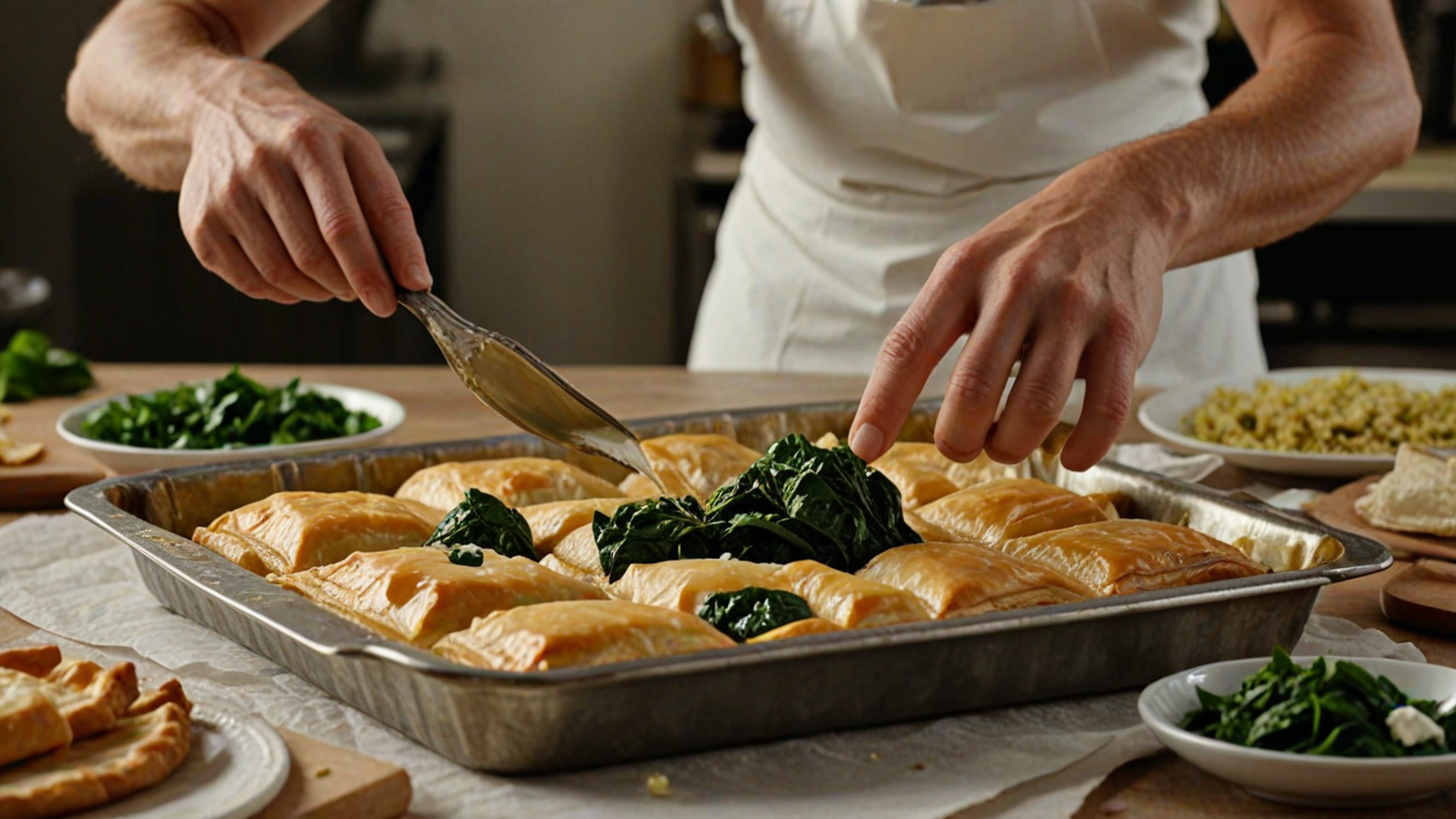
Filling Placement & Envelope Folding: Spread the spinach-feta filling evenly over the bottom phyllo base, smoothing with a spatula into a uniform 1-inch layer. Fold the overlapping outer phyllo flaps inward over the edges of the filling like an envelope, brushing with olive oil.
7
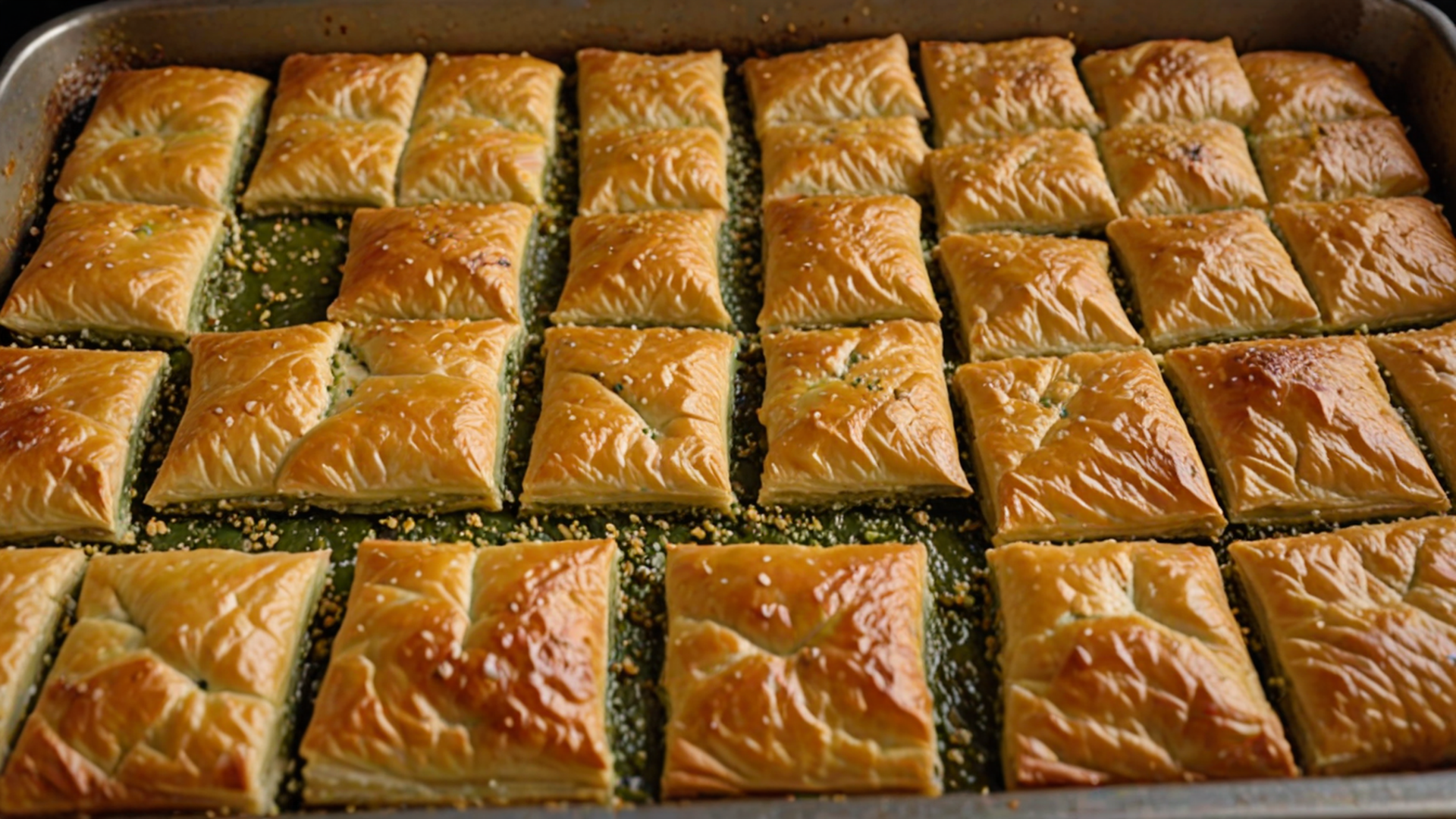
The Top Lamination & Surgical Pre-Scoring: Layer 8 more sheets of phyllo over the top of the filling, brushing melted oil generously between every single layer. Brush the top sheet with extra olive oil and sprinkle with sesame seeds. CRITICAL SCORING STEP: Using a razor-sharp chef's knife, score the top phyllo layers only (do not cut through to the bottom) into 8 or 12 squares. Scoring vents internal steam and allows clean, picture-perfect slices after baking without shattering the brittle crust into crushed flakes.
8
Convection Bake & Acoustic Shatter Benchmark: Bake in an oven preheated to 180°C (350°F) for 50 to 55 minutes until the top and bottom phyllo layers turn deep golden-bronze, puffed, and shatteringly crisp. Cool in the pan for 15 minutes to allow the feta custard to stabilize before slicing along the scored lines. Serve warm or at room temperature.
The Culinary Science: Why It Works
The culinary physics of Spanakopita is an exercise in moisture purge dynamics and phyllo steam-frying lamination. Raw spinach contains over 90% intracellular water: salting and hand-wringing tears plant vacuoles, expelling water via osmosis so the filling stays moist without turning the pastry into soggy mush. Furthermore, phyllo dough consists of flour and water stretched paper-thin with near-zero fat. By brushing each individual sheet with olive oil or clarified butter, a thin lipid film separates the delicate dough leaves. In the 180°C oven, residual water in the dough vaporizes into steam, pushing the dry sheets apart into thousands of separated air voids while the surrounding oil fries each micro-layer individually. Pre-scoring the top sheets provides targeted steam-vent channels, preventing the top crust from ballooning into a bubble and ensuring an acoustic, glass-shattering crunch upon biting.
To bake legendary Greek Spanakopita with a multi-tiered, shatteringly crisp phyllo crust and a succulent, savory spinach-feta interior, aggressively salt and wring out fresh spinach to expel all cellular water. Fold with aromatic fresh dill, scallions, and brine-cured sheep’s milk Feta cheese bound with farm eggs. Laminate eight sheets of paper-thin phyllo with olive oil for the base and eight sheets for the crown, scoring the top crust into squares before baking at 180°C (350°F) until deeply golden-bronze.
The culinary physics of Spanakopita is an exercise in moisture purge dynamics and phyllo steam-frying lamination. Raw spinach contains over 90% intracellular water: salting and hand-wringing tears plant vacuoles, expelling water via osmosis so the filling stays moist without turning the pastry into soggy mush. Furthermore, phyllo dough consists of flour and water stretched paper-thin with near-zero fat. By brushing each individual sheet with olive oil or clarified butter, a thin lipid film separates the delicate dough leaves. In the 180°C oven, residual water in the dough vaporizes into steam, pushing the dry sheets apart into thousands of separated air voids while the surrounding oil fries each micro-layer individually. Pre-scoring the top sheets provides targeted steam-vent channels, preventing the top crust from ballooning into a bubble and ensuring an acoustic, glass-shattering crunch upon biting.
3. Red Flags & Point of No Return Thresholds
Red Flag
Observable Chemical Phenomenon
Mandatory Chef Action
Soggy Leathery Mushy Bottom Crust
Failing to wring out spinach water or using frozen spinach without squeezing dry
Salt and wring spinach with maximum force in a towel until bone-dry and volume shrinks by 80%
Phyllo Shattering into Dust While Working
Leaving the phyllo dough exposed to room air on the counter
Always keep unused phyllo sheets covered under plastic wrap and a damp kitchen towel while working
Filling Leaking and Burning Around Edges
Failing to fold the overhang bottom phyllo sheets over the filling like an envelope
Fold the bottom flaps inward over the filling before laying down the top sheets to seal the perimeter
Crust Crushed into Ruins When Slicing
Attempting to slice the baked spanakopita after it comes out of the oven
Always score the top phyllo sheets into squares with a sharp knife BEFORE baking
Egg proteins coagulate during baking, setting the spinach and feta into cohesive, tender layers
12
Pre-Scoring Imperative
Top phyllo scored into squares BEFORE baking
Un-scored (shatters on cutting)
Allows clean portioning after baking without crushing the delicate, brittle top crust
13
Baking Oven Temperature
180°C (350°F) convection middle rack
>210°C (burns top before bottom cooks)
Gentle steady heat cooks bottom crust through while browning top to golden-amber
14
Bake Duration Benchmark
50 to 55 minutes until deep bronze
<35 minutes (raw pasty bottom)
Guarantees complete moisture evaporation from all 16 distinct phyllo layers
15
Serving Temperature Versatility
Warm or room temperature (traditional)
Boiling hot straight out of oven
Room temperature highlights sheep’s milk feta complexity and olive oil fruitiness
5. Step-by-Step Culinary Action Protocol & Process Photography
For scalable ingredient proportions, custom serving calculations, and interactive step check-offs, use the recipe card at the top of this guide. Below is the photographic documentation and culinary physics breakdown for each critical phase.
Phase 1: Precision Mise en Place & Chemical Ratio Balance — All raw lipids, aromatics, and structural starches assembled at room temperature to ensure rapid thermal equilibrium.Phase 2: Mechanical Manipulation & Structural Entwicklung — Active dough folding, protein emulsion, or cell wall breakdown to establish the dish’s fundamental architectural matrix.Phase 3: Thermal Transformation & Maillard Kinetics — Controlled heat transfer driving gelatinization, lipid rendering, and surface browning within the validated temperature window.
6. Dangerous Common Pitfalls & Disastrous Mistakes
Error 1: Skipping the spinach squeezing step: Spinach is essentially a bag of water. If you don’t salt and wring it bone-dry in a kitchen towel, that water will boil inside the pie, turning your bottom crust into soggy gray wallpaper paste.
Error 2: Letting the phyllo pastry dry out on the counter: Phyllo sheets are paper-thin; if left uncovered, they dry out in 2 minutes and crumble into unusable flakes; keep them covered with a damp towel.
Error 3: Trying to cut spanakopita after baking without pre-scoring: Baked phyllo is brittle like stained glass; cutting it fresh out of the oven shatters the top crust into broken shards; always score the top sheets before baking.
Error 4: Using cheap cow’s milk feta: Cow’s milk feta is dry, chalky, and salty. Authentic Greek feta made from sheep and goat’s milk is creamy, tangy, and rich, creating a luscious filling.
Thermocouple Calibration: Always verify internal core meat, fish, and custard temperatures with a calibrated instant-read digital probe thermometer.
Thermal & Splatter Protection: Handle boiling baths, smoking charcoal grills, and spitting frying oil using heavy silicone-lined heatproof mitts.
Storage & Bacterial Safety: Cool all high-protein dishes rapidly and refrigerate below 4°C (39°F) for up to 3 days, or freeze for up to 3 months.
8. Frequently Asked Questions (FAQ)
Q1: What is the difference between Spanakopita and Spanakotiropita?
Spanakopita literally means ‘Spinach Pie.’ Spanakotiropita specifically denotes a spinach pie with a heavy proportion of cheese (tiro = cheese). In modern culinary practice, virtually all spanakopita contains feta cheese.
Q2: Can I use frozen spinach instead of fresh?
Yes, but you must thaw it completely and squeeze it with extreme force in a kitchen towel until not a single drop of green water drips out. Fresh spinach, however, provides far superior texture and sweet flavor.
Q3: What can I use instead of Greek Anthotyro cheese?
Whole-milk Italian ricotta, French pot cheese, or whole-milk cottage cheese (blotted dry) are excellent substitutes that balance the salty bite of Greek feta.
Q4: Can Spanakopita be frozen before baking?
Yes! In fact, spanakopita freezes phenomenally. Assemble the pie completely in the pan, score the top with a sharp knife, wrap tightly in plastic wrap and foil, and freeze for up to 3 months. Bake directly from frozen at 175°C (350°F) for 65-70 minutes—do not thaw!
Q5: Why did my bottom crust turn soggy while the top was crispy?
This happens if the spinach was not squeezed dry, or if the pie was baked on the top rack. Bake on the lower-middle rack, preferably on a preheated pizza stone or heavy baking sheet to crisp the bottom.
Q6: How do you reheat leftover Spanakopita?
Never microwave! Microwaving steams phyllo into rubber. Reheat in a 175°C (350°F) oven or toaster oven for 8 to 10 minutes to restore the shatteringly crisp lamination.
9. Glossar of 5 Essential Culinary Science Terms
Phyllo (Filo): Paper-thin unleavened wheat flour pastry dough of Greek origin, used in multiple layers to produce delicate flaky crusts.
Feta DOP: A protected Greek cheese made from at least 70% sheep’s milk and up to 30% goat’s milk, cured in natural sea-salt brine.
Anthotyro: A traditional fresh Greek whey cheese made from sheep and goat’s milk, similar to Italian ricotta, known for its mild floral creaminess.
Osmotic Purge: Using salt to draw water across cellular plant membranes, shrinking vegetable volume and preventing excess water in baked goods.
Pre-Scoring: Cutting through the top layers of pastry before baking to create steam vents and allow neat slicing without shattering brittle crust.
10. Organic Network Links & Community Forum Hub
Join the precision culinary science discussion at the RecipeTips Community Forum. Exchange thermodynamic triage data, troubleshoot emulsion failures, and share kitchen experiment results with fellow culinary scientists and passionate home cooks in our dedicated lounges.