Authentic Viral Dubai Chocolate Bar: Crispy Kadayif, Pistachio Tahini & The Science of the Perfect Snap
Master the viral Dubai chocolate bar with our test-kitchen perfected ratio of ultra-crispy butter-toasted kadayif, emerald pistachio paste, and stabilized tahini cream—engineered for an audible snap and zero sogginess.
The signature contrast of the Dubai chocolate bar relies on two thermodynamic principles: beta-crystal chocolate tempering for that distinct audible snap, and slow Maillard butter-toasting of thin starch filaments (kadayif) below 160°C (320°F) to eliminate moisture (<1.5% water content) so the pastry never turns soggy when enveloped in lipid-dense pistachio tahini emulsion.
Step-by-Step Instructions
1
Finely cross-cut the thawed kadayif pastry strands into 1/2-inch (1cm) segments using a sharp chef's knife.
2
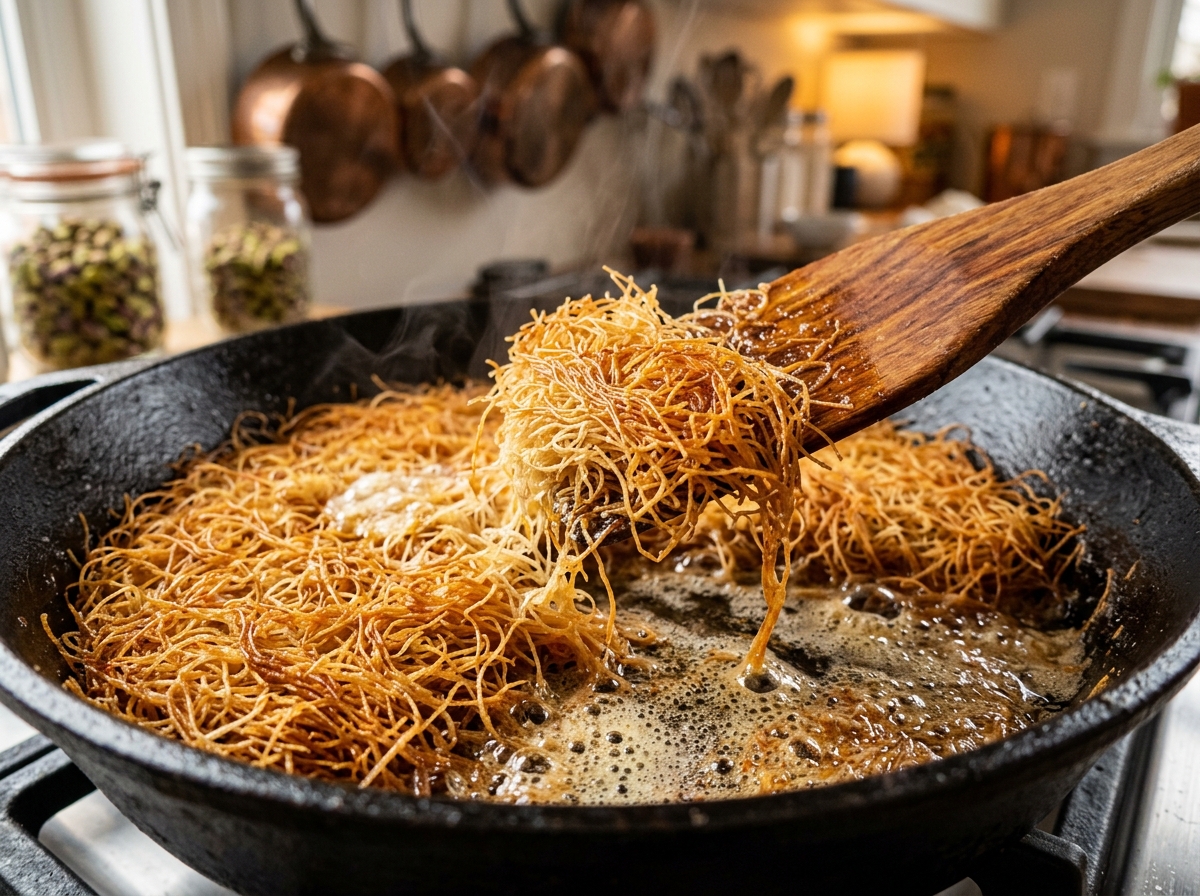
Melt 45g European butter in a wide heavy-bottomed skillet over medium-low heat. Toast the kadayif continuously for 10-12 minutes until all moisture evaporates, turning it uniformly deep golden-amber and extraordinarily crunchy. Spread onto a parchment-lined tray to cool completely.
3
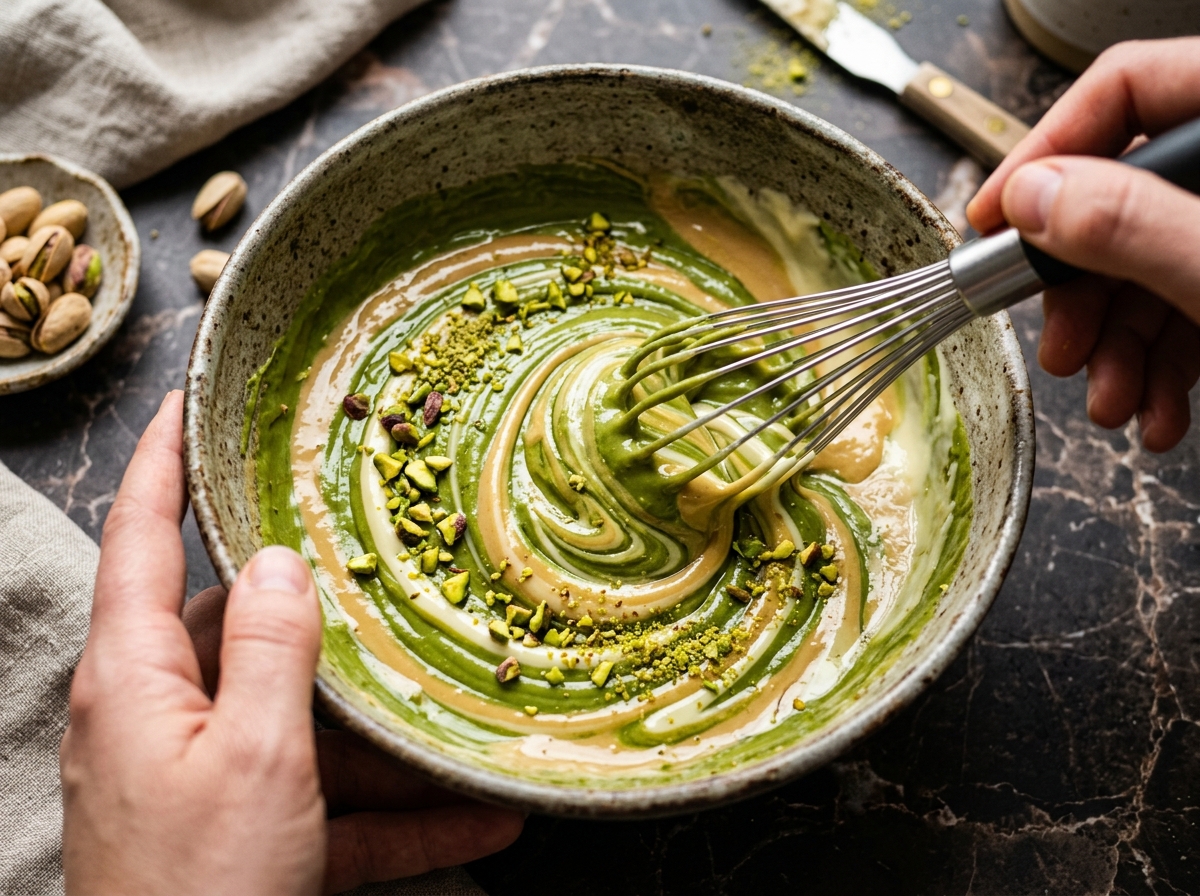
In a mixing bowl, whisk together the 220g pistachio paste, 40g tahini, melted white chocolate, and a pinch of flaky sea salt until a silky emulsion forms. Gently fold in the cooled crispy kadayif until completely coated.
4
Temper your couverture chocolate: Melt 260g over a gentle double boiler to 115°F (46°C), remove from heat, seed with the remaining 140g chopped chocolate, and stir vigorously until cooled to 88°F (31°C). Pour a 3mm layer into deep silicone bar molds, coating the sides. Chill for 10 minutes until set.
5
Spoon the crunchy pistachio kadayif filling into the set chocolate shell, leaving 2mm border. Seal with the remaining tempered chocolate, tap gently to level, and refrigerate for 35 minutes until completely solid. Unmold and hear the signature snap!
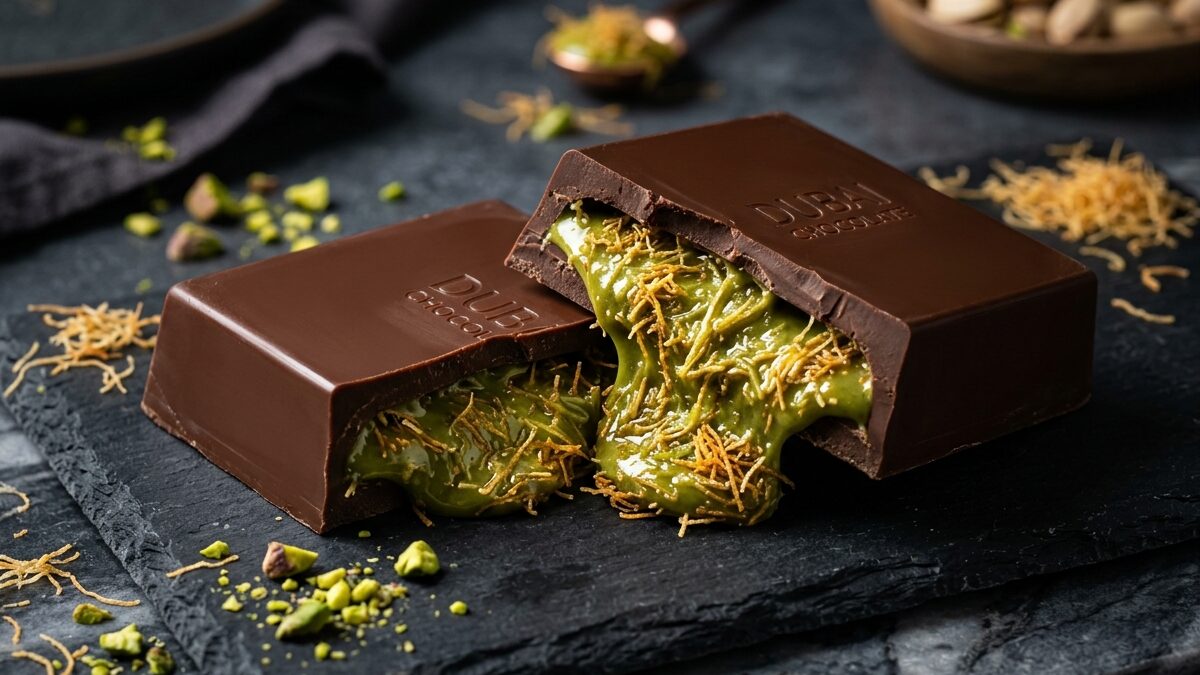
The viral Dubai chocolate bar—originated by Dubai’s boutique Fix Dessert Chocolatier under the moniker “Can’t Get Knafeh of It”—is not just an internet sensory sensation; it is a masterclass in contrasting gastronomic textures. Below the tempered, mirror-gloss milk chocolate shell lies an unexpected thermodynamic marvel: thousands of paper-thin, butter-toasted kadayif filaments suspended in a velvety emerald pistachio-tahini matrix.
In this comprehensive test-kitchen blueprint, we dismantle the science behind the iconic snap, troubleshoot why 80% of home attempts turn soggy within two hours, and provide exact gram weights and thermodynamic temperatures for pastry-grade perfection.
1. The Kadayif Toasting Secret: Eliminating Residual Moisture
The single biggest failure point in replicating the Dubai chocolate bar at home is chewy, rubbery kadayif. Fresh or thawed kataifi (kadayif) dough contains approximately 35% residual water. If this water is not completely driven off during the stovetop toasting phase, moisture migrates into the pistachio paste, causing the starch to swell and completely destroying the crispiness.
Figure 1: Toasting kadayif over gentle medium-low heat allows moisture to escape before Maillard browning occurs, ensuring an enduring crunch.
Chef’s Golden Rule: Never rush the toasting on high heat. Toasting on medium-low heat for 10 to 12 minutes with 82% fat European butter guarantees that moisture drops below 1.5%, ensuring the strands stay audibly crunchy even after days inside the chocolate.
2. The Pistachio-Tahini Emulsion: Why Tahini is Mandatory
Pure pistachio paste is naturally dense in unsaturated fats and can feel heavy or unctuously sticky on the palate. The secret to the original Dubai confection is the addition of high-grade sesame tahini and a small measure of melted white chocolate.
Figure 2: Whisking pure pistachio butter with sesame tahini balances the rich sweetness and provides a velvety viscosity.
Sesame tahini introduces mild roasted sesame bitterness (sesamol) and natural emulsifiers that cut through the richness of the pistachio, while melted cocoa butter from the white chocolate stabilizes the filling so it stays creamy at room temperature without bleeding oil into the chocolate shell.
3. The Physics of the Snap: Beta-V Chocolate Tempering
When you snap an authentic artisan chocolate bar, you should hear a crisp, clean acoustic crack. If your chocolate melts instantaneously upon touch or leaves dull white swirls (fat bloom), the cocoa butter crystallized in unstable polymorphic forms (Forms I through IV).
Chocolate Stage
Milk Chocolate Target
Dark Chocolate (54%) Target
Molecular Goal
1. Melting (Melt all crystals)
113°F – 115°F (45°C – 46°C)
120°F – 122°F (49°C – 50°C)
Destroys all unstable lipid crystal seeds
2. Cooling (Seeding Beta-V)
81°F – 82°F (27°C – 28°C)
82°F – 84°F (28°C – 29°C)
Forms dense, stable Beta-V crystals
3. Working Temperature
86°F – 88°F (30°C – 31°C)
88°F – 90°F (31°C – 32°C)
Optimal fluidity for uniform mold lining
4. Troubleshooting Guide: What Went Wrong & How to Fix It
❌ Problem 1: “My kadayif turned soft and soggy inside the bar.”
Root Cause: The kadayif was either folded while still hot (trapping steam condensation) or under-toasted. Fix: Allow toasted pastry to cool completely to ambient room temperature before folding into the pistachio cream. Never cover the cooling tray.
❌ Problem 2: “The chocolate shell stuck to the silicone mold and broke.”
Root Cause: Untempered chocolate or rushed demolding before crystallization was complete. Properly tempered chocolate contracts slightly as it sets, naturally pulling away from the mold edges. Fix: Ensure the bottom shell chills for at least 10 minutes, and the finished sealed bar rests in the refrigerator for a full 35 minutes before peeling back the silicone.
❌ Problem 3: “The pistachio filling is leaking through the chocolate seams.”
Root Cause: Overfilling the bar cavity or applying top chocolate while the filling is mounded higher than the mold edges. Fix: Leave a strict 2mm clearance from the top rim. Use a small offset spatula to level the filling before pouring the sealing chocolate layer.
5. Frequently Asked Questions (FAQ)
Can I make the Dubai chocolate bar ahead of time?
Yes! When prepared with thoroughly moisture-evaporated kadayif and properly tempered chocolate, the bar retains its signature crisp snap for up to 10 days stored in an airtight container at cool room temperature (65°F–68°F / 18°C–20°C). Avoid freezing, as defrosting causes condensation that ruins the crunch.
Can I substitute regular pistachio spread for pure pistachio butter?
Commercial pistachio spreads usually contain palm oil and excessive added sugar (up to 45%). If using a pre-sweetened spread, omit the melted white chocolate from the recipe and add an extra teaspoon of tahini to counter the cloying sweetness. For authentic gourmet results, 100% pure Antep or Sicilian pistachio butter is recommended.
Can I bake the kadayif in the oven instead of pan toasting?
Yes. Toss the chopped kadayif with melted butter and spread evenly on a large sheet pan. Bake at 350°F (175°C) for 15 to 18 minutes, stirring every 4 minutes to achieve an even golden roast without burnt edges.
💬 Join the Discussion in RecipeTips Baking Lab
Have questions about chocolate tempering temperatures or pistachio butter brands? Join fellow artisan confectioners in our community forum.